Sprain, strain, or broken bone? Decode your symptoms, learn when you can safely skip the ER , and get fast, walk-in X-rays in Bloomfield and Cresskill, NJ.

April 5, 2026
Sprain, Strain, or Fracture? How to Tell the Difference and When to Get an X-Ray

Main Takeaways
- Sprain vs strain vs fracture distinctions come down to which tissue is damaged: sprains affect ligaments (bone-to-bone connections), strains affect muscles or tendons, and fractures involve broken bone.
- Clinical decision rules like the Ottawa Ankle and Knee Rules help determine when an X-ray is necessary—if you can bear weight and have no bone tenderness at specific landmarks, imaging may not be needed.
- Visible deformity, inability to bear weight, hearing a “crack” at the time of injury, and numbness or coldness in the extremity are red flags that warrant immediate medical evaluation.
Table of Contents
- What’s the Difference Between a Sprain, Strain, and Fracture?
- How to Tell If It’s a Fracture: Clinical Signs That Matter
- The Ottawa Rules: When Do You Need an X-Ray?
- Grading System: How Severe Is Your Injury?
- Types of Fractures: What the X-Ray Might Show
- Initial Treatment: The RICE Protocol
- What Happens If You Don’t Get Proper Treatment?
- Urgent Care vs. Emergency Room: Where Should You Go?
You twisted your ankle on the stairs, jammed your finger playing basketball, or felt something give in your knee during a run. Now it’s swelling, it hurts, and you’re trying to figure out: is it a sprain, a strain, or did I break something? Do I need an X-ray, or can I just ice it and wait?
The difference between sprain vs strain vs fracture matters because treatment varies significantly depending on which tissue is injured. A mild sprain might need nothing more than rest and ice for a week. A fracture could require weeks in a cast or even surgery. And misdiagnosing one for the other can lead to chronic problems down the road—joint instability, arthritis, or bone that heals crooked.
At A+ Urgent Care, we see these injuries daily. Most don’t require an emergency room visit, but they do need proper evaluation to rule out fractures and determine the right treatment plan. Understanding the basics can help you decide when to seek care—and what to expect when you get there.
What’s the Difference Between a Sprain, Strain, and Fracture?
The terminology confuses people because all three injuries can cause pain, swelling, and bruising. The difference lies in which tissue got damaged.
Sprains: Ligament Injuries
Ligaments are tough bands of connective tissue that connect bone to bone and stabilize joints. A sprain occurs when a joint gets forced through an abnormal range of motion—like rolling your ankle inward or hyperextending your wrist during a fall.
Common sprain locations:
- Ankle (most frequent)
- Knee (ACL, MCL)
- Wrist
- Thumb
The “pop” people often report hearing during an ankle injury? That’s the sound of ligament fibers snapping. Sprains trigger immediate inflammation, leading to swelling and bruising over the following hours.
Strains: Muscle and Tendon Injuries
Strains involve the muscles or tendons (the fibrous cords connecting muscle to bone). While sprains happen at joints, strains typically occur in the muscle belly or at the muscle-tendon junction.
Common strain locations:
- Lower back (paraspinal muscles)
- Hamstrings
- Groin (adductor muscles)
- Calf
- Shoulder
Strains often result from overexertion, improper lifting mechanics, or sudden explosive movements. Chronic strains develop from repetitive overuse rather than a single traumatic event. Muscle spasms and weakness are hallmark signs that distinguish strains from sprains.
Fractures: Broken Bones
A fracture is any break in bone continuity—from hairline stress fractures to bones shattered into multiple pieces. Fractures occur through direct impact, rotational forces, or chronic repetitive loading.
| Injury Type | Tissue Involved | How It Happens | Key Symptoms |
| Sprain | Ligament (bone to bone) | Joint forced through abnormal range | Pain at joint, instability, swelling |
| Strain | Muscle or tendon | Overexertion, improper mechanics | Muscle spasm, weakness, pain with contraction |
| Fracture | Bone | Direct impact, twisting, repetitive stress | Point tenderness over bone, possible deformity, inability to bear weight |
How to Tell If It’s a Fracture: Clinical Signs That Matter
You can’t diagnose a fracture at home with certainty—that’s what X-rays are for. But certain signs increase the likelihood that you’re dealing with broken bone rather than soft tissue damage.
What You Heard and Felt
Crack vs. Pop A distinct “crack” or “snap” at the moment of injury suggests bone involvement. Ligament tears more commonly produce a “pop” or “tearing” sensation. Neither is definitive, but a cracking sound warrants closer evaluation.
Crepitus If you feel a grinding or grating sensation when moving the injured area, bone fragments may be rubbing together. Crepitus is a strong indicator of fracture.
Pain Location and Quality
Fracture pain:
- Localized directly over the bone
- Sharp and intense immediately
- Point tenderness when pressing on bony prominences
Sprain/strain pain:
- Diffuse around the joint or muscle
- May start as a dull throb that intensifies as swelling increases
- Tenderness in soft tissue rather than directly on bone
Visible Deformity
A limb that looks bent, twisted, or misaligned indicates a displaced fracture or dislocation. Severe sprains can cause significant swelling that distorts the joint’s shape, but they don’t produce the “hard” angular deformity seen with broken bones.
Weight-Bearing Ability
Can you take four steps on the injured limb? The ability to bear weight—even painfully—suggests soft tissue injury rather than fracture. Complete inability to put any weight on the limb, or a leg that buckles when you try, raises fracture concern.
Red Flags Requiring Immediate ER Care
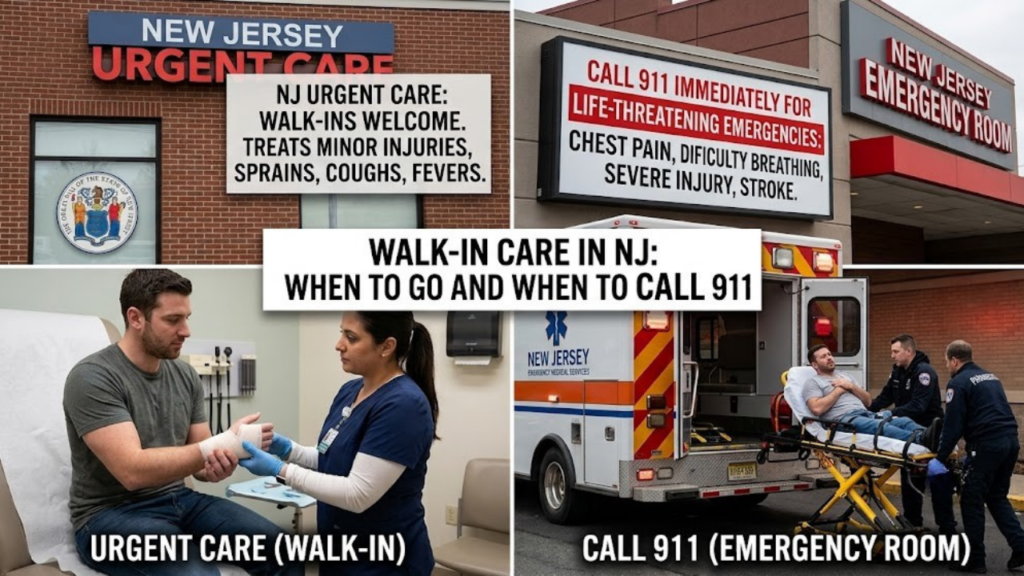
Some signs indicate emergencies that need the emergency room rather than urgent care:
- Visible bone through skin (open fracture)
- Numbness or tingling below the injury
- Cold, pale, or blue-tinted fingers or toes
- Severe deformity of the limb
- Loss of pulse below the injury site
The Ottawa Rules: When Do You Need an X-Ray?
Not every injury requires imaging. The Ottawa Ankle and Knee Rules are evidence-based guidelines that help clinicians determine when X-rays are necessary—and when they can be safely skipped.
Ottawa Ankle Rules
An ankle X-ray is indicated if ANY of the following are present:
For the ankle (malleolar zone):
- Bone tenderness along the back edge or tip of the lateral malleolus (outer ankle bone) within the distal 6 cm
- Bone tenderness along the back edge or tip of the medial malleolus (inner ankle bone) within the distal 6 cm
- Inability to bear weight (take four steps) both immediately after injury AND in the clinic
For the foot (midfoot zone):
- Bone tenderness at the base of the fifth metatarsal (outer midfoot)
- Bone tenderness at the navicular bone (inner midfoot)
- Inability to bear weight both immediately and in the clinic
If none of these criteria are met, the probability of a significant fracture is less than 1%. The Ottawa Rules have nearly 100% sensitivity—meaning they rarely miss fractures that need treatment.
Ottawa Knee Rules
A knee X-ray is indicated if ANY of the following are present:
- Age 55 or older
- Isolated tenderness of the patella (kneecap) with no other bone tenderness
- Tenderness at the head of the fibula
- Inability to flex the knee to 90 degrees
- Inability to bear weight (four steps) both immediately and in the clinic
Pittsburgh Knee Decision Rule
An alternative to Ottawa, the Pittsburgh Rule applies to patients ages 5-50 and mandates imaging only if:
- The injury resulted from blunt trauma or a fall, AND
- The patient is under 12, over 50, or unable to take four weight-bearing steps
For patients who don’t meet any criteria, clinical monitoring without X-ray is appropriate.
Grading System: How Severe Is Your Injury?
Both sprains and strains are classified on a three-tier severity scale that guides treatment decisions and recovery expectations.
Grade I (Mild)
Tissue damage: Microscopic stretching or tearing of fibers; no macroscopic disruption
Symptoms:
- Minimal pain
- Localized tenderness
- Mild swelling
- No joint instability or significant weakness
Recovery: 1-3 weeks with conservative treatment (RICE protocol)
Grade II (Moderate)
Tissue damage: Partial tearing of ligament or musculotendinous unit
Symptoms:
- Moderate pain
- Significant swelling and bruising
- Mild to moderate joint laxity or weakness
- Difficulty bearing weight
Recovery: 3-8 weeks; may require splinting or bracing
Grade III (Severe)
Tissue damage: Complete rupture or tear
Symptoms:
- Severe initial pain (may decrease after rupture)
- Massive swelling and bruising
- Gross joint instability or total loss of muscle function
- Inability to bear weight
Recovery: 3-6 months; often requires orthopedic consultation and potentially surgery
| Grade | Tissue Damage | Instability | Recovery Time |
| I | Microscopic stretching | None | 1-3 weeks |
| II | Partial tear | Mild to moderate | 3-8 weeks |
| III | Complete rupture | Severe | 3-6 months |
Types of Fractures: What the X-Ray Might Show
Fractures are classified by the pattern of the break and whether the skin remains intact. Understanding fracture types helps explain why some require casting while others need surgery.
Closed vs. Open Fractures
Closed (simple): The bone is broken, but skin remains intact. Lower infection risk; often manageable with casting or splinting.
Open (compound): Bone pierces through skin, creating an external wound. Surgical emergency due to high infection risk.
Fracture Patterns
Transverse: Break runs perpendicular to the bone’s long axis. Usually from direct impact; may be stable if aligned properly.
Oblique: Diagonal break across the bone. Often unstable; prone to displacement without fixation.
Spiral: Twisting pattern along the bone shaft. Indicates significant rotational force; common in sports injuries and falls.
Comminuted: Bone shattered into three or more fragments. High-energy trauma; typically requires surgical fixation.
Avulsion: Small bone fragment pulled away by a tendon or ligament. Common in ankle and knee; reflects severe tension on soft tissue attachment.
Stress fracture: Hairline cracks from repetitive loading. Often invisible on initial X-rays; common in runners and athletes.
Greenstick: Bone bends and cracks on one side only. Seen in children whose bones are more flexible.
Initial Treatment: The RICE Protocol
Regardless of whether you’re dealing with a sprain, strain, or stable fracture, initial management focuses on controlling inflammation and preventing further damage.
Rest
Stop the activity that caused the injury. Continued use risks additional fiber tearing or bone displacement. Use crutches or a sling if needed to keep weight off the injured area.
Ice
Apply cold packs for 15-20 minutes every 2-3 hours during the first 48-72 hours. Ice causes vasoconstriction, reducing blood flow to the area and limiting swelling. Don’t apply ice directly to skin—use a towel barrier.
Compression
Elastic bandages or compression wraps limit edema accumulation. Wrap snugly but not so tight that you cut off circulation. If you notice numbness, tingling, or increased pain, loosen the wrap.
Elevation
Prop the injured limb above heart level when possible. Gravity helps drain fluid from the injured area, reducing hydrostatic pressure and swelling.
When RICE isn’t enough:
- Pain uncontrolled with over-the-counter medications
- Swelling that continues increasing after 48 hours
- Any signs suggesting fracture (see red flags above)
- Inability to bear weight after 24-48 hours of rest
If symptoms aren’t improving or you’re uncertain about the severity, it’s time to get evaluated. Urgent care facilities like A+ Urgent Care can provide same-day X-rays and professional assessment without emergency room wait times.
What Happens If You Don’t Get Proper Treatment?
Misdiagnosis or delayed treatment of musculoskeletal injuries can lead to long-term complications.
Chronic Joint Instability
When Grade II or III sprains don’t heal properly, ligaments may remain stretched or lax. The joint feels unreliable during activity—it “gives way” unexpectedly. Chronic instability leads to repeated injuries and accelerates joint degeneration.
Post-Traumatic Arthritis
Joint injuries—especially intra-articular fractures where the break extends into the joint surface—can trigger degenerative arthritis even in young patients. Microscopic misalignment of the joint surface accelerates cartilage wear. Symptoms include chronic pain, stiffness, and grinding sensations.
Non-Union and Malunion
Fractures that aren’t properly immobilized may fail to heal (non-union) or heal in a deformed position (malunion). Both require additional intervention, often surgical, to correct.
Avascular Necrosis
Certain bones, particularly the scaphoid in the wrist, have limited blood supply. A missed scaphoid fracture can lead to bone death (avascular necrosis) because the blood supply gets disrupted. The bone tissue dies, and the entire structure eventually collapses.
Urgent Care vs. Emergency Room: Where Should You Go?
Knowing the right facility saves time and money while ensuring appropriate care.
Go to the Emergency Room if:
- Bone is visible through an open wound
- The limb is severely deformed or bent at an abnormal angle
- Skin below the injury is numb, cold, pale, or blue
- You cannot move fingers or toes on the affected limb
- Bleeding won’t stop with direct pressure
Urgent Care Is Appropriate for:
- Moderate pain and swelling without deformity
- Ability to bear some weight (even if painful)
- No signs of vascular or nerve compromise
- Need for X-ray to rule out fracture
- Splinting, bracing, or crutch fitting
Urgent care facilities with on-site X-ray capabilities can diagnose most sprains, strains, and simple fractures, provide initial treatment, and arrange orthopedic follow-up when needed. You’ll typically be seen faster than in an ER and at lower cost.
For patients in the Bloomfield area, understanding when symptoms warrant evaluation versus home treatment can help you make informed decisions about seeking care.
Frequently Asked Questions
How can I tell if my ankle is sprained or broken?
The most reliable indicators are point tenderness directly over bone (especially the back edge of the ankle bones or base of the fifth metatarsal) and inability to bear weight for four steps. A “crack” sound at the time of injury and visible deformity also suggest fracture. The Ottawa Ankle Rules provide specific criteria, but when in doubt, an X-ray gives definitive answers within minutes.
Can you walk on a fractured foot?
Some people can walk on certain fractures, particularly stress fractures or small chip fractures. The ability to bear weight doesn’t rule out a break—it just makes a severe, displaced fracture less likely. If you’re limping significantly or pain worsens with weight-bearing over 24-48 hours, get evaluated.
How long does a sprain take to heal compared to a fracture?
Grade I sprains typically heal in 1-3 weeks. Grade II sprains take 3-8 weeks. Grade III sprains may require 3-6 months, especially if surgery is needed. Simple fractures generally heal in 6-8 weeks with proper immobilization, though complete bone remodeling continues for months. Soft tissue injuries often take longer to fully recover because ligaments and tendons have limited blood supply compared to bone.
Do I need an X-ray for a sprained wrist?
If you fell on an outstretched hand, X-ray is often warranted because scaphoid fractures are easy to miss and have serious consequences if untreated. Tenderness in the anatomical snuffbox (the depression at the base of the thumb when you extend it) is particularly concerning for scaphoid fracture. Wrist sprains do occur, but ruling out fracture is important given the stakes.
What’s the difference between a hairline fracture and a stress fracture?
The terms are often used interchangeably. Both refer to small cracks in bone caused by repetitive stress rather than acute trauma. Stress fractures are common in runners, dancers, and military recruits. They may not show up on initial X-rays and sometimes require MRI or bone scan for diagnosis. Pain that worsens with activity and improves with rest is the classic presentation.
When should I see an orthopedic specialist?
Referral to orthopedics is appropriate for: fractures requiring surgery (displaced, intra-articular, or open fractures); Grade III ligament tears; injuries not improving with standard treatment; and any injury involving growth plates in children. Your urgent care provider can make this referral and provide interim treatment while you wait for the specialist appointment.
Get Same-Day X-Rays at A+ Urgent Care
Dr. Ajay Jetley, Medical Director of A+ Urgent Care, brings over 15 years of emergency medicine experience to the evaluation and treatment of sprains, strains, and fractures at both Bloomfield and Cresskill locations.
With on-site digital X-ray capabilities, the team provides rapid diagnosis and treatment for musculoskeletal injuries—including splinting, bracing, and orthopedic referrals when needed.
The brand-new Bloomfield location has already earned a 4.8-star rating on Google, reflecting the clinic’s commitment to accessible, high-quality urgent care for the Northern New Jersey community.
Walk in today or call Bloomfield at (201) 983-4062 or Cresskill at (551) 316-6587.
Meet the Author

Dr. Ajay V. Jetley, MD, is a Emergency Medicine certified physician with over 15 years of clinical experience. As the Medical Director for A+ Urgent Care in Bloomfield and Cresskill, NJ, he is dedicated to providing high-quality, accessible outpatient care for acute illnesses, minor injuries, and wellness services. Dr. Jetley combines his extensive medical expertise and affiliations with premier institutions like Englewood Hospital with a thorough, patient-centered approach to serving the Northern New Jersey community.