A DOT physical stands between commercial drivers and a valid medical card — and the rules changed in 2026. Learn exactly what the exam tests, what to bring, how to prepare, the new electronic reporting …


Key Takeaways
- A DOT physical is the federal medical exam commercial drivers need to stay certified to drive. It must be performed by an FMCSA National Registry-certified medical examiner and checks vision, hearing, blood pressure, and overall fitness to operate a commercial vehicle safely.
- The exam itself didn’t change much in 2026, but how results are reported did. Under new FMCSA rules, examiners now transmit results electronically to your state record. New Jersey is one of a handful of states where paper medical cards remain valid during the transition — through October 11, 2026.
- Most healthy drivers pass and get a medical card valid for up to 24 months. Knowing what’s tested, what to bring, and how to prepare — especially around blood pressure — helps you walk in ready and walk out certified the same day.
Table of Contents
- What Is a DOT Physical?
- Who Needs a DOT Physical?
- What’s Tested During the Exam
- The Blood Pressure Standard (and Why It Matters Most)
- Vision and Hearing Requirements
- What to Bring to Your DOT Physical
- How to Prepare and Pass
- What Can Disqualify You (and the Pathways Around It)
- How Long Your Medical Card Lasts
- The 2026 Reporting Changes and What They Mean in NJ
- DOT Physical vs. Drug Test: What’s the Difference?
- Frequently Asked Questions
- Get a Same-Day DOT Physical in Bloomfield and Cresskill

For commercial drivers, the DOT physical is one of those recurring requirements that’s easy to put off until it’s suddenly urgent. Your medical card has an expiration date, and once it passes, you’re not legally cleared to drive — which means a missed exam can directly threaten your livelihood. The good news is that for most healthy drivers, the DOT physical is quick, straightforward, and can be done same-day at a walk-in clinic.
Knowing what to expect makes the whole thing easier. The exam follows federal standards set by the FMCSA (Federal Motor Carrier Safety Administration), so it’s the same core process whether you’re a first-time CDL applicant or renewing for the tenth time. There’s a clear list of what gets checked, what you should bring, and how to put yourself in the best position to pass — particularly when it comes to blood pressure, the single most common reason drivers run into trouble.
This guide covers everything a New Jersey commercial driver needs: what the exam tests, how to prepare, what can disqualify you and the pathways around those issues, how long your card lasts, and the 2026 reporting changes that affect how your certification is recorded. If you need a DOT physical NJ drivers can count on, knowing the process ahead of time means no surprises.
What Is a DOT Physical?
A DOT physical — officially the FMCSA Commercial Driver Medical Examination — is a standardized federal health exam that confirms a commercial driver is physically and mentally fit to operate a commercial motor vehicle (CMV) safely.
The Purpose
Commercial driving is demanding and carries real safety responsibility. The DOT physical exists to make sure drivers can handle those demands — that their vision, hearing, cardiovascular health, and overall condition won’t compromise their ability to drive safely or put others on the road at risk. Passing the exam earns you a Medical Examiner’s Certificate, commonly called a “medical card,” which you need to stay legally certified.
Who Performs It
Not just any doctor can do a DOT physical. The exam must be conducted by a medical examiner listed on the FMCSA National Registry of Certified Medical Examiners. These providers — who can be physicians, physician assistants, advanced practice nurses, or other qualified clinicians — have completed specific federal training and testing to perform these exams. When choosing where to go, confirming the provider is National Registry-certified is essential; an exam by an uncertified provider doesn’t count.
The Forms Involved
Two federal forms are central to the process:
- Form MCSA-5875 — the Medical Examination Report, where the examiner documents the exam
- Form MCSA-5876 — the Medical Examiner’s Certificate (the “medical card”) issued when you pass
A+ Urgent Care performs DOT physicals as part of its occupational health services, with certified examiners and same-day availability.
Who Needs a DOT Physical?
Not every driver needs one, but the requirement is broader than many people assume.
Who’s Required to Have One
Generally, you need a valid DOT medical certificate if you operate a commercial motor vehicle in interstate commerce that meets certain criteria, including:
- Vehicles with a gross vehicle weight rating (GVWR) over 10,001 pounds
- Vehicles designed to transport a certain number of passengers
- Vehicles transporting hazardous materials requiring placarding
- Most drivers who hold or are applying for a CDL (commercial driver’s license)
A Common Misconception
Many drivers assume the requirement applies only to CDL holders, but that’s not quite right. Some non-CDL commercial drivers — those operating qualifying vehicles in interstate commerce — also need a DOT medical card. If you drive a commercial vehicle for work and aren’t sure whether you need certification, it’s worth confirming, since driving without a required card carries real consequences.
Why Timing Matters
Your medical card has an expiration date, and once it lapses, you’re no longer medically certified to drive commercially. For CDL holders, an expired card can lead to your license being downgraded by the state. Getting your renewal exam done before your current card expires — ideally a few weeks ahead — prevents any gap in your certification and keeps you on the road without interruption.
What’s Tested During the Exam
The DOT physical follows a consistent federal format. Knowing each component helps you arrive prepared.
Medical History Review
The exam starts with a health history questionnaire you complete, covering:
- Current medications and dosages
- Existing medical conditions
- Past surgeries and hospitalizations
- Symptoms like chest pain, dizziness, or shortness of breath
- Sleep issues, including sleep apnea symptoms
- Use of alcohol, tobacco, or drugs
Honesty here matters — the examiner uses this to guide the exam, and undisclosed conditions discovered later can create bigger problems.
Vital Signs and Measurements
The examiner records:
- Blood pressure and pulse
- Height and weight
- Sometimes a calculation related to sleep apnea risk
The Physical Examination
The hands-on exam reviews the body’s major systems:
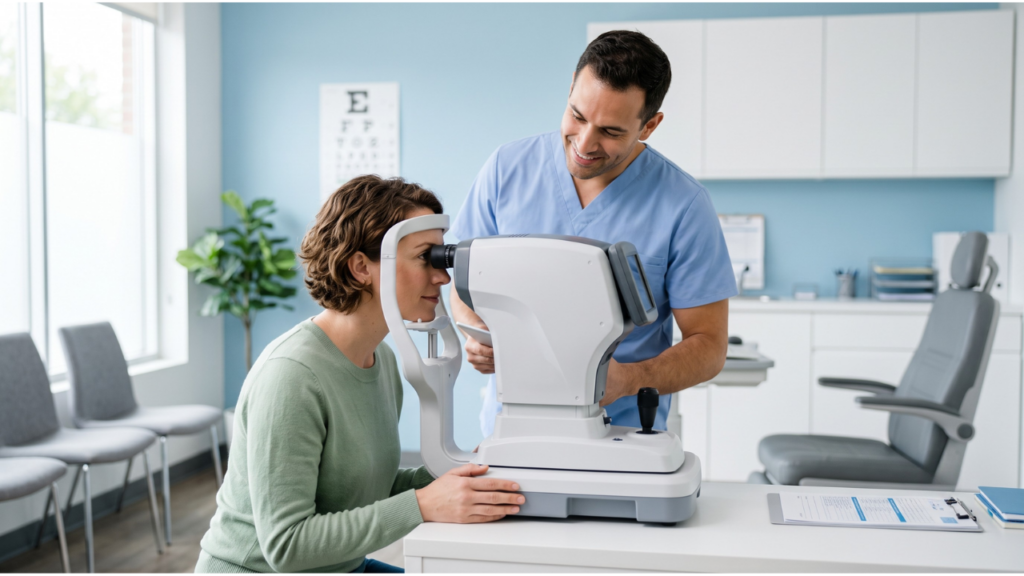
- Eyes — vision testing and examination
- Ears — hearing test and examination
- Heart and cardiovascular system — listening for irregularities
- Lungs and breathing
- Abdomen — checking for hernias, enlarged organs, or other issues
- Neurological function — reflexes, coordination
- Spine and musculoskeletal system
- General appearance and overall health
Urinalysis
A urine sample is part of the standard DOT physical — but here’s an important point of confusion: this is not a drug test. The urinalysis checks for protein, sugar, and blood, which can flag underlying conditions like diabetes or kidney issues. (Employer drug testing is a separate process, covered later in this guide.)
The Blood Pressure Standard (and Why It Matters Most)
If there’s one thing that catches drivers off guard at a DOT physical, it’s blood pressure. It’s the single most common reason drivers run into certification trouble, so it’s worth understanding clearly.
The Standards and What They Mean
Blood pressure directly affects how long a certificate you can receive:
| Blood Pressure Reading | Typical Outcome |
| Under 140/90 | Eligible for full 24-month certificate |
| 140-159 / 90-99 (Stage 1) | Often a one-year certificate |
| 160-179 / 100-109 (Stage 2) | Often a one-time three-month certificate, then must improve |
| 180/110 or higher (Stage 3) | Typically disqualifying until brought under control |
The exact handling can vary based on the examiner’s clinical judgment and your history, but the pattern is clear: lower, controlled blood pressure earns a longer certificate.
Why Drivers Get Surprised
Two things trip drivers up. First, “white coat syndrome” — anxiety about the exam itself can spike your reading. Second, many people don’t know their blood pressure is high until the exam reveals it. A reading that’s fine at home can come in higher under the stress of an exam day.
How to Give Yourself the Best Shot
Some practical steps before your exam:
- Manage known high blood pressure — take prescribed medications consistently
- Limit caffeine the morning of your exam
- Avoid heavy salt the day before
- Skip nicotine right before the exam
- Arrive early and relaxed — rushing in stressed raises your reading
- Take a few minutes to calm down in the waiting room before being called
If your reading is borderline, the examiner may re-check it after you’ve rested. Coming in calm and prepared genuinely helps.
Vision and Hearing Requirements
Two sensory standards are central to the DOT physical, and both have clear thresholds.
Vision Standards
To pass the vision portion, you generally need:
- At least 20/40 acuity in each eye, and both eyes together — correction with glasses or contacts is allowed
- A field of vision of at least 70 degrees in each eye
- The ability to distinguish traffic signal colors — red, green, and amber
If you wear glasses or contacts, bring them to the exam, since you’ll be tested with your correction in place. Drivers who don’t meet the standard in one eye may still qualify through the FMCSA Vision Exemption program, though that process takes additional time and planning.
Hearing Standards
The hearing requirement is more forgiving than many expect. You generally need to be able to perceive a “forced whisper” at a distance of five feet or less, in at least one ear, with or without a hearing aid. If you use a hearing aid, bring it. Drivers who don’t meet the standard may have an exemption pathway available as well.
Plan Ahead for Exemptions
The key takeaway on both vision and hearing: if you know you may not meet a standard, look into the exemption process well before your card expires.
These federal exemptions exist precisely so that drivers with correctable or longstanding conditions can keep driving, but they’re not same-day — they require advance application.
What to Bring to Your DOT Physical
Arriving prepared keeps the visit quick and prevents a wasted trip. Here’s your checklist.
The DOT Physical Checklist
- Photo ID (driver’s license or CDL)
- A list of all current medications, with dosages and prescribing doctors
- Glasses or contact lenses if you wear them
- Hearing aids if you use them
- Any required medical documentation for existing conditions (see below)
- Your CDL or CDL application information
If You Have a Managed Medical Condition
Drivers with certain conditions should bring supporting documentation so the examiner can certify you without delay:
- High blood pressure — a note from your doctor and your medication list
- Diabetes — recent blood sugar logs, A1C results, and a note from your treating physician
- Heart conditions — clearance letters from your cardiologist, records of any procedures
- Sleep apnea — your CPAP compliance data and treatment records
- Vision or hearing exemptions — your exemption paperwork if applicable
Bringing this documentation is often the difference between getting certified on the spot and having to come back after gathering records.
For First-Time Drivers
If this is your first DOT physical, you don’t need much beyond ID, your medication list, and any vision/hearing aids — most first-time, healthy drivers pass without needing additional documentation.
How to Prepare and Pass
Most healthy drivers pass the DOT physical without issue, and a little preparation improves your odds further.
In the Days Before
- Take prescribed medications as directed, especially for blood pressure
- Stay hydrated, which helps with the urinalysis
- Eat well and limit salt in the day or two prior
- Get a good night’s sleep before the exam
- Gather any documentation for managed conditions
The Morning Of
- Limit caffeine and skip nicotine right before
- Eat a normal, light meal — don’t skip food, which can affect how you feel
- Bring everything on the checklist
- Arrive early so you’re not rushed and stressed
- Take a few minutes to relax before your blood pressure is taken
Be Honest and Thorough
It can be tempting to downplay a condition to avoid complications, but accuracy serves you better. Examiners are experienced, undisclosed issues often surface anyway, and being upfront lets the examiner help you find the right pathway to certification rather than creating problems later. Most conditions don’t disqualify you outright — they’re managed through documentation or shorter certification periods.
What Can Disqualify You (and the Pathways Around It)
Relatively few conditions cause outright, permanent disqualification. Most concerns have a pathway to certification with proper management or documentation.
Conditions That Need Extra Steps (Not Automatic Disqualifiers)
- High blood pressure — manageable with medication and may mean a shorter certificate until controlled
- Diabetes — diet- or pill-controlled diabetes usually certifies normally; insulin-treated diabetes requires a federal exemption, which is available
- Heart conditions — a history of heart attack, bypass, or pacemaker often requires a cardiologist’s clearance, after which certification is frequently possible
- Sleep apnea — drivers using CPAP with good compliance records typically certify
- Vision or hearing below standard — federal exemption programs provide a path
More Serious Concerns
Some situations create bigger hurdles and require resolution before certification:
- Uncontrolled, very high blood pressure (until brought down)
- Certain unmanaged cardiac conditions
- Current substance abuse
- Conditions causing loss of consciousness, like uncontrolled seizures or unmanaged severe sleep apnea
- Use of certain medications incompatible with safe driving
The Encouraging Reality
The takeaway for most drivers is reassuring: the large majority of conditions don’t end your driving career. They may require a doctor’s note, a specialist’s clearance, a federal exemption, or a shorter certification period — but pathways exist. Coming prepared with documentation is the key to navigating any of these smoothly. When a condition needs further evaluation, addressing it promptly and returning with the right paperwork usually gets you certified.
How Long Your Medical Card Lasts
A DOT medical card isn’t a fixed two-year cycle for everyone — the validity period depends on your health.
The Standard and the Variations
- Up to 24 months — the maximum, for healthy drivers who meet all standards cleanly
- 12 months or less — common for drivers managing conditions like hypertension, insulin-treated diabetes, or those using certain exemptions
- 3 months — sometimes issued as a one-time certificate for borderline blood pressure, giving you time to bring it under control
- Shorter or conditional — based on the examiner’s assessment of conditions needing monitoring
Why Yours Might Be Shorter
A shorter card isn’t a punishment — it’s a way to keep you driving while ensuring a condition stays monitored. A driver with well-managed high blood pressure might get a 12-month card, for example, meaning a yearly exam keeps tabs on it. Knowing your card’s specific expiration and planning your next exam accordingly prevents any lapse.
Track Your Expiration
Whatever length you receive, mark the expiration well in advance and schedule your renewal a few weeks early. For CDL holders, letting a card expire can trigger a license downgrade by the state, so proactive tracking matters. Walk-in availability makes renewals easy to fit in before the deadline.
The 2026 Reporting Changes and What They Mean in NJ
This is the part that’s genuinely new, and it’s caused real confusion among drivers in 2026. The exam itself didn’t change — but how your results get reported did.
What Changed
Under FMCSA’s National Registry rule, certified medical examiners now transmit DOT physical results electronically to the FMCSA, which then sends them to your state licensing agency.
For CDL holders, your medical certification status gets recorded directly on your commercial driving record (the CDLIS MVR). The goal is a single, verifiable electronic source of truth, gradually replacing the paper medical card system that’s been around for decades.
What This Means for Drivers
For CDL holders in fully transitioned states, the electronic record is becoming the official proof of certification, and the paper card is increasingly a backup rather than the primary document. Examiners are required to report results promptly — generally by the next day after your exam.
The New Jersey Specifics
Here’s where it matters locally: New Jersey is one of a small group of states still completing the transition. Under an FMCSA exemption, drivers licensed in NJ may continue using paper medical cards as valid proof through October 11, 2026.
This gives NJ drivers a transition window, but it also means you should keep your paper card and make sure your certification is properly recorded.
The Practical Advice
Because these rules are mid-transition and state-specific, the smart move is to confirm your current certification status and requirements directly with the FMCSA and the NJ Motor Vehicle Commission.
Keep any paper certificate your examiner gives you, verify your status is recorded correctly, and don’t assume — the gap between “I passed my physical” and “my record shows I’m certified” is exactly what the new system is working to close. An experienced examiner will issue the appropriate documentation and explain what you need for your situation.
DOT Physical vs. Drug Test: What’s the Difference?
This is one of the most common points of confusion, so it’s worth clearing up directly.
They’re Separate Things
A DOT physical and a DOT drug test are two different requirements:
- The DOT physical is a medical exam assessing your fitness to drive. Its urinalysis checks for health markers like sugar and protein — not drugs.
- The DOT drug and alcohol test is a separate screening, required for safety-sensitive positions, that specifically tests for controlled substances.
Why People Confuse Them
Both involve providing a urine sample, and employers often arrange both around the same time when onboarding a driver — so drivers reasonably assume the physical includes a drug test. It doesn’t. They’re governed by different rules and serve different purposes.
Getting Both Done Together
The upside is that many clinics, including A+ Urgent Care, offer both DOT physicals and employer drug and alcohol testing, so drivers and employers can handle both in one visit when needed. If your employer requires both, mention it when you arrive so they can be coordinated efficiently.
Frequently Asked Questions
What is tested in a DOT physical?
A DOT physical tests vision (20/40 in each eye, with correction allowed), hearing, blood pressure, and pulse, plus a urinalysis checking for sugar, protein, and blood (not drugs). The examiner also reviews your medical history and examines your heart, lungs, abdomen, neurological function, and musculoskeletal system to confirm you’re fit to drive a commercial vehicle safely.
What should I bring to a DOT physical?
Bring a photo ID, a complete list of your current medications with dosages, your glasses or contacts if you wear them, hearing aids if you use them, and documentation for any managed conditions — like a doctor’s note for blood pressure, blood sugar logs for diabetes, a cardiologist’s clearance for heart conditions, or CPAP compliance data for sleep apnea. Bringing records prevents delays.
What blood pressure do you need to pass a DOT physical?
A reading under 140/90 qualifies you for a full 24-month certificate. Stage 1 (140-159/90-99) often means a one-year card. Stage 2 (160-179/100-109) typically results in a one-time three-month card to give you time to improve. Readings of 180/110 or higher are generally disqualifying until brought under control. Managing known high blood pressure before your exam helps.
How long is a DOT medical card good for?
The maximum is 24 months for healthy drivers meeting all standards. Drivers managing conditions like hypertension or insulin-treated diabetes often receive a 12-month or shorter card so the condition stays monitored. Borderline blood pressure may get a one-time three-month card. Your exact validity depends on your health, so check your card’s expiration date.
What can disqualify you from a DOT physical?
Few conditions cause permanent disqualification. Uncontrolled very high blood pressure, certain unmanaged heart conditions, current substance abuse, and conditions causing loss of consciousness can disqualify you until resolved. Most concerns — managed diabetes, controlled hypertension, sleep apnea on CPAP, vision or hearing below standard — have pathways to certification through documentation, specialist clearance, or federal exemptions.
Is a DOT physical a drug test?
No. The DOT physical’s urinalysis checks for health markers like sugar and protein, not drugs. The DOT drug and alcohol test is a separate screening for controlled substances, required for safety-sensitive driving positions. Employers often arrange both at once, which is why they’re commonly confused, but they’re distinct requirements.
How much does a DOT physical cost?
Costs vary by location, but DOT physicals are generally affordable and often paid out of pocket or covered by an employer rather than billed to health insurance. A+ Urgent Care offers transparent pricing — call ahead for the current cost. Some employers cover or reimburse the exam, so check with yours.
Do I need an appointment for a DOT physical?
At A+ Urgent Care, no — DOT physicals are available on a walk-in basis at both locations, with same-day completion by a certified medical examiner. Calling ahead to confirm examiner availability and current wait times is still a good idea, especially if you also need drug testing done at the same visit.
Who can perform a DOT physical?
A DOT physical must be performed by a medical examiner listed on the FMCSA National Registry of Certified Medical Examiners — a provider who has completed specific federal training and certification. An exam by a provider not on the National Registry doesn’t count toward your medical card. A+ Urgent Care’s examiners are National Registry-certified.
What happens if my medical card expires?
If your card expires, you’re no longer medically certified to drive commercially. For CDL holders, the state can downgrade your license, barring you from operating a commercial vehicle until you’re recertified. Reinstatement requires a new DOT physical and updating your record with the state, which takes time — so renew before your card expires to avoid any gap.
What are the 2026 DOT physical changes in NJ?
The medical standards didn’t change, but reporting did — examiners now transmit results electronically to FMCSA and your state record. New Jersey is still completing this transition, and under an FMCSA exemption, NJ drivers may continue using paper medical cards through October 11, 2026. Keep your paper card, confirm your certification is recorded correctly, and check with FMCSA or NJ MVC for your current status.
Where can I get a same-day DOT physical in Northern NJ?
A+ Urgent Care provides walk-in DOT physicals by certified medical examiners at both Bloomfield (Essex County) and Cresskill (Bergen County) locations, seven days a week, often with same-day completion. Employer drug and alcohol testing is available at the same visit if needed. Call ahead to confirm examiner availability.
Get a Same-Day DOT Physical in Bloomfield and Cresskill
For commercial drivers, staying medically certified is part of the job — and it doesn’t have to be a hassle. The DOT physical follows a clear federal process, most healthy drivers pass without trouble, and a little preparation (especially around blood pressure and bringing the right documentation) sets you up to walk out certified the same day. The 2026 reporting changes add a wrinkle worth understanding, but for NJ drivers, the paper-card window and a certified examiner keep things straightforward.
If your medical card is coming up for renewal, or you’re a first-time driver who needs to get certified, you don’t have to wait days for an appointment. Walk in for a DOT physical with a certified examiner, get the exam done on your schedule, and keep your certification current without interrupting your work.
About A+ Urgent Care
A+ Urgent Care serves drivers, workers, and families across Essex and Bergen counties with walk-in care at two convenient Northern New Jersey locations —Bloomfield and Cresskill — open seven days a week, including evenings and weekends.
Alongside everyday illness and injury care, the team provides a full range of occupational health services: DOT and employment physicals, employer drug and alcohol testing, and workers’ comp visits. Led by Dr. Ajay Jetley, a board-certified emergency medicine physician with more than 15 years of experience, the practice gets drivers and employees the certifications and care they need quickly. No appointment necessary — walk in during operating hours.