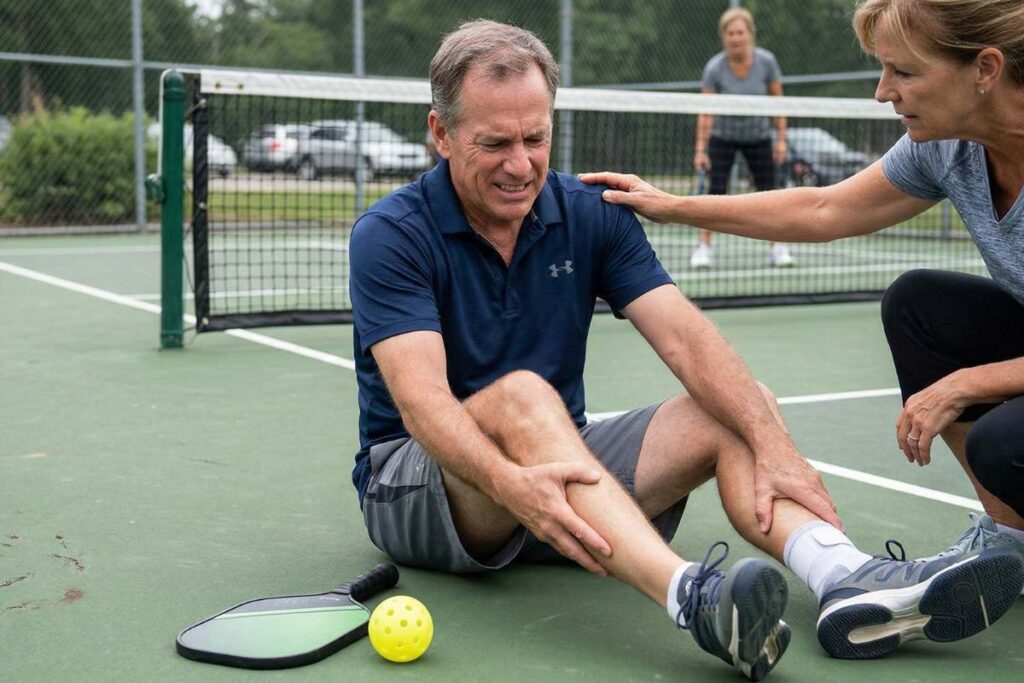
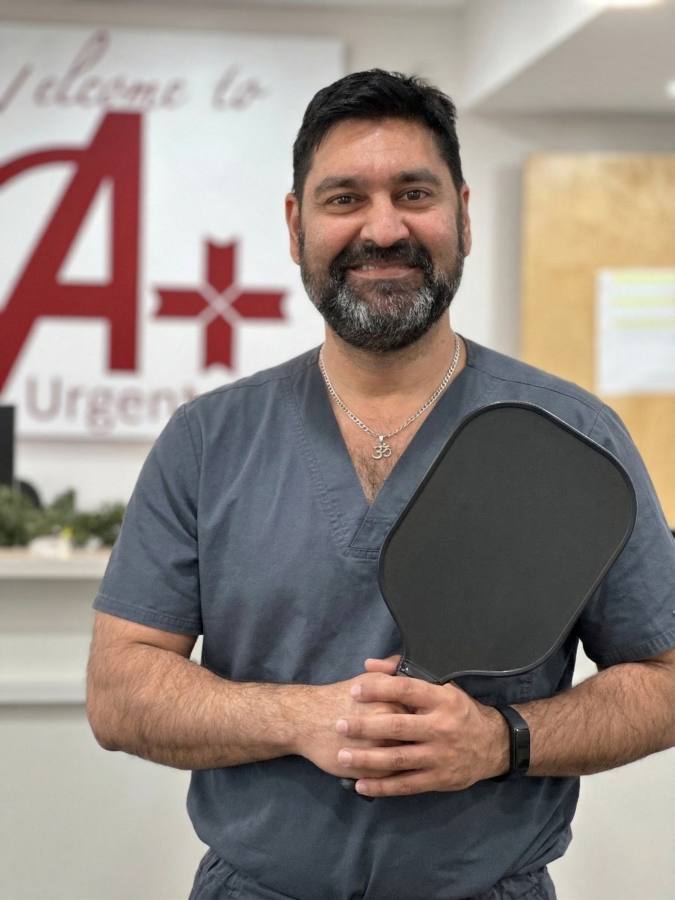
The courts are packed, and so are the clinics. Dr. Ajay Jetley, Medical Director at A+ Urgent Care and an avid player, explains the top pickleball injuries and why a walk-in clinic is your best …

Key Takeaways:
- Pickleball injuries have surged alongside the sport’s popularity, with eye trauma, calf tears, and elbow pain topping the list of conditions seen at urgent care clinics in Northern NJ.
- Dr. Ajay Jetley, Medical Director at A+ Urgent Care and an avid player himself, has treated many of these injuries courtside and knows firsthand how quickly a friendly game can turn into a medical situation.
- Most pickleball injuries don’t require an ER visit—walk-in clinics with on-site X-rays can diagnose, stabilize, and treat the majority of acute sports injuries same-day.
Table of Contents
- Why Pickleball Injuries Are Spiking Right Now
- Eye Injuries: When a Paddle or Ball Meets Your Face
- Pickleball Elbow: The Sport’s Signature Overuse Injury
- Achilles and Torn Calf Injuries: The Dreaded Pop
- Shoulder, Knee, and Ankle Problems on the Court
- Lower Back Strain from Hundreds of Dinks
- When to Visit Urgent Care vs. the Emergency Room
- Frequently Asked Questions
Why Pickleball Injuries Are Spiking Right Now
So what’s going on with pickleball? The courts are packed, the waiting lists for public play are long, and urgent care facilities across the country are seeing a new kind of patient—one wearing athletic shorts and nursing a swollen ankle or a blackened eye.
Three Factors Driving the Pickleball Injury Spike
The learning curve hits everyone. Pickleball looks easy to pick up, and it is—but that accessibility is part of the problem. Players of all ages jump into competitive play before their bodies have adapted to the sport’s specific demands. A 25-year-old who runs marathons might still pull a calf muscle lunging for a drop shot, because distance running doesn’t prepare you for explosive lateral movement.
Also, Pickleball attracts players over 50, many of whom haven’t done, or are not ready for the explosive lateral movement. Tendons and ligaments that worked fine for walking and light jogging suddenly face demands they aren’t prepared for.
The court size. A pickleball court is about a quarter the size of a tennis court. You’re standing just feet away from your opponent at the “kitchen” line, which means reaction times shrink dramaticaly. A ball traveling 40 mph gives you roughly half a second to respond.
The movements. Sudden starts, abrupt stops, quick pivots, deep lunges—none of these motions are gentle on joints or tendons that haven’t been conditioned for them. And unlike sports with longer rest periods between points, pickleball rallies can be relentless. You might execute dozens of these explosive movements in a single game without realizing how much strain you’re accumulating.
What Dr. Jetley Has Seen Firsthand
Dr. Ajay Jetley, the Medical Director at A+ Urgent Care, has witnessed this pattern play out repeatedly. As an avid pickleball player himself, he’s had the unfortunate opportunity to treat injuries right there on the court as they happen.
He’s watched players clutch their heels after hearing a sickening pop. He’s seen black eyes form in real time after a paddle deflection sends the ball into someone’s face. One patient he treated had torn both calves within a six-month span—same sport, same movements, two seperate ruptures.
Is this a reason to stop playing? Absolutely not. But it’s a reason to understand what can go wrong, how to prevent it, and where to go when something does.
Eye Injuries: When a Paddle or Ball Meets Your Face
How often do people get hit in the eye playing pickleball? More often than you’d think. And why does it happen so frequently in this sport compared to others?
Why the Face Is Such a Common Target
The geometry of the game creates the problem:
- At the non-volley zone (the kitchen), players stand just seven feet from the net
- This puts them roughly fourteen feet from their opponents
- A ball traveling at 40 mph covers that distance in about a quarter of a second
- Paddle deflections are unpredictable and frequently redirect balls toward faces
Standard sunglasses won’t help here. In fact, they can make things worse—regular lenses can shatter on impact, potentially causing more damage than the ball itself.
Types of Eye Injuries Seen on Court
| Condition | What It Is | Severity |
| Corneal Abrasion | Scratched eye surface | Mild to moderate |
| Hyphema | Blood pooling in front of eye | Serious |
| Retinal Tear/Detachment | Damage to back of eye | Severe—vision threatening |
| Berlin’s Edema | Outer retina damage | Moderate to serious |
What to Do If It Happens
- Stop playing immediately. Don’t try to finish the game.
- Don’t rub the eye. This can worsen a scratch or push debris deeper.
- For minor scratches: Visit urgent care. Clinics like A+ Urgent Care can perform a fluorescent eye stain test and prescribe antibiotic drops.
- For serious symptoms: If you experience sudden vision loss, flashing lights, or visible blood in the eye, an urgent care provider will stabilize you and expedite you to an ER or ophthalmologist.
How to Prevent Eye Injuries
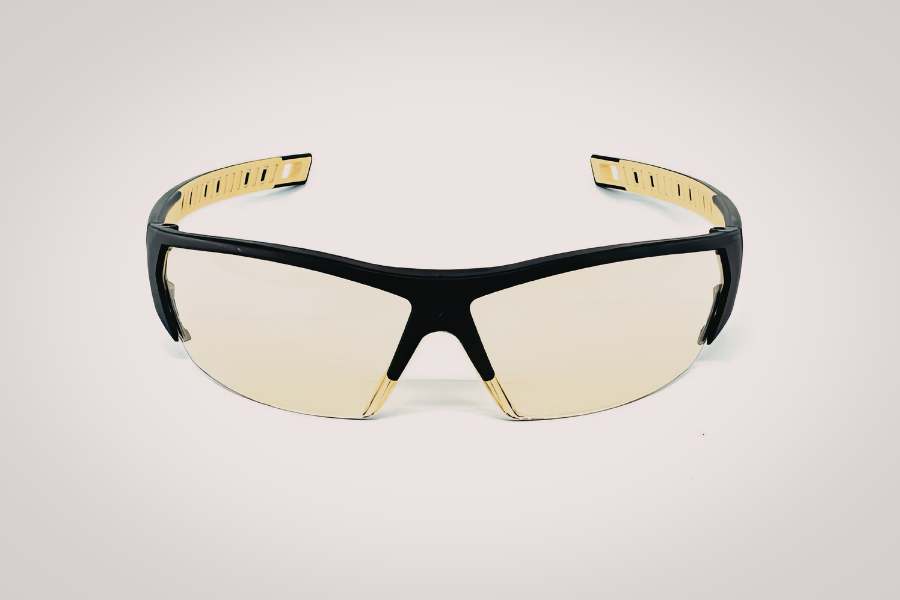
Wear Clear Safety Glasses
Any clear protective safety glasses will protect your eyes from impact! Use them, especially if you cross over to intermediate level.
The shots at intermediate level are stronger, faster and harder to anticipate. You allso play in very close proximity to the opponents, at the kitchen line, and fast balls are impossible to avoid.
Consider wearing wrap-around polycarbonate safety goggles with a Z87+ impact rating. They’re not glamourous, no one looks cool in them, but they work.
The American Academy of Ophthalmology has been increasingly vocal about this issue as pickleball-related eye injuries have climbed.
Wear a Cap
Another pro tip: Wear a baseball cap or a hat with a brim! The visor is likely to protect your eyes from a direct hit with an overhead incoming fast ball. As simple as that.
Pickleball Elbow: The Sport’s Signature Overuse Injury
You’ve heard of tennis elbow. But have you heard of pickleball elbow? It’s the same condition—lateral epicondylitis—but it’s earned its own colloquial name because of how frequantly it shows up in pickleball players.
What Causes Pickleball Elbow?
Repetitive swinging is the culprit, especially backhand shots executed with poor form. When you flick your wrist to generate power instead of using your core and shoulders, you place tremendous stress on the tendons that attach to the outside of your elbow.
Do this hundreds of times per session, multiple times per week, and those tendons start to break down.
The Grip Size Problem
Grip size matters more than most players realize:
- A paddle grip that’s too small forces you to squeeze harder
- Squeezing strains the forearm tendons with every shot
- If your hand cramps frequently during play, your grip is probaly wrong
Early Warning Signs
The early symptoms are subtle:
- A slight ache on the outside of the elbow after playing
- Some stiffness the next morning
- Discomfort when gripping objects
Left untreated, it progresses to constant pain that flares with everyday activities like turning a doorknob or lifting a coffee cup.
Treatment Options
- Ice after playing helps reduce inflammation
- Rest (though most players hate hearing that word)
- Urgent care visit can confirm diagnosis and provide prescription-strength NSAIDs
- Counterforce brace (the strap worn just below the elbow) relieves tension while healing
Does pickleball elbow ever fully go away? It can, but it requires addressing the underlying cause—fixing your swing mechanics, resizing your grip, and building strength in the forearm muscles.
Achilles and Torn Calf Injuries: The Dreaded Pop
Few sounds in sports are as unmistakable as the pop of an Achilles tendon rupturing. Players often describe it as feeling like someone kicked them in the back of the leg—except no one was there.
The Three Types of Achilles/Calf Injuries
| Injury Type | Description | Typical Treatment |
| Achilles Tendinitis | Inflammation of the tendon | Rest, ice, anti-inflammatories, PT |
| Achilles Tendinopathy | Micro-tears within the tendon | Extended rest, bracing, PT |
| Achilles Tendon Rupture | Complete tear of the tendon | Surgical repair or casting |
Why Pickleball Is Particularly Hard on the Achilles
The explosive lateral movements—side-steps, lunges, sudden pivots—put massive shear force on the Achilles tendon. The risk increases significantly if:
- Calf muscles are tight from insufficient warm-up
- The player hasn’t done this type of movement in years
- There’s existing tendon degeneration from age or prior injury
The “Split Step” Prevention Technique
When your opponent is about to strike the ball, execute a “split step”—a small hop that plants both feet simultaneously. This prepares your body to move in any direction and avoids the erratic forward momentum that leads to over-extended slips and sudden tears.
If You Hear a Pop
- Do not bear weight on it. Seriously, don’t try to walk it off.
- Get to urgent care. They’ll conduct a rapid physical exam (like the Thompson test) to differentiate between severe tendinitis and a full rupture.
- Immobilization is critical. The clinic can supply a walking boot and crutches before you see an orthopedic surgeon.
If you’re unsure whether you need an X-ray for a potential sprain or fracture, urgent care can make that determination quickly with on-site imaging.
Shoulder, Knee, and Ankle Problems on the Court
Beyond the big three—eyes, elbows, and Achilles—several other body parts take a beating during pickleball. Here’s what to watch for.
Rotator Cuff Injuries (Shoulder)
What causes them: Serving, overhead smashes, and reaching rapidly across the body can pinch or tear the stabilizing muscles of the shoulder joint.
Warning signs:
- Pain when lifting arm overhead
- Weakness when rotating the shoulder
- Aching that worsens at night
Prevention tips:
- Warm up with dynamic arm circles and resistance band pull-aparts
- Avoid snapping your shoulder down violently on overhead smashes
- Let the paddle’s momentum carry your arm smoothly through the follow-through
Knee Sprains and Cartilage Tears
What causes them: The constant stop-and-go motion and deep squatting required for dinking at the net can grind knee cartilage or overstretch stabilizing ligaments.
Common knee injuries in pickleball:
- Meniscus tears
- MCL/LCL sprains (medial/lateral collateral ligament)
- Patellar tendinitis
Prevention tips:
- Strengthen quadriceps and hamstrings off the court
- Avoid twisting your torso while feet remain planted
- Wear proper court shoes with lateral support
Ankle Sprains
What causes them: Rolling the ankle is extremely common when players lunge for a wide shot or step on a stray ball.
The shoe problem nobody talks about: Never wear running shoes on a pickleball court. Running shoes have a high stack height and no lateral support, making ankle rolls incredibly easy. Invest in flat-soled, court-specific shoes designed for side-to-side movement.
If you roll your ankle:
- Don’t attempt to “walk it off”—this can worsen a micro-fracture
- An urgent care center is the fastest way to get an X-ray
- Proper wrapping, an air cast, and load-bearing instructions make a huge difference in recovery time
Lower Back Strain from Hundreds of Dinks
Constantly leaning forward at the kitchen line and bending down to pick up balls hundreds of times per week fatigues the lumbar muscles. Its a cumulative thing—one game won’t hurt you, but months of repetitive bending will.
Types of Lower Back Injuries
- Lumbar Muscle Strain: The most common. Overworked muscles tighten and spasm.
- Sacroiliac (SI) Joint Dysfunction: Pain where the spine meets the pelvis.
- Lumbar Radiculopathy: Nerve compression causing pain, numbness, or tingling down the leg.
Simple Prevention Strategies
Strengthen your core. A strong core supports your spine and reduces strain on the lower back muscles. Planks, dead bugs, and bird dogs are all effective exercises.
Change how you pick up balls. Two options:
- Scoop the ball with your paddle instead of bending over
- Bend deeply at the knees (squat down) rather than hinging at the waist
Stretch after playing. Hip flexors and hamstrings tighten during play and pull on the lower back. Five minutes of stretching post-game makes a noticable difference.
When Back Pain Becomes Urgent
Acute lower back spasms can be intensely painful and immobilizing. If you can barely move, an urgent care provider can:
- Administer an immediate intramuscular injection (such as Toradol)
- Prescribe short-term muscle relaxants to break the spasm cycle
- Help you regain enough mobility to begin physical therapy
When to Visit Urgent Care vs. the Emergency Room
One of the most common questions after a pickleball injury: where should I go? The ER? My primary care doctor? Urgent care?
Choose Urgent Care For:
- Rolled or sprained ankles
- Suspected minor fractures
- Eye scratches (corneal abrasions)
- Muscle strains and pulled calves
- Pickleball elbow flare-ups
- Knee swelling without obvious deformity
- Lower back spasms
- Lacerations needing stitches
Go to the ER For:
- Obvious bone deformity or compound fracture
- Sudden vision loss or blood visible in the eye
- Chest pain or difficulty breathing
- Loss of consciousness
- Suspected spinal injury
Why Urgent Care Makes Sense for Most Pickleball Injuries
A+ Urgent Care locations in Bloomfield and Cresskill offer:
- On-site digital X-rays for rapid diagnosis
- Bracing and splinting supplies for immediate stabilization
- Prescription-strength anti-inflammatories to halt acute inflammation
- Same-day treatment without ER wait times
For non-life-threatening sports injuries, bypassing the emergency room saves hours of waiting and often thousands of dollars in bills. You get seen faster, treated appropriately, and referred to a specialist if needed.
Frequently Asked Questions
What is pickleball elbow and how is it different from tennis elbow?
Pickleball elbow and tennis elbow are the same condition—lateral epicondylitis. The term “pickleball elbow” emerged because the injury has become so common among pickleball players specifically. Both involve inflammation of the tendons on the outside of the elbow caused by repetitive arm motions.
Can urgent care treat a torn Achilles tendon?
Urgent care can diagnose a torn Achilles using physical examination techniques like the Thompson test. While surgical repair must be done by an orthopedic surgeon, urgent care provides critical first steps: confirming the diagnosis, immobilizing the ankle with a walking boot, supplying crutches, and arranging the specialist referral.
Do I need an X-ray for a rolled ankle?
Not every rolled ankle requires an X-ray, but many do. Urgent care providers use clinical guidelines (like the Ottawa Ankle Rules) to determine whether imaging is necessary. If there’s significant swelling, bruising, inability to bear weight, or tenderness over specific bones, an X-ray helps rule out fractures.
What kind of goggles should I wear for pickleball?
Look for wrap-around polycarbonate safety goggles with a Z87+ impact rating. Regular sunglasses and prescription lenses can shatter on impact, potentially causing additional injury. Several sports eyewear brands now make pickleball-specific protective glasses.
How long does it take for pickleball elbow to heal?
Recovery time varies based on severity. Mild cases may improve in 2-4 weeks with rest, ice, and anti-inflammatories. More severe cases can take 3-6 months, especially if you continue playing without addressing the underlying cause (usually poor swing mechanics or incorrect grip size).
Is there an urgent care near Hillsdale NJ that treats sports injuries?
A+ Urgent Care has locations in both Cresskill and Bloomfield, NJ, serving patients throughout Bergen County and Northern NJ. Both facilities have on-site X-rays and staff experienced in treating sports injuries.
Should I go to urgent care or the ER for a pickleball injury?
For most pickleball injuries—sprains, strains, suspected minor fractures, eye scratches, and muscle tears—urgent care is the appropriate choice. Reserve the ER for severe trauma: obvious bone deformity, sudden vision loss, blood in the eye, chest pain, or suspected spinal injury.
About Dr. Ajay Jetley & A+ Urgent Care
Dr. Ajay Jetley is a board-certified Emergency Medicine physician with over 15 years of clinical experience—and also an avid pickleball player who has treated injuries on the court as they happen.
He’s seen firsthand the black eyes, the torn calves, the elbow pain that won’t quit.
As Medical Director of A+ Urgent Care, he oversees locations in both Bloomfield and Cresskill, NJ, where on-site digital X-rays allow for rapid diagnosis of fractures and sprains.
The brand-new Bloomfield location already holds a 4.8-star rating on Google—see what patients are saying.
Whether you rolled an ankle chasing a drop shot or took a ball to the face at the kitchen line, Dr. Jetley and his team provide fast, expert care so you can get back on the court.