Some redness around a cut is normal healing. Some is the start of an infection. Learn how to tell the difference, the specific signs that mean you need to be seen, the red flags that …

Key Takeaways
- The clearest signal is direction. Normal wounds steadily improve after the first day or two. Infected wounds get worse — more redness, more pain, more swelling — after day two or three.
- Some redness is normal, but it should stay confined to the wound edges. Redness that expands outward, especially over hours, is the sign that matters most.
- Red streaks radiating from a wound need same-day care, not watchful waiting. Combined with fever, chills, or spreading redness, they can signal a fast-moving infection.
Table of Contents
- Normal Healing vs. Infection
- When Infection Usually Shows Up
- The Signs of an Infected Cut
- The Redness Test
- Red Flags That Need Emergency Care
- Who’s at Higher Risk
- What Causes Wounds to Get Infected
- How Infected Wounds Are Treated
- Preventing Infection in the First Place
- Two Wound-Care Myths Worth Dropping
- Frequently Asked Questions
- Get Same-Day Wound Care in Bloomfield and Cresskill
You cut yourself a few days ago, cleaned it, bandaged it — and now it looks angrier than it did yesterday. It’s a little redder. It aches more than it did. And you’re standing in the bathroom trying to decide whether this is normal healing or something that needs a doctor.
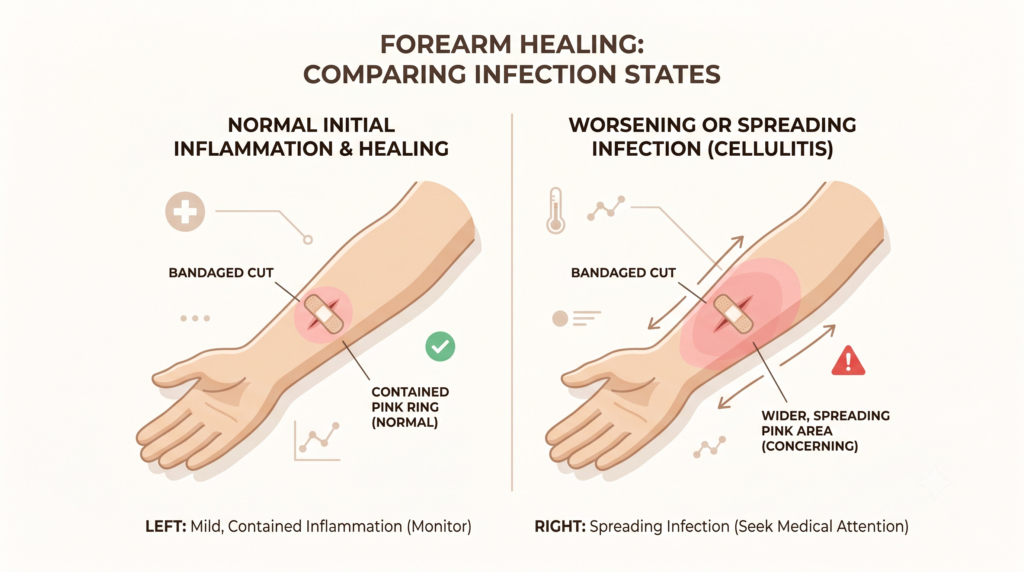
It’s a fair question, because early infection and normal inflammation genuinely look similar. Both involve redness, some swelling, and tenderness. The difference isn’t in any single symptom — it’s in which direction things are heading. A healing wound gets better each day. An infected one gets worse.
This guide covers how to tell the two apart, the specific signs worth acting on, the small number of red flags that need care immediately rather than tomorrow, and how to care for a wound so it doesn’t get infected at all. Most wound infections caught early are simple to treat. The ones that cause problems are the ones people watch for too long.
Normal Healing vs. Infection
Understanding what normal looks like makes the abnormal obvious.
What Normal Healing Looks Like
In the first 24-48 hours after a cut, some inflammation is expected and healthy:
- Mild redness confined to the wound edges — generally within about half an inch
- Some swelling and tenderness right at the site
- Clear or slightly pink fluid in the first day
- A scab forming over the following days
- Steady improvement — each day slightly better than the last
What Infection Looks Like
- Redness expanding outward away from the wound
- Pain increasing rather than easing after day two
- Swelling that worsens instead of settling
- Thick, cloudy, yellow, or green drainage (pus)
- Warmth noticeably greater than surrounding skin
- A foul smell
- Fever
- A wound that stops making progress or reopens
The One Rule That Covers Most Cases
If your wound is worse on day three than it was on day two, that’s the signal. Normal healing is a downward curve of symptoms. Infection reverses that curve.
When Infection Usually Shows Up
Timing helps you know when to pay closest attention.
Most wound infections become apparent within the first two to five days. The first 24-48 hours are typically inflammation rather than infection — that’s your immune system responding normally. By day three, things should be clearly improving. Symptoms that intensify at that point are the ones worth acting on.
Catching it early matters. Infections identified in the first 24-48 hours after they appear are usually straightforward to treat with oral antibiotics. Left longer, bacteria multiply deeper into surrounding tissue where treatment is harder and complications more likely.
There’s also a later category: a wound that simply won’t heal. If a cut hasn’t meaningfully improved after about two weeks of proper home care, that itself warrants evaluation — an underlying infection or retained foreign body may be preventing healing.
The Signs of an Infected Cut
The specific things to look for, in order of how commonly they show up.
Increasing Pain
Pain should peak in the first day or two, then steadily decrease. Pain that intensifies after day two — especially throbbing pain — is one of the earliest infection signals and often shows up before visible changes.
Expanding Redness
Normal redness hugs the wound edges. Infection-related redness spreads outward, and in more serious cases expands noticeably over hours.
Pus or Cloudy Drainage
Thick yellow, green, or cloudy drainage is a clear sign. (Clear or slightly pink fluid in the first day or two is normal.)
Warmth and Swelling
Skin around an infected wound feels distinctly warmer than the surrounding area. Swelling that increases rather than resolving — or skin that feels hard, tight, or firm — points toward infection spreading into deeper tissue.
Odor
A foul or unusual smell from a wound is not part of normal healing.
Fever
A fever alongside a wound that looks worse means the infection may be affecting you systemically. That’s a same-day concern.
Red Streaks
Red lines radiating from the wound toward the body deserve their own emphasis — covered in the emergency section below.
The Redness Test
Since redness is the most common source of confusion, here’s a practical way to settle it.
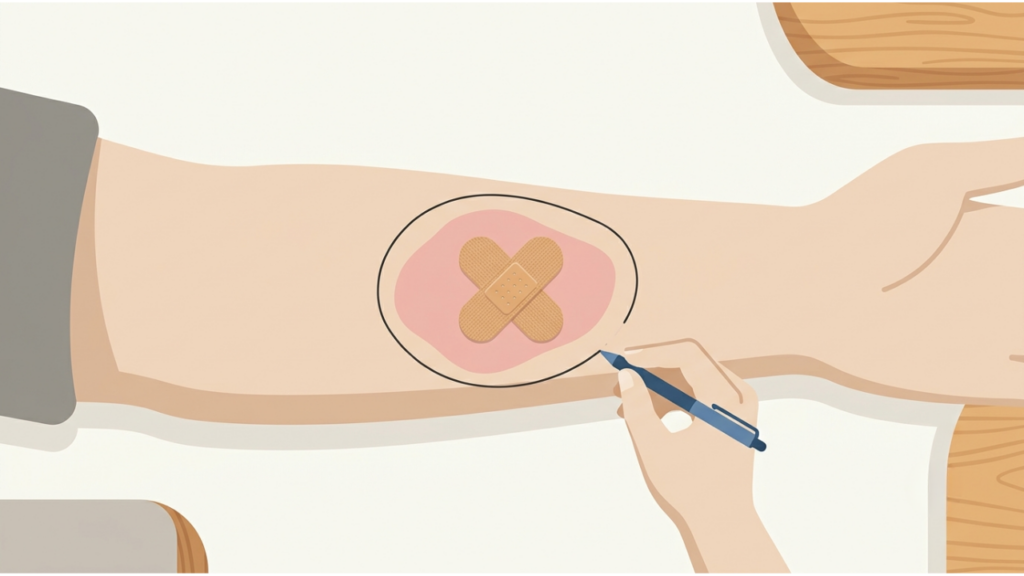
Draw the Line
Take a pen and draw a line around the edge of the red area, then note the time. Check it a few hours later.
- Redness stays inside the line, or shrinks → likely normal inflammation
- Redness has crossed the line → the infection is spreading, and you should be seen
This simple technique is used clinically to track skin infections, and it converts a vague “is it worse?” into a clear yes or no. If you’re already on antibiotics, it’s also how you confirm they’re working — the redness shouldn’t be expanding beyond the line after starting treatment.
What Normal Redness Looks Like
Generally confined within about half an inch of the wound edge, stable or improving day over day, and not accompanied by fever or increasing pain.
What Cellulitis Looks Like
Cellulitis is a deeper bacterial skin infection where redness expands — sometimes noticeably by the hour. The skin feels tight, swollen, very warm, and extremely tender. It progresses quickly, often within 24-48 hours if untreated, and needs prompt antibiotic treatment.
Red Flags That Need Emergency Care
Most wound infections are urgent care situations. A few need the ER right away.
Go to the ER or call 911 for:
- Red streaks spreading from the wound toward the body — this suggests infection traveling through the lymphatic system
- Rapidly expanding redness over hours
- Fever with chills, confusion, racing heart, or feeling very unwell — possible signs of a systemic infection
- Severe pain out of proportion to the wound’s appearance
- Skin turning gray, purple, or black, or developing blisters
- The wound or surrounding skin becoming numb, or skin feeling hard and tight
- Facial wounds with significant spreading redness or eye involvement
Per GoodRx’s clinical review of cellulitis, a small percentage of skin infections need IV antibiotics or hospitalization, and certain features — fever, dark skin changes, rapid spread — are what separate an office visit from an emergency one.
Severe pain with rapidly spreading redness and feeling very ill is a true emergency. Rare soft-tissue infections can progress fast, and that combination shouldn’t wait.
Who’s at Higher Risk
Some people should have a much lower threshold for getting a wound checked.
- Diabetes — impaired circulation and nerve sensation mean infections develop faster and are noticed later
- Poor circulation or peripheral vascular disease
- Weakened immune systems — chemotherapy, immunosuppressants, certain conditions
- Older adults
- People with chronic conditions affecting healing
If any of these apply to you, don’t run the “wait and see” playbook. Get wounds evaluated early, especially anything on the feet or lower legs.
Higher-risk wounds also deserve earlier attention regardless of who you are: puncture wounds, animal and human bites, wounds contaminated with soil, crush injuries, and burns. Our guide on when a cut needs stitches covers which wounds should be professionally cleaned and closed from the start.
What Causes Wounds to Get Infected
Infection happens when bacteria enter the wound and multiply faster than your immune system clears them. A few factors raise the odds:
- Inadequate initial cleaning — the single biggest preventable factor
- Retained debris — dirt, glass, or splinters left in the wound
- Puncture wounds, which carry bacteria deep and are hard to flush
- Bites, which introduce heavy bacterial loads
- Contaminated sources — soil, rusty metal, standing water
- Delayed treatment of wounds that needed professional closure
- Wounds kept too moist or too dirty during healing
How Infected Wounds Are Treated
Treatment is usually simple when caught early.
At the visit, a provider will assess the wound and surrounding skin, check for retained foreign material, clean and irrigate thoroughly, sometimes drain any collected pus, and start antibiotics when indicated. Tetanus status gets reviewed — for higher-risk wounds like punctures, bites, or soil-contaminated cuts, a booster is recommended if it’s been more than five years.
Oral antibiotics handle most mild to moderate infections. You should see improvement within 48-72 hours of starting. Two things matter:
- Finish the entire course, even once the wound looks fine
- Return if you’re not improving within 48-72 hours — that can mean the wrong antibiotic or a deeper problem
More serious infections may need IV antibiotics or, occasionally, a procedure to drain or clean the wound.
Preventing Infection in the First Place
Most wound infections are preventable with good early care.
- Clean it properly and immediately — rinse under clean running water for several minutes
- Remove visible debris gently; don’t dig for anything embedded
- Wash around the wound with mild soap, keeping soap out of the wound itself
- Apply a thin layer of antibiotic ointment for minor cuts to keep it moist
- Cover with a clean, dry dressing and change it daily or when soiled
- Keep it dry — no soaking, swimming, or hot tubs while healing
- Don’t pick at scabs
- Get bites, punctures, and deep or dirty wounds professionally cleaned rather than managing them at home
Two Wound-Care Myths Worth Dropping
Hydrogen Peroxide
Peroxide doesn’t help wound healing — it damages the healthy tissue trying to repair the wound along with any bacteria. The same applies to rubbing alcohol and iodine poured directly into a wound. Clean running water is more effective and far gentler.
“Let It Air Out”
Wounds heal better covered and slightly moist than dry and exposed. A clean dressing protects against contamination and supports faster healing with less scarring. Uncovering a wound to “let it breathe” is outdated advice.
Frequently Asked Questions
How do I know if my cut is infected?
Look at the direction things are heading. Normal wounds improve after the first day or two; infected wounds get worse after day two or three. Watch for redness expanding beyond the wound edges, increasing rather than decreasing pain, pus or cloudy drainage, growing warmth and swelling, a foul odor, or fever.
Is some redness around a cut normal?
Yes. Mild redness confined to the wound edges — generally within about half an inch — is normal inflammation in the first day or two. What’s not normal is redness that expands outward, especially over hours. Draw a pen line around the red area and check a few hours later: crossing the line means it’s spreading.
How soon after a cut would infection show up?
Most wound infections become apparent within two to five days. The first 24-48 hours are usually normal inflammation. By day three, a wound should be clearly improving — symptoms intensifying at that point are the ones to act on. A wound that hasn’t improved after two weeks also warrants evaluation.
What do red streaks from a wound mean?
Red lines radiating from a wound toward the body suggest infection spreading through the lymphatic system. This needs same-day medical care, not watchful waiting — and combined with fever, chills, or feeling very unwell, it warrants emergency evaluation. Don’t monitor red streaking at home.
Can an infected cut heal on its own?
Minor surface infections occasionally settle with improved cleaning and care, but established wound infections generally need antibiotics. Waiting allows bacteria to multiply deeper into tissue where treatment becomes harder. Since early infections are simple to treat, getting evaluated is the faster route.
What does an infected wound smell like?
Any foul or unusual odor from a wound is abnormal and suggests infection. Healing wounds shouldn’t smell. Odor combined with cloudy or discolored drainage is a clear indication to be seen.
Should I use hydrogen peroxide on a cut?
No. Hydrogen peroxide damages the healthy tissue trying to heal the wound alongside any bacteria, and it doesn’t improve outcomes. The same goes for rubbing alcohol and iodine in an open wound. Clean running water is more effective and gentler.
When should I go to the ER for an infected cut?
Go for red streaks spreading from the wound, rapidly expanding redness, fever with chills or confusion, severe pain out of proportion to the wound, skin turning gray or black, blisters, or the area becoming numb or feeling hard and tight. Most wound infections, though, are handled well at urgent care.
Do I need a tetanus shot for an infected cut?
Possibly. For higher-risk wounds — punctures, bites, soil-contaminated cuts, crush injuries, and burns — a booster is recommended if it’s been more than five years since your last one. A provider will review your vaccination history at the visit and give one if indicated.
How long do antibiotics take to work on a wound infection?
You should see improvement within 48-72 hours of starting antibiotics — redness should stop spreading and pain should ease. Finish the entire course even after the wound looks better. If you’re not improving in that window, return for reassessment; it may mean a different antibiotic or a deeper issue.
Where can I get a wound checked in NJ?
A+ Urgent Care provides walk-in wound evaluation and treatment at both Bloomfield (Essex County) and Cresskill (Bergen County) locations, seven days a week including evenings and weekends. Providers clean and assess wounds, prescribe antibiotics when needed, and give tetanus boosters. Most patients are seen within minutes.
Get Same-Day Wound Care in Bloomfield and Cresskill
The simplest way to know whether a cut is infected is to watch its direction. Healing wounds improve a little every day. Infected wounds turn the corner the wrong way — more red, more painful, more swollen — usually around day two or three. When you see that reversal, that’s your cue.
Most wound infections caught early are handled with a quick visit and a course of antibiotics. The ones that become serious are almost always the ones someone watched a day or two too long. If your wound looks worse today than yesterday, or if you’re seeing red streaks or running a fever, walk in and get it looked at.
About A+ Urgent Care
A+ Urgent Care provides walk-in medical care for families across Essex and Bergen counties, with locations in Bloomfield and Cresskill open seven days a week, including evenings and weekends. From wound care and stitches to infections, sprains, and on-site X-rays and labs, the team handles injuries and everyday medical needs through a full range of services. Led by Dr. Ajay Jetley, a board-certified emergency medicine physician with more than 15 years of experience, most patients are seen within minutes. No appointment necessary; for any life-threatening emergency, call 911.