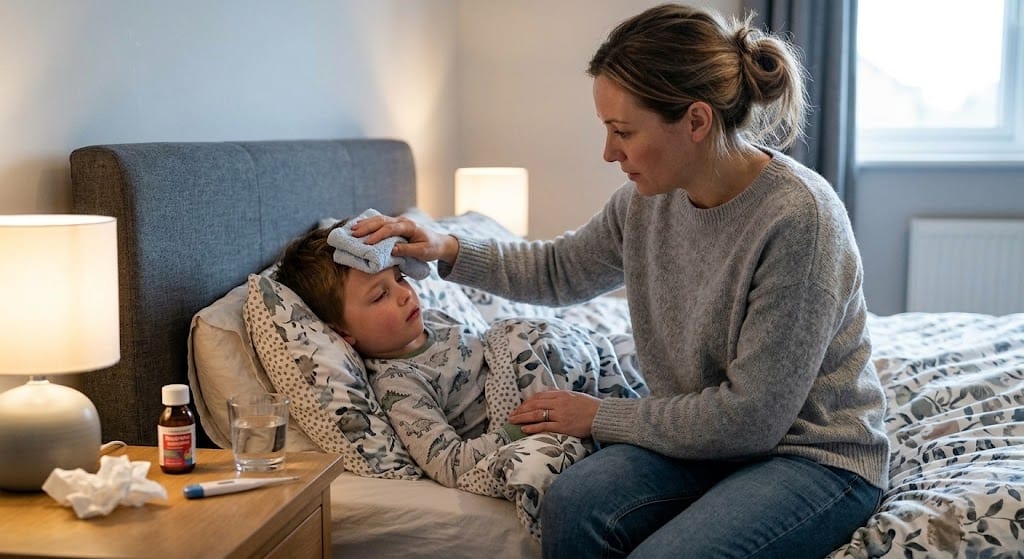
Hoping that painful earache will just disappear? While mild irritation from trapped water might resolve, a true swimmer’s ear infection usually requires prescription drops. Discover why delaying treatment can make symptoms worse and how to …


Key Takeaways
- Whether swimmer’s ear goes away on its own depends on the stage. Trapped water clears itself in a few hours. But once a real infection sets in — pain, swelling, maybe some drainage — waiting stops working. Untreated swimmer’s ear usually gets worse, not better.
- Trying to treat an established infection with home remedies like rubbing alcohol or vinegar drops can backfire badly. These work for prevention but cause severe stinging and worsening irritation when poured into an already inflamed canal.
- The faster you treat an active infection, the faster the pain stops. Most patients feel significant relief within 48 hours of starting prescription drops. Untreated swimmer’s ear can spread to deeper tissues, cause canal swelling that’s much harder to treat, and in rare cases lead to serious complications.
Table of Contents
- Water Trapped in the Ear vs. an Actual Infection
- Can Mild Swimmer’s Ear Resolve on Its Own?
- How Long Does Swimmer’s Ear Last?
- What Happens If Swimmer’s Ear Goes Untreated?
- Home Remedies for Swimmer’s Ear vs. Antibiotics
- Why Home Drops Can Backfire on an Active Infection
- How to Cure Swimmer’s Ear Fast
- Do I Need Prescription Drops for Swimmer’s Ear?
- Where to Get Same-Day Ear Infection Treatment in NJ
- Frequently Asked Questions
- Get Fast Earache Relief in Bloomfield and Cresskill
It happens almost every summer day in New Jersey: a kid (or grown-up) climbs out of the pool, says their ear feels weird, and by bedtime the discomfort has turned into real pain.
The next question is the one everyone asks before deciding whether to spend the time and money on a doctor — will this just go away on its own?
The truthful answer is: it depends what you actually have. There’s a meaningful difference between water trapped in the ear (annoying, harmless, self-resolving) and a true bacterial swimmer’s ear infection (painful, progressive, and usually needing prescription treatment).
Confusing the two costs people days of unnecessary misery — sometimes weeks — and the home remedies that work great for prevention can actively make an established infection worse.
This guide walks through how to tell the two apart, when watchful waiting is reasonable, when home care helps, and when you need to walk into a clinic for prescription drops.
By the end, you’ll know whether your ear pain is something you can manage at home or whether you should head to an urgent care for ear infection NJ treatment today.
Water Trapped in the Ear vs. an Actual Infection
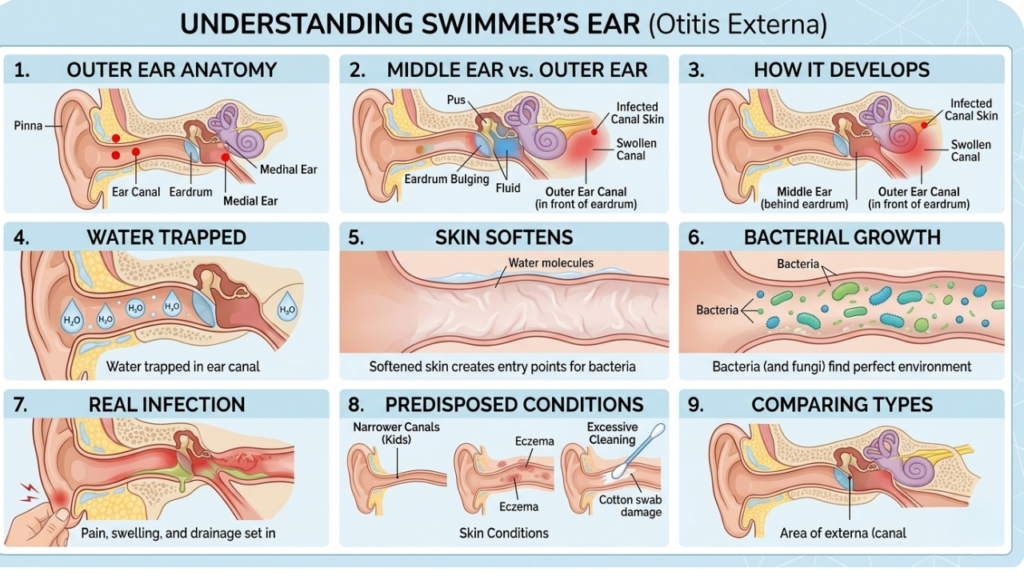
This distinction is the most important part of the whole guide. Getting it right tells you whether to wait or to walk in.
Plain Trapped Water
Plenty of swimmers feel water sloshing in their ear after a pool day. It’s uncomfortable. Hearing sounds muffled on one side, the sensation of fluid moving when you tilt your head, maybe a faint popping. What’s usually missing:
- No real pain, just a plugged or full feeling
- No redness or visible swelling
- No drainage
- No tenderness when you tug on the earlobe
Trapped water resolves on its own as the canal naturally drains, especially with a head tilt, a few gentle earlobe pulls, or a soft towel. Drying drops made from rubbing alcohol and white vinegar can speed it along. This isn’t an infection — it’s a temporary nuisance.
An Active Swimmer’s Ear Infection
A real infection, medically called acute otitis externa, looks and feels different:
- Sharp pain that worsens with movement
- Pain when you tug on the outer earlobe — the classic test
- Pain when chewing or moving the jaw
- Visible redness or swelling of the canal opening
- Drainage of clear, white, or yellowish fluid
- Hearing loss on the affected side as the canal swells shut
- Itching that has turned into pain
- Sometimes fever in more severe cases
These signs mean the bacteria have moved past minor irritation and established an infection in the skin lining the canal. At this point, watchful waiting and home remedies stop being good strategies.
For a complete breakdown of how the infection develops and how to prevent it, see our companion guide on how to prevent swimmer’s ear this summer.
Can Mild Swimmer’s Ear Resolve on Its Own?

This is where honesty matters. The answer is yes, occasionally — but predicting which cases will and which won’t is hard, and the wrong guess costs you.
The Very Mildest Cases
If you catch the very earliest signs — just mild itching, a slight plugged feeling, no real pain yet — diligent home care sometimes turns things around:
- Keeping the ear dry (no swimming, no submerged baths)
- Using prevention drops if you’re certain there’s no eardrum perforation
- Giving the canal time to dry out and recover
A small percentage of patients catch swimmer’s ear at this earliest stage and stop it before bacteria fully establish. That’s the closest thing to “going away on its own.”
Why That Window Is So Short
The trouble is that swimmer’s ear progresses fast. The American Academy of Pediatrics notes that what feels like mild itching one evening can become significant pain by the next morning.
Bacteria multiply quickly in the warm, moist environment of the ear canal, and once they’ve established an infection, the immune response and inflammation don’t reverse easily without prescription antibiotics.
The Honest Bottom Line
Once you have actual pain — especially the kind that worsens when you tug your earlobe — the chance of spontaneous resolution drops significantly.
Most cases at this stage will continue to worsen until they’re treated. The fastest, safest move is a quick visit for prescription drops rather than another day of hoping.
For ear pain that hasn’t yet crossed into clear infection territory, our services page outlines how A+ Urgent Care evaluates ear concerns, including when watchful waiting is reasonable.
How Long Does Swimmer’s Ear Last?
Knowing the typical timeline helps you decide when to keep waiting and when to act.
With Prescription Treatment
Once antibiotic ear drops start, recovery typically follows a predictable pattern:
| Time After First Dose | What Usually Happens |
| 12-24 hours | Pain starts to ease, less throbbing |
| 24-48 hours | Significant pain reduction, swelling beginning to decrease |
| 3-5 days | Normal hearing returns as canal swelling resolves |
| 7-10 days | Full course complete, infection eliminated |
Most patients feel meaningfully better within two days. Finishing the entire course matters even after symptoms resolve — stopping early can let the infection return.
Without Treatment
Untreated swimmer’s ear can drag on for weeks. Some cases technically resolve eventually as the immune system clears the bacteria, but the path there is miserable:
- Worsening pain that often peaks in the first week
- Increasing canal swelling that can completely close the canal
- Persistent drainage
- Possible spread to surrounding tissues
The contrast is stark. A 48-hour turnaround with treatment versus weeks of suffering without it — assuming the infection resolves at all rather than progressing to something worse.
What Happens If Swimmer’s Ear Goes Untreated?
This is the question that determines whether waiting is reasonable. The possible complications range from inconvenient to serious.
Common Complications
Most untreated swimmer’s ear cases progress through a predictable cascade:
- Worsening pain that interferes with sleep, eating, and concentration
- Significant canal swelling that closes the ear and makes drops harder to deliver later
- Spread to surrounding tissues including cellulitis of the outer ear or surrounding skin
- Temporary hearing loss from canal closure
- Chronic recurrent infections if scarring develops
These aren’t dramatic outcomes, but they extend the misery and often require more aggressive treatment than early intervention would have needed.
Once the canal swells shut, providers sometimes have to place a wick to deliver drops into the deeper canal — a procedure that’s avoidable with early treatment.
Less Common but Serious Complications
In a small number of cases, untreated swimmer’s ear progresses to more serious problems:
- Malignant otitis externa — a severe infection spreading into the skull bone, primarily affecting diabetics, the elderly, and immunocompromised patients
- Cellulitis spreading from the ear into the face or neck
- Inner ear involvement in rare cases
- Permanent hearing changes if scarring develops in the canal
These complications are uncommon but real. They’re also far more likely in people with diabetes, weakened immune systems, or existing ear problems — populations who shouldn’t wait on swimmer’s ear under any circumstances. The CDC’s guidance on swimmer’s ear provides additional detail on risk factors and complication rates.
Home Remedies for Swimmer’s Ear vs. Antibiotics
This is where a lot of well-meaning advice steers people wrong. The home remedies that prevent swimmer’s ear are not the same as the treatments needed once an infection has started.
What Home Remedies Actually Do
The most commonly recommended home approach — a 1:1 mix of rubbing alcohol and white vinegar — works through two mechanisms:
- The alcohol absorbs water in the canal and evaporates, drying things out
- The vinegar’s acidity discourages bacterial and fungal growth
These effects work best as prevention — drying the canal before an infection has a chance to take hold.
They’re far less effective once bacteria have established a real infection, and they can cause significant pain on inflamed skin (more on this in the next section).
What Antibiotics Do
Prescription antibiotic ear drops actually kill the bacteria causing the infection. The most commonly prescribed options include:
- Ciprofloxacin/dexamethasone (Ciprodex) — antibiotic plus steroid for swelling
- Ofloxacin (Floxin Otic) — antibiotic alone
- Neomycin/polymyxin/hydrocortisone (Cortisporin Otic) — combination drops
These work directly on the bacteria, eliminate the infection, and reduce swelling. They produce results within 24-48 hours in most patients — something no home remedy can match against an established infection.
The Right Tool for the Right Job
A useful way to think about it:
- Prevention: drying drops, head tilts, towel dry, no cotton swabs
- Active infection: prescription antibiotic ear drops, full stop
Trying to substitute one for the other doesn’t work. Using prescription drops to prevent infection is overkill and unnecessary. Using home drops to treat an established infection wastes days and can cause real discomfort.
Why Home Drops Can Backfire on an Active Infection
Worth its own section, because this is a mistake parents and patients make often.
The Sting Problem
When the skin lining the ear canal is healthy, alcohol-vinegar drops cause minimal sensation — maybe a brief cool feeling. When the canal is already inflamed and infected, that same solution lands on raw, swollen tissue and causes severe stinging. The Mayo Clinic specifically warns against using these solutions on actively infected ears for this reason.
The pain isn’t dangerous, but it’s bad enough that most people only try it once. And it doesn’t help — the alcohol can’t reverse an established infection through its drying action alone.
The Eardrum Problem
Some swimmer’s ear cases involve a perforated eardrum (a small hole in the eardrum) that the patient doesn’t know about.
Pouring alcohol-based drops onto a perforated eardrum sends the solution into the middle ear, causing significant pain and potentially damaging the delicate structures there.
A provider can quickly check whether the eardrum is intact before recommending any drops. Home use without that check is a gamble.
The Ear Tube Problem
Children with tympanostomy tubes (ear tubes) should not receive alcohol-vinegar drops. The solution travels through the tube into the middle ear, causing pain similar to what happens with a perforated eardrum.
Parents whose kids have tubes should always consult their pediatrician or ENT about safe drying products.
The Bottom Line on Home Remedies
Use them for prevention. Skip them for active infection. The fastest path from painful ear to relief runs through a clinic visit and prescription drops, not the medicine cabinet.
How to Cure Swimmer’s Ear Fast
The fastest recovery from an established infection follows a predictable pattern: rapid diagnosis, targeted treatment, and a few simple supportive measures.
Step 1: Get Evaluated Quickly
Same-day evaluation matters. Every additional day of waiting gives bacteria more time to multiply and the canal more time to swell.
Walk-in clinics like the Bloomfield and Cresskill locations of A+ Urgent Care are designed for exactly this kind of acute, time-sensitive complaint — no appointment, typical wait times of 15-45 minutes.
Step 2: Start Prescription Drops Immediately
The standard treatment involves antibiotic ear drops, usually four times daily for 7-10 days. A few practical tips:
- Warm the bottle in your hand for a couple of minutes before use to reduce dizziness from cold drops
- Lie on your side with the affected ear up
- Pull the ear gently to straighten the canal
- Place the prescribed number of drops in the canal
- Stay on your side for 3-5 minutes to let the drops work down to the infection
- Wipe excess from the outer ear with a tissue
Some patients benefit from a second person helping with the drops, especially for kids who fidget.
Step 3: Keep the Ear Dry
During treatment, the ear needs to stay completely dry:
- No swimming for the duration of treatment, typically 7-10 days
- Avoid showers where water can enter the ear, or use a cotton ball coated with petroleum jelly during showers
- Skip hot tubs and lakes until cleared by your provider
- No water-based activities like water parks, splash pads, or dunking
Step 4: Manage Pain Effectively
The first day or two of treatment can still be quite painful while the antibiotic builds up:
- Acetaminophen or ibuprofen at appropriate doses for pain
- Warm compress against the outer ear for comfort
- Sleep with the affected ear facing up to reduce pressure
- Avoid getting the ear wet in any way
Most patients feel substantial improvement within 48 hours. If you’re not seeing improvement by then, return to the clinic for re-evaluation.
Do I Need Prescription Drops for Swimmer’s Ear?
For an established infection — defined by pain, swelling, drainage, or all three — yes. This is one of the main reasons to see a provider rather than trying to manage it at home.
Why OTC Products Aren’t Enough
Over-the-counter drying drops (Swim-Ear, Auro-Dri, generic versions, homemade alcohol-vinegar) are designed for prevention.
They have no antibiotic activity. Once bacteria have established themselves, you need a medication that actively kills them — and those are prescription-only in the United States.
OTC pain relievers like acetaminophen and ibuprofen can help with discomfort during the visit and the first day of treatment, but they don’t address the underlying infection either.
What a Provider Visit Looks Like
A typical swimmer’s ear visit at A+ Urgent Care takes 30-45 minutes from check-in to walking out with a prescription:
- Brief history of swimming, symptoms, ear tube status, and prior infections
- Examination of the ear canal with an otoscope
- Assessment of the eardrum to confirm it’s intact
- Prescription sent electronically to your pharmacy
- Pain management guidance and clear follow-up instructions
For families searching for pediatric urgent care Cresskill or earache treatment Bergen County, this same workflow handles kids and adults with equal efficiency.
When OTC Pain Relievers Have a Role
While waiting for an appointment or while the prescription drops take effect, OTC pain medications help bridge the gap:
- Acetaminophen (Tylenol) at age-appropriate doses
- Ibuprofen (Advil, Motrin) for kids 6 months and older at appropriate doses
- Warm compress against the ear for additional comfort
These don’t treat the infection but make the wait until treatment kicks in much more tolerable.

Where to Get Same-Day Ear Infection Treatment in NJ
For families in Essex and Bergen counties, same-day walk-in care at urgent care is the fastest path from “my ear is killing me” to “I have a prescription and I’m starting to feel better.”
What A+ Urgent Care Offers
Both A+ Urgent Care locations handle ear infections seven days a week, including evenings and weekends:
- Walk-in availability — no appointment needed
- Same-day evaluation with typical wait times of 15-45 minutes
- On-site exam with otoscope and full assessment
- Same-day prescription sent electronically to your pharmacy
- Clear treatment instructions and follow-up plan
- Coordination with your pediatrician when appropriate
For working parents trying to fit an urgent care visit into a busy day, evening and weekend availability makes a real difference. An ear infection that flares Friday evening doesn’t have to wait until Monday morning.
Insurance and Self-Pay
A+ Urgent Care accepts most major insurance plans for ear infection visits. For families paying out of pocket, transparent self-pay pricing is far less expensive than an ER visit for the same complaint.
See the full list on the insurance and payment options page.
What to Bring
To make the visit as efficient as possible:
- Photo ID and insurance card (if applicable)
- List of current medications
- List of known drug allergies, especially antibiotic allergies
- For kids: any history of ear tubes, perforated eardrums, or chronic ear infections
- Approximate timeline of when symptoms started
Frequently Asked Questions
Can swimmer’s ear go away without antibiotics?
Very mild cases caught at the earliest itchy stage may resolve with diligent drying and home preventive drops. Most established infections — with pain, swelling, or drainage — will not resolve without antibiotic ear drops and tend to worsen if untreated. Once there’s significant pain, the medical consensus is to treat with prescription drops rather than wait.
How long does swimmer’s ear last untreated?
Without treatment, swimmer’s ear can persist for weeks. Some cases technically resolve eventually as the immune system clears the bacteria, but the path involves prolonged pain, worsening canal swelling, and increasing risk of complications. With treatment, most patients feel significant relief within 48 hours and fully recover within 7-10 days.
Will my swimmer’s ear get worse if I don’t treat it?
In most cases, yes. Bacteria continue multiplying without treatment, leading to worsening pain, increasing canal swelling that can close the ear entirely, possible spread to surrounding tissues, and in rare cases more serious complications. Early treatment prevents this cascade.
Can I just buy ear drops at the pharmacy?
Over-the-counter drying drops are designed for prevention, not treatment of active infection. They have no antibiotic activity and won’t clear an established infection.
Effective treatment requires prescription antibiotic drops, which means seeing a provider — though the visit is typically fast and the prescription works quickly.
What if my child’s pain is severe?
Severe ear pain in a child warrants prompt evaluation, especially if accompanied by fever, significant swelling, or drainage.
Same-day walk-in urgent care can usually handle these cases efficiently. Head to the ER for very high fever, severe facial swelling, signs of spreading infection (redness extending to the face or neck), or significant systemic illness.
Can swimmer’s ear cause permanent hearing loss?
Permanent hearing loss from swimmer’s ear is uncommon, but possible in cases of severe or repeated infections that cause scarring in the ear canal.
Most patients return to completely normal hearing within days of starting treatment as the canal swelling resolves. Early treatment minimizes any risk to long-term hearing.
What if I have a punctured eardrum or ear tubes?
These situations require special care. Standard alcohol-vinegar drops should never be used with a perforated eardrum or ear tubes.
Even prescription drops vary in their safety with these conditions — some are tube-safe and some are not. A provider can examine the eardrum and prescribe the appropriate medication.
Where can I get same-day swimmer’s ear treatment in Northern NJ?
A+ Urgent Care provides walk-in evaluation and same-day prescription treatment for ear infections at both Bloomfield (Essex County) and Cresskill (Bergen County) locations.
Most patients are seen within 15-45 minutes and leave with a prescription sent electronically to their pharmacy. No appointment needed.
Get Fast Earache Relief in Bloomfield and Cresskill
Hoping a painful ear infection just goes away on its own is understandable — nobody wants to interrupt their day for a doctor’s visit.
But the math doesn’t work out in your favor with swimmer’s ear. Two days of waiting and home remedies usually means two days of unnecessary pain followed by the same clinic visit you could have had on day one, just with a more inflamed ear by then.
If your ear hurts when you tug your earlobe, if there’s drainage, if pain is interfering with sleep or normal activity, the fastest path to feeling better is a walk-in visit and prescription drops.
The exam takes minutes, the prescription works within two days, and you can stop trying to white-knuckle through something that doesn’t have to hurt this much.
About A+ Urgent Care
When painful symptoms hit, the last thing anyone wants is a week-long wait for a primary care opening or a six-hour ER visit. A+ Urgent Care was built to fix that gap.
Under the medical direction of Dr. Ajay Jetley — a board-certified emergency medicine physician with more than 15 years of clinical experience — the Bloomfield and Cresskill locations deliver same-day evaluation, on-site lab testing, and pharmacy-ready prescriptions for the conditions Northern New Jersey residents face most often.
The newer Bloomfield clinic has already earned a 4.8-star Google rating from patients who appreciate the short waits and thorough care .Read recent patient reviews or walk in during operating hours — no appointment necessary.