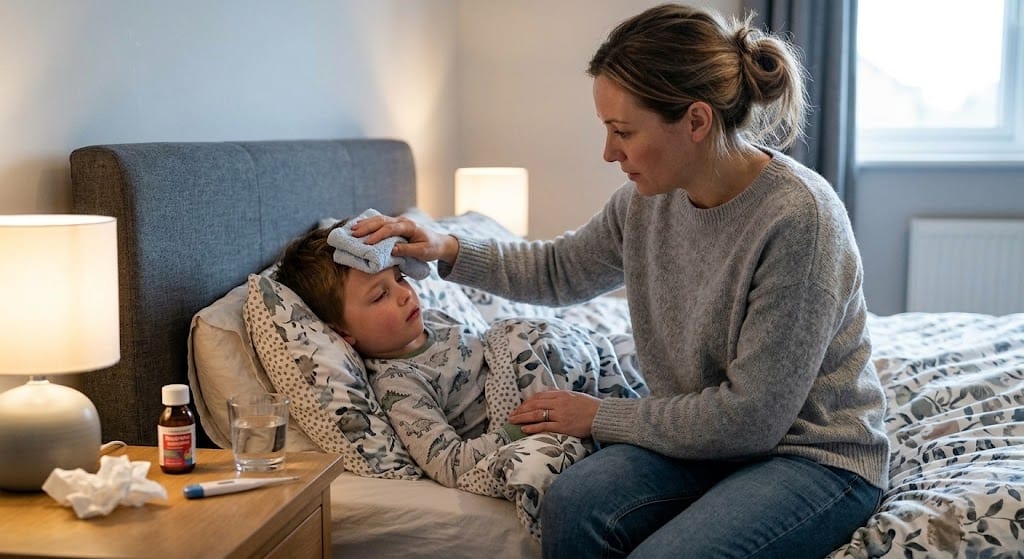
The World Cup is bringing massive crowds to MetLife Stadium this summer — and big crowds plus July heat means a real risk of heat exhaustion and dehydration. Learn how to stay safe at a …

Key Takeaways
- World Cup matches at MetLife Stadium mean huge crowds, long lines, and hours in the summer sun — a combination that puts fans at real risk for heat exhaustion and dehydration. A little planning keeps the day fun instead of miserable.
- Know the difference between heat exhaustion and heat stroke. Heat exhaustion (heavy sweating, dizziness, nausea) is your warning sign to cool down fast. Heat stroke (confusion, hot skin, fainting, body temp 103°F+) is a 911 emergency.
- For non-emergency issues after a match — dehydration, a minor injury, sunburn, or feeling wiped out by the heat — walk-in urgent care near the Meadowlands gets you treated fast without an ER trip.
Table of Contents
- Why World Cup Matches Are a Heat Risk
- The MetLife Match Schedule (and Why Timing Matters)
- What to Pack for a Match in the Heat
- How to Stay Hydrated All Day
- Heat Exhaustion vs. Heat Stroke: Know the Difference
- What to Do If Someone Goes Down in the Heat
- Other Common Match-Day Health Issues
- Who’s Most at Risk
- Where to Get Walk-In Care Near MetLife
- Frequently Asked Questions
- Enjoy the Match — Stay Safe Out There
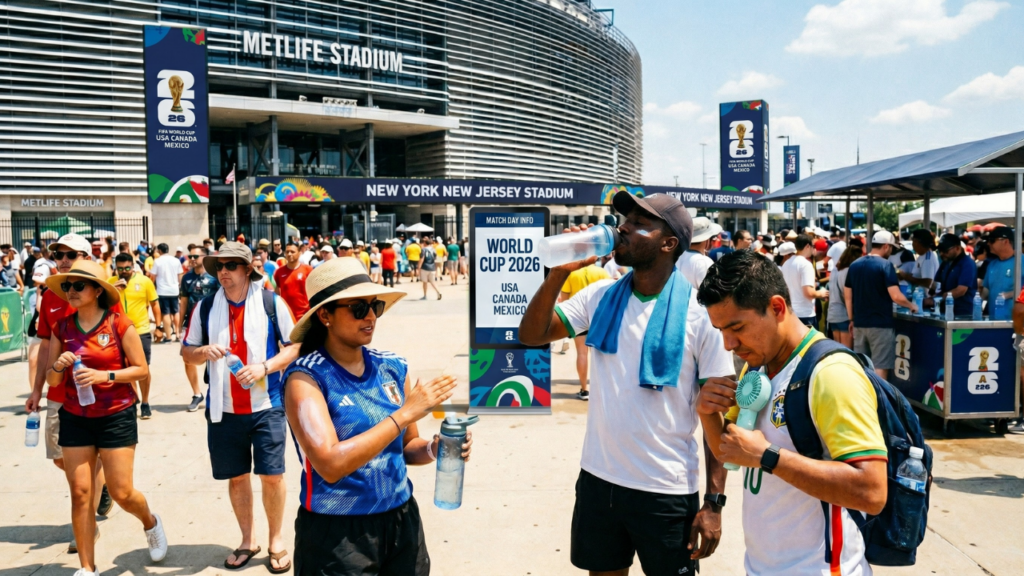
The World Cup has landed in New Jersey, and MetLife Stadium — officially “New York New Jersey Stadium” for the tournament — is hosting some of the biggest matches of the summer, right through the final on July 19. If you’ve got tickets, you’re in for one of the great sporting experiences of a lifetime.
You’re also in for a long day in the July heat. Between getting to the Meadowlands, security lines, the match itself, and the crowds heading home, you could be on your feet in the sun for the better part of a day.
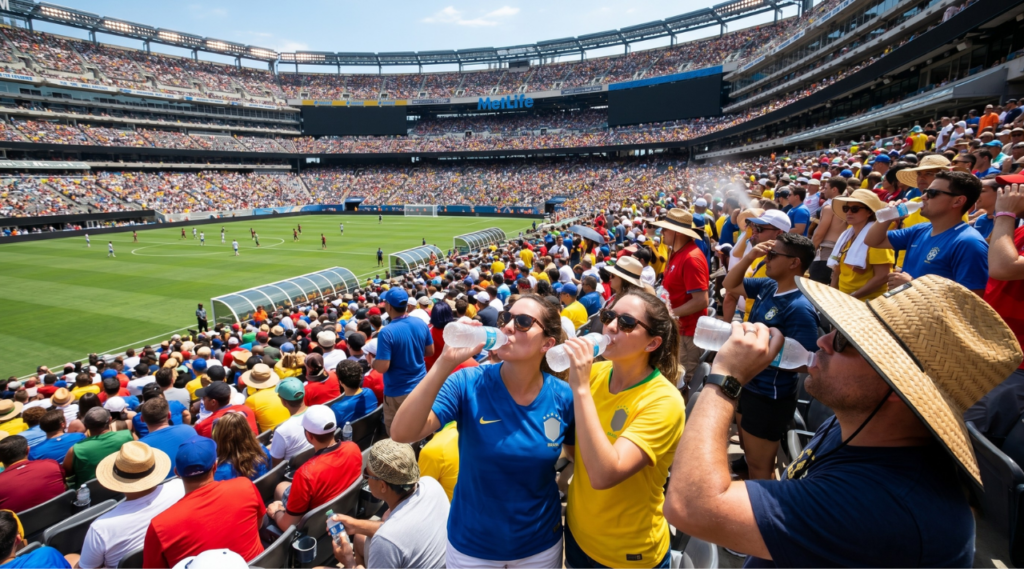
Add 80,000-plus people, limited shade, and a New Jersey summer that’s already serving up heat advisories with the index near 100, and heat illness becomes a genuine risk — one that public health officials are actively warning fans about for these matches.
The good news: heat illness is almost entirely preventable with a bit of planning. This guide covers how to prep for a match in the heat, how to spot the warning signs before they turn serious, what to do if someone in your group starts struggling, and where to get fast walk-in care near the stadium if you need it. A few smart moves mean you spend the day cheering, not recovering.
Why World Cup Matches Are a Heat Risk
Big summer sporting events combine several factors that each raise heat risk — and at a World Cup match, they all stack up at once.
The Perfect Storm of Heat Factors
A match day at MetLife layers risk in a way an ordinary hot afternoon doesn’t:
- Hours of sun exposure — arriving early for security and parking, then sitting through a 90-plus-minute match, means many hours outdoors
- Limited shade in stadium seating, especially for afternoon kickoffs
- Massive crowds that radiate heat and slow your movement to water, shade, and restrooms
- Excitement and distraction that make people forget to drink water until they’re already behind
- Alcohol, which many fans drink at matches and which actively dehydrates
- Standing, cheering, and physical exertion that generate body heat
New Jersey’s Summer Conditions
It isn’t only the air temperature that matters — it’s the humidity. New Jersey summers are humid, and high humidity prevents sweat from evaporating efficiently, which is your body’s main cooling mechanism.
When sweat can’t evaporate, the “feels like” temperature climbs well above the actual reading, and your body struggles to cool itself. NJ has already seen heat advisories this June with the heat index approaching 100 degrees.
Why This Matters for Fans
Heat-related illness sends tens of thousands of people to emergency rooms across the country every summer, and large outdoor events are a known hotspot.
The encouraging part is that the same factors that make matches risky are all manageable — hydration, shade, pacing, and knowing the warning signs handle the vast majority of cases before they become serious.
The MetLife Match Schedule (and Why Timing Matters)
Knowing your match’s kickoff time helps you plan around the hottest part of the day.
Remaining MetLife Matches
The matches at MetLife Stadium continue through the final:
- June 22 — Norway vs. Senegal (8:00 PM ET)
- June 26 — Ecuador vs. Germany (4:00 PM ET)
- June 27 — Panama vs. England (5:00 PM ET)
- June 30 — Round of 32 (5:00 PM ET)
- July 5 — Round of 16 (4:00 PM ET)
- July 19 — The Final (3:00 PM ET)
Afternoon Kickoffs Are the Hottest
The afternoon matches — particularly the 3:00 and 4:00 PM kickoffs — fall during the hottest stretch of the day, when sun exposure and temperatures peak.
The July 19 final at 3:00 PM, in the heart of summer, is the one to plan most carefully around. Evening kickoffs like the June 22 match are somewhat more forgiving, though the crowds and exertion still warrant the same precautions.
Plan Your Arrival and Hydration Around the Heat
For afternoon matches, the heat is already building when you arrive and peaks during the match itself. Pre-hydrate in the days before (more on that below), seek shade during pre-match waits, and be especially attentive to early warning signs in the second half and the walk back to transit, when you’ve already spent hours in the heat.
The Meadowlands sits in a large open complex with limited natural shade, so don’t count on finding a cool spot easily once you’re there.

What to Pack for a Match in the Heat
A little preparation goes a long way. Stadiums have bag policies (usually clear-bag rules), so check your match’s specific guidelines, but here’s what helps most in the heat.
The Match-Day Heat Checklist
- A refillable water bottle (empty going through security, then fill at fountains inside — check the venue’s policy on bottle type and size)
- Sunscreen (SPF 30+), applied before you arrive and reapplied during the match
- A hat or cap for shade on your face and neck
- Sunglasses with UV protection
- Light, loose, light-colored clothing that breathes and reflects heat
- A small hand fan or battery-powered fan if permitted
- Electrolyte packets to add to water for long, sweaty days
- A cooling towel you can wet and drape on your neck
- Any personal medications you need, plus knowledge of how heat interacts with them
Dress for the Heat, Not Just the Team
Team jerseys are part of the fun, but consider what’s underneath and around them. Lightweight, light-colored, loose-fitting clothing helps your body cool itself far better than dark, tight, or heavy fabrics. Breathable materials that wick sweat make a real difference over a long day.
For Families With Kids
Children are more vulnerable to heat than adults, so pack extra water for them, dress them in sun-protective clothing, bring a hat, and plan more frequent shade and water breaks.
Keep a closer eye on little ones, who may not say they’re overheating until they’re already unwell.
How to Stay Hydrated All Day
Hydration is the single most important factor in preventing heat illness, and most people underestimate how much they need on a hot, active day.
Start Before You Arrive
Hydration isn’t something you fix at kickoff — it starts in the days leading up to the match. Drink plenty of water the day before and the morning of, so you arrive already well-hydrated rather than playing catch-up in the heat.
Keep Drinking Throughout
For people active in the heat, a good rule of thumb is roughly 8 ounces of water every 15-20 minutes during peak exposure — more than most people instinctively drink.
Don’t wait until you’re thirsty; thirst is already a sign you’re falling behind. Sip steadily rather than chugging occasionally.
Electrolytes Matter on Long, Sweaty Days
When you sweat heavily for hours, you lose not just water but salt and electrolytes. Plain water is fine for shorter exposures, but for a full match day in the heat, alternating water with an electrolyte drink (or adding electrolyte packets to your water) helps replace what you’re sweating out and prevents the cramping and weakness that come with salt depletion.
What to Limit
A few things work against you:
- Alcohol — dehydrates you and impairs your judgment about how hot you’re getting
- Caffeine — also mildly dehydrating, so balance that iced coffee or soda with extra water
- Sugary drinks — can slow hydration compared to water or proper electrolyte drinks
If you do drink alcohol at the match, alternate each drink with a full glass of water and be extra attentive to heat symptoms.
Heat Exhaustion vs. Heat Stroke: Know the Difference
This is the most important section to read before match day. Heat illness exists on a spectrum, and recognizing where someone is on it determines whether you cool them down or call 911.
The Two Conditions Side by Side
| Feature | Heat Exhaustion | Heat Stroke |
| Severity | Serious warning sign | Life-threatening emergency |
| Skin | Cool, moist, pale, heavy sweating | Hot, red; may be dry or damp |
| Body temp | Near normal or mildly elevated | High — 103°F or above |
| Mental state | Tired, lightheaded, but alert | Confused, agitated, slurred speech, fainting |
| Pulse | Fast, weak | Fast, strong |
| Other signs | Headache, nausea, dizziness, cramps | Throbbing headache, nausea, loss of consciousness |
| What to do | Cool down, hydrate, rest | Call 911 immediately |
Heat Exhaustion: The Warning Stage
Heat exhaustion is your body signaling it’s losing the battle to stay cool. The hallmark signs are heavy sweating, cool and clammy skin, dizziness, headache, nausea, and a fast, weak pulse.
The person is uncomfortable and worn down but still mentally clear. This is the stage to act — get them cool and hydrated before it progresses.
Heat Stroke: The Emergency Stage
Heat stroke is when the body’s cooling system fails entirely and core temperature spikes dangerously. The critical difference from heat exhaustion is mental status: confusion, agitation, slurred speech, stumbling, or loss of consciousness.
The skin may become hot and red, and sometimes stops sweating. Body temperature can reach 103°F or higher. Heat stroke can cause permanent disability or death within minutes and requires emergency treatment immediately.
The Key Distinction to Remember
If the person is sweating heavily but still thinking clearly, it’s likely heat exhaustion — cool them down. If they’re confused, disoriented, or losing consciousness, treat it as heat stroke and call 911 right away. Mental confusion is the red flag that separates a manageable situation from a true emergency.
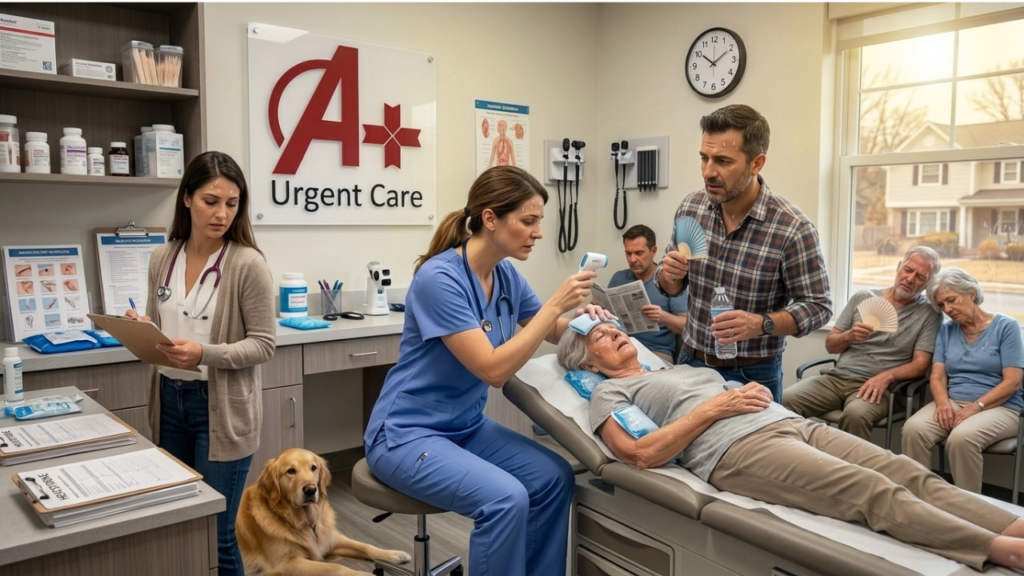
What to Do If Someone Goes Down in the Heat
Knowing the steps in advance means you can act fast if a friend, family member, or stranger starts struggling.
For Heat Exhaustion
If someone shows signs of heat exhaustion:
- Move them to a cooler spot — shade, a concourse, an air-conditioned area, anywhere out of direct sun
- Have them sit or lie down and rest
- Give cool water to sip (not gulp), ideally with electrolytes
- Loosen or remove excess clothing
- Cool the skin — apply cool, wet cloths, or have them wet their face, neck, and arms
- Apply cool packs to the neck, armpits, and groin if available
- Monitor them — symptoms should improve within 30-60 minutes
If they’re vomiting, not improving within an hour, or getting worse, seek medical help.
For Heat Stroke — Call 911 Immediately
Heat stroke is a true emergency. While waiting for help:
- Call 911 right away — don’t wait to see if it improves
- Move them to a cooler place immediately
- Cool them aggressively with any means available — cool water, wet sheets, ice packs to the neck, armpits, and groin
- Do not give fluids to someone who is confused or losing consciousness (choking risk)
- Stay with them until emergency services arrive
- At a stadium, alert the nearest staff member or first aid station immediately — major venues have medical personnel on site
Find Stadium First Aid
Large venues like MetLife staff first aid stations and medical personnel during major events. When you arrive, it’s worth noting where the nearest first aid station and staff are. For a serious situation, stadium medical staff and 911 are your fastest resources — they’re right there.
Other Common Match-Day Health Issues
Heat is the biggest concern, but a long day at a packed stadium brings a few other issues worth anticipating.
Dehydration
Even without full heat exhaustion, mild to moderate dehydration is common after hours in the sun. Signs include thirst, dark urine, headache, fatigue, and dizziness.
Most cases resolve with rest and fluids, but significant dehydration — especially with vomiting or inability to keep fluids down — may need medical evaluation and sometimes IV fluids.
Sunburn
Hours of unshaded sun add up fast. Reapply sunscreen during the match, not just before. Severe sunburn with blistering, or sunburn covering large areas with fever and chills, warrants medical attention.
Minor Injuries
Big crowds, stairs, and excitement lead to the occasional twisted ankle, slip, or bump. Most minor injuries — sprains, minor cuts, bruises — are exactly what walk-in urgent care handles. For sorting out whether an injury needs an X-ray, our guide on sprains, strains, and fractures is a helpful reference.
Foot and Leg Fatigue
Hours of standing and walking on hard surfaces take a toll. Comfortable, broken-in shoes make a bigger difference than people expect, and they reduce the blisters and foot pain that can turn the walk back to transit into a slog.
Who’s Most at Risk
Heat affects everyone, but some people need extra care and attention on a hot match day.
Higher-Risk Groups
The CDC identifies several groups as more vulnerable to heat illness:
- Young children and infants — they heat up faster and can’t always communicate distress
- Older adults — particularly those over 65
- People with chronic conditions — heart disease, high blood pressure, diabetes, respiratory conditions
- People on certain medications — some blood pressure drugs, antihistamines, antidepressants, and others affect the body’s ability to regulate heat
- People not used to the heat — international visitors arriving from cooler climates for the World Cup may not be acclimated
A Note for World Cup Visitors
The tournament draws fans from all over the world, some from much cooler or less humid climates. If you’re visiting Northern New Jersey for a match and aren’t used to East Coast summer humidity, give yourself extra grace — hydrate more than you think you need, take more shade breaks, and watch for symptoms earlier. Your body hasn’t adjusted to these conditions.
Extra Care for the Vulnerable
If you’re attending with young kids, older relatives, or anyone with a chronic health condition, build in more frequent water and shade breaks, keep a closer eye on them, and don’t hesitate to leave the heat if someone starts feeling off. It’s better to miss ten minutes of the match than to end the day in an emergency room.
Where to Get Walk-In Care Near MetLife
For non-emergency issues during or after a match, walk-in urgent care is faster and far more affordable than an emergency room — and it handles the vast majority of heat- and event-related problems.
When Urgent Care Is the Right Call
Walk-in care is appropriate for:
- Dehydration that needs more than rest and fluids
- Heat exhaustion that’s slow to improve
- Minor injuries — sprains, minor cuts, bruises
- Severe sunburn
- General “the heat wiped me out” symptoms once any emergency is ruled out
For anything pointing to heat stroke — confusion, fainting, very high temperature — skip urgent care and call 911 or get to an ER, since that’s a life-threatening emergency.
A+ Urgent Care in Bergen and Essex County
A+ Urgent Care operates two Northern New Jersey locations convenient to the broader Meadowlands area: Cresskill in Bergen County and Bloomfield in Essex County.
Both are open seven days a week — weekdays 8 AM to 8 PM, weekends 9 AM to 5 PM — which covers match days and the hours afterward when heat symptoms often catch up with people.
Both offer same-day walk-in evaluation with on-site IV fluids for dehydration, treatment for minor injuries, and rapid assessment, typically seeing patients within 15-45 minutes. You can reach either location through thecontact page.
Know Your Options Before You Go
It helps to know where you’ll go before you need it. If you’re traveling in for a match, take a moment to note the nearest urgent care to where you’re staying, and remember that for any true emergency, 911 and the nearest ER are always the right call. For everything short of that, walk-in care gets you back on your feet faster.
Frequently Asked Questions
How hot does it get at MetLife Stadium in summer?
MetLife Stadium is an open-air venue in East Rutherford with limited shade, so seating areas can feel significantly hotter than the air temperature during afternoon matches. With New Jersey’s summer humidity, the “feels like” temperature can approach or exceed 100°F on hot days. Afternoon kickoffs, including the July 19 final, fall during the hottest part of the day.
What should I bring to a World Cup match to stay cool?
Bring a refillable water bottle (empty through security), sunscreen, a hat, sunglasses, light loose-fitting clothing, a cooling towel, and electrolyte packets.
Check your match’s specific bag and bottle policy first, since stadiums typically have clear-bag rules and restrictions on bottle types. Pack extra water and sun protection if you’re bringing kids.
What are the first signs of heat exhaustion?
Early signs include heavy sweating, cool and clammy skin, dizziness, headache, nausea, muscle cramps, and a fast, weak pulse.
The person is tired and uncomfortable but still mentally clear. This is the stage to act — move to shade, rest, cool down, and hydrate before it progresses to heat stroke.
How do I know if it’s heat stroke and not just heat exhaustion?
The key difference is mental status. Heat exhaustion leaves a person tired but clear-headed. Heat stroke causes confusion, agitation, slurred speech, stumbling, or loss of consciousness, often with hot red skin and a body temperature of 103°F or higher. Heat stroke is a 911 emergency — if someone is confused or unconscious, call immediately.
What should I do if someone faints from the heat at the match?
Treat fainting in the heat as a possible emergency. Call 911 or alert stadium medical staff right away, move the person to a cooler area, and cool them aggressively with wet cloths or ice packs to the neck, armpits, and groin. Don’t give fluids to someone who isn’t fully conscious. Stay with them until help arrives.
How much water should I drink at a stadium in the heat?
For people active in the heat, roughly 8 ounces every 15-20 minutes during peak exposure is a good target — more than most people drink instinctively.
Start hydrating the day before, don’t wait until you’re thirsty, and add electrolytes for long, sweaty days. Limit alcohol and caffeine, which both dehydrate you.
Can I bring water into MetLife Stadium?
Policies vary by event, but most stadiums allow empty refillable bottles through security that you fill at fountains inside, while restricting outside liquids and certain bottle types.
Check the specific guidelines for your match ahead of time. Staying hydrated is important enough that it’s worth confirming the current policy before you go.
Is dehydration something urgent care can treat?
Yes. Urgent care can evaluate dehydration and provide IV fluids when needed, which works faster than drinking water alone for significant cases.
Mild dehydration usually resolves with rest and fluids, but if you’re vomiting, can’t keep fluids down, or feel severely unwell after a match, walk-in care can help you recover quickly.
I’m visiting from another country — what should I know about NJ summer heat?
New Jersey summers are hot and humid, and if you’re coming from a cooler or drier climate, your body won’t be acclimated.
Hydrate more than you think you need, take frequent shade breaks, wear light clothing and sunscreen, and watch for heat symptoms earlier than you normally would. It takes weeks for the body to adjust to new heat conditions.
When should I go to the ER instead of urgent care during the World Cup?
Go to the ER or call 911 for any signs of heat stroke (confusion, fainting, very high temperature, hot red skin), chest pain, difficulty breathing, severe injury, or any life-threatening emergency.
Urgent care handles non-emergencies — dehydration, heat exhaustion that’s slow to improve, minor injuries, and severe sunburn — faster and more affordably than the ER.
Where is the closest urgent care to MetLife Stadium?
A+ Urgent Care has two Northern New Jersey locations serving the broader area — Cresskill in Bergen County and Bloomfield in Essex County — both open seven days a week with walk-in availability.
For visitors, it’s worth noting the nearest urgent care to your accommodations before match day so you know where to go if needed.
Can the heat make existing health conditions worse?
Yes. Heat puts extra strain on the heart and body, and can worsen conditions like heart disease, high blood pressure, and respiratory problems.
Certain medications also impair the body’s ability to handle heat. If you have a chronic condition, take extra precautions, stay well-hydrated, limit sun exposure, and talk to your doctor about how heat may affect you before attending.
Enjoy the Match — Stay Safe Out There
A World Cup match at MetLife is a once-in-a-lifetime experience, and a little heat planning is all that stands between a great day and a rough one.
Hydrate early and often, dress for the sun, take shade breaks, keep an eye on everyone in your group — especially kids, older relatives, and anyone visiting from a cooler climate — and know the warning signs that separate “time to cool down” from “call 911.”
If the heat does get the better of you or someone you’re with after the final whistle, you don’t have to let it ruin the trip. For dehydration, a minor injury, or just feeling wrecked by the sun, walk-in care gets you sorted quickly so you can get back to enjoying the tournament.
About A+ Urgent Care
A+ Urgent Care provides walk-in medical care for Northern New Jersey from two locations convenient to the Meadowlands area —Cresskill in Bergen County and Bloomfield in Essex County — open seven days a week, including evenings and weekends.
Led by Dr. Ajay Jetley, a board-certified emergency medicine physician with more than 15 years of experience, the team handles dehydration, heat-related illness, minor injuries, and the everyday medical needs that come up — with on-site IV fluids, X-rays, and labs for same-day treatment.
No appointment necessary; walk in during operating hours, and for any life-threatening emergency, call 911.