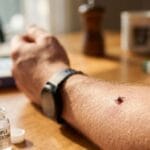
Not sure if your tick bite needs medical attention? Learn when to visit urgent care in NJ, the 24-hour attachment rule, and how to qualify for preventive antibiotics.
April 29, 2026
When to Visit a NJ Urgent Care for a Tick Bite

Key Takeaways:
- Urgent care for tick bite NJ visits are climbing as tick-borne illness rates reach historic highs—knowing when to seek medical attention can prevent serious complications like Lyme disease.
- The 24-hour rule matters: most tick-borne pathogens require prolonged attachment to transmit, so prompt removal and clinical evaluation within 72 hours can qualify you for preventive antibiotics.
- A+ Urgent Care locations in Bloomfield and Cresskill offer same-day tick bite treatment, clinical evaluation, and prophylactic doxycycline when CDC guidelines are met—no ER wait times required.
Table of Contents
- Urgent Care for Tick Bite NJ: Understanding Your Local Risk
- Clinical Signs That Require Immediate Medical Attention
- The 24-Hour Rule: Understanding Tick Attachment Duration
- Safe Removal vs. Professional Extraction
- What to Expect During Your Urgent Care Visit
- Deer Tick vs. Dog Tick: Does Identification Matter?
- Lyme Disease Testing in NJ: What You Need to Know
- Frequently Asked Questions
Urgent Care for Tick Bite NJ: Understanding Your Local Risk
New Jersey ranks among the top three states in the nation for Lyme disease cases. According to recent reports, between 2022 and 2024, over 21,000 residents were diagnosed with the infection.
And 2026 is shaping up to be even worse—CDC data shows tick-related emergency room visits are running at their highest level in nearly a decade.
The Local Risk Is Real
If you live in Northern NJ, Bergen County, or anywhere in the Garden State, tick exposure isn’t a hypothetical concern.
Ticks thrive in suburban yards, hiking trails, parks, and even well-maintained lawns that border wooded areas.
Rutgers research confirms that ticks are becoming more common throughout the state as climate conditions and suburban development push humans closer to tick habitats.
The deer tick (black-legged tick) is the primary carrier of Lyme disease in our region.
But it’s not the only threat.
Lone Star ticks, which can cause Alpha-gal syndrome, are expanding their range northward.
Dog ticks carry Rocky Mountain spotted fever.
Multiple species mean multiple risks.
Ocean County alone saw 570 people contract Lyme disease in 2025, and similar rates affect communities across Northern NJ.
Why Urgent Care Makes Sense
So should you visit a doctor for every tick bite? Not necessarily—but many bites do warrant professional evaluation. The question is knowing which ones.
A tick removal clinic or walk-in urgent care can assess your risk, perform proper extraction if needed, and prescribe prophylactic antibiotics when appropriate. You get answers the same day without sitting in an emergency room for hours.
Clinical Signs That Require Immediate Medical Attention
How do you know when a tick bite has become something more serious? Watch for these warning signs in the days and weeks following a bite.
Symptoms That Warrant Same-Day Evaluation
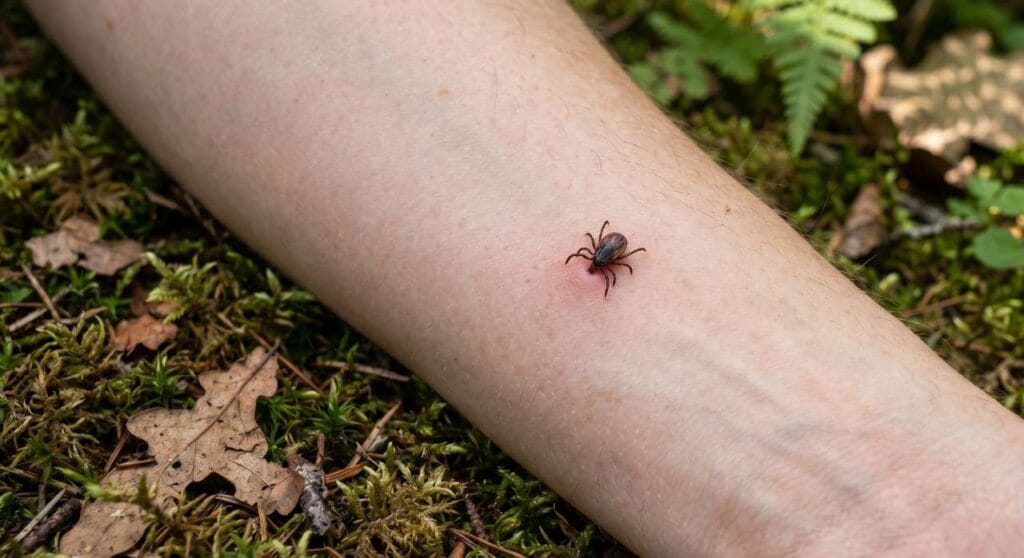
The expanding rash (erythema migrans). The classic bullseye pattern—a red ring that expands outward from the bite site—is the hallmark of early Lyme disease.
But not all Lyme rashes look like perfect bullseyes. Any expanding red area near a tick bite should be evaluated promptly.
Fever and chills. A fever developing within 1-4 weeks of a tick bite suggests possible infection. Don’t dismiss it as a cold or flu without considering the tick connection.
Severe fatigue. Not just tiredness—the kind of exhaustion that makes normal activities feel impossible.
Muscle and joint pain. Aching that seems out of proportion to your activity level, especially if it develops suddenly.
Headache and stiff neck. These can indicate the infection is affecting the nervous system.
Symptoms That Require Emergency Care
Some symptoms indicate severe or rapidly progressing infection:
- Facial drooping or paralysis (Bell’s palsy)
- Severe joint swelling, especially in the knees
- Heart palpitations or irregular heartbeat
- Confusion or cognitive changes
- Numbness or tingling spreading through extremities
If you experience any of these, go directly to the emergency room.
When You’re Not Sure
Uncertainty is a valid reason to seek care. If you were bitten by a tick in New Jersey and something feels off—even if you can’t pinpoint exactly what—an urgent care visit provides peace of mind and catches problems early.
A+ Urgent Care providers can assess your symptoms and determine whether treatment is needed.
The 24-Hour Rule: Understanding Tick Attachment Duration
How long after a tick bite should I go to urgent care? The answer depends partly on how long the tick was attached—but estimating attachment duration isn’t always straightforward.
The Science of Transmission
Lyme disease bacteria (Borrelia burgdorferi) live in the tick’s gut. When a tick feeds, it takes time for the bacteria to migrate from the gut to the salivary glands and into the host.
Research suggests this process requires approximately 36-48 hours of attachment for Lyme disease transmission.
What does this mean practically?
- Tick attached less than 24 hours: Low risk for Lyme disease
- Tick attached 24-36 hours: Moderate risk
- Tick attached more than 36 hours: Higher risk; prophylactic treatment may be recommended
The Problem with Estimating
Most people don’t know exactly when the tick attached. You might notice it after a hike, but did it climb on during the first mile or the last? Was it there overnight?
Some clues help estimate duration:
| Tick Appearance | Likely Attachment Duration |
| Flat, not engorged | Less than 24 hours |
| Slightly swollen | 24-48 hours |
| Fully engorged (round, dark) | 48-72+ hours |
When the 72-Hour Window Matters
CDC guidelines allow for prophylactic doxycycline if:
- The tick is identified as a deer tick
- Attachment lasted 36 hours or more (or duration is uncertain but engorged)
- Treatment can begin within 72 hours of tick removal
- The patient has no contraindications to doxycycline
If you removed a tick yesterday and you’re reading this today, the window for preventive treatment may still be open.
Don’t wait—visit a tick bite treatment clinic before the 72-hour mark passes.
Safe Removal vs. Professional Extraction
Can you remove a tick yourself, or should you go to urgent care for extraction? In most cases, home removal is appropriate—but technique matters enormously.
When Home Removal Is Appropriate
If you can see the tick clearly and have access to fine-tipped tweezers, home removal is fine. The key is doing it correctly.
Proper removal technique:
- Use fine-tipped tweezers (not the flat, blunt kind)
- Grasp the tick as close to the skin surface as possible
- Pull upward with steady, even pressure—don’t twist or jerk
- Don’t squeeze the tick’s body
- Clean the bite area with rubbing alcohol or soap and water
- Save the tick in a sealed container if possible
What NOT to do:
- Don’t use nail polish, petroleum jelly, or heat to make the tick “back out”
- Don’t grab the tick by its swollen abdomen
- Don’t crush the tick with your bare fingers
When Professional Extraction Is Needed
Visit urgent care for tick removal if:
- The tick is deeply embedded and you can’t grasp it properly
- The mouthparts broke off during attempted removal
- The tick is in a difficult location (ear canal, eyelid, scalp where you can’t see clearly)
- You’re not confident in your ability to remove it correctly
- Signs of infection are already present (redness, swelling, pus)
A provider can use proper instruments to extract embedded ticks and ensure complete removal.
They can also clean the wound and assess whether antibiotics are warranted.
Mouthparts Left Behind
What if you removed the tick but the head or mouthparts stayed in the skin? Don’t panic. Leftover mouthparts can’t transmit disease—the bacteria live in the tick’s gut and salivary glands, not the mouthparts alone.
However, retained mouthparts can cause local irritation or infection. If the area becomes increasingly red, swollen, or painful over the following days, have it evaluated.
The body will eventually push the fragments out, but secondary infection sometimes requires treatment.
What to Expect During Your Urgent Care Visit
Never been to urgent care for a tick bite before? Here’s what typically happens so you know what to expect.
Check-In and Triage
You’ll provide basic information about:
- When you noticed the tick
- How long you estimate it was attached
- Whether you removed it yourself (and if so, whether you have the tick)
- Any symptoms you’ve experienced
- Your medical history and allergies
Clinical Evaluation
A provider—like Dr. Ajay Jetley at A+ Urgent Care—will examine:
- The bite site for signs of early stages of Lyme disease
- Any rash, noting its size, shape, and whether it’s expanding
- Your vital signs
- Lymph nodes near the bite
- The tick itself, if you brought it, to identify the species
Treatment Decisions
Based on the evaluation, the provider may:
Prescribe prophylactic doxycycline if you meet CDC criteria. A single 200mg dose within 72 hours of tick removal can prevent Lyme disease in high-risk situations.
Recommend watchful waiting if the risk is low. You’ll receive instructions on what symptoms to monitor for over the following 30 days.
Order blood tests if you’re already symptomatic. Keep in mind that Lyme tests detect antibodies, which take 2-6 weeks to develop. Testing immediately after a bite usually produces false negatives.
Provide wound care if the bite site shows signs of secondary infection.
What Urgent Care Cannot Do
Will urgent care test a tick for Lyme disease? Unfortunately, no. Tick testing isn’t performed at most clinical facilities.
Rutgers University’s “NJ Ticks for Science” program accepts tick submissions for research purposes, but results aren’t available quickly enough to guide immediate treatment decisions.
Clinical decisions are based on tick species identification (visual), attachment duration, and patient symptoms—not tick testing.
Deer Tick vs. Dog Tick: Does Identification Matter?
Yes, tick identification matters—a lot. Different tick species carry different diseases, and some species don’t transmit Lyme disease at all.
Deer Tick (Black-Legged Tick)
The primary concern in New Jersey. Deer ticks transmit:
- Lyme disease
- Anaplasmosis
- Babesiosis
- Powassan virus
Appearance:
- Small (nymphs are poppy-seed sized; adults are sesame-seed sized)
- Orange-brown body with dark legs
- No white markings
If a deer tick was attached for 36+ hours, prophylactic treatment is often recommended.
Dog Tick (American Dog Tick)
Less concerning for Lyme disease—but not harmless. Dog ticks transmit:
- Rocky Mountain spotted fever
- Tularemia
Appearance:
- Larger than deer ticks
- Brown with white or gray mottled markings on the back
- More rounded body shape
Dog ticks do NOT transmit Lyme disease. If you can confirm the tick was a dog tick, Lyme prophylaxis isn’t necessary. However, watch for symptoms of other tick-borne illnesses.
Lone Star Tick
Increasingly common in New Jersey. Lone Star ticks transmit:
- Ehrlichiosis
- Alpha-gal syndrome (red meat allergy)
Appearance:
- Medium-sized
- Females have a distinctive white spot on their back
- Aggressive biters
In 2024, researchers documented the first known death from Alpha-gal syndrome in a New Jersey man who experienced a fatal allergic reaction after eating a hamburger—a sobering reminder that Lyme disease isn’t the only serious tick-borne threat in our state.
Quick Identification Table
| Feature | Deer Tick | Dog Tick | Lone Star Tick |
| Size | Very small | Large | Medium |
| Color | Orange-brown | Brown with white markings | Brown, white spot on female |
| Lyme disease risk | Yes | No | No |
| Other diseases | Anaplasmosis, Babesiosis | RMSF, Tularemia | Ehrlichiosis, Alpha-gal |
Bring the tick with you to your urgent care visit if possible. Proper identification helps guide treatment decisions.
Lyme Disease Testing in NJ: What You Need to Know
Do I need antibiotics for a tick bite in NJ? And should I get tested for Lyme disease? These are the two most common questions after a tick bite, and the answers aren’t always straightforward.
The Testing Timeline Problem
Blood tests for Lyme disease detect antibodies—proteins your immune system produces in response to infection. The problem? Antibodies take time to develop.
Testing accuracy by timing:
- 0-2 weeks after bite: Tests are often negative even if you’re infected
- 2-4 weeks: Antibodies may be detectable
- 4-6 weeks: Most reliable window for accurate testing
Testing immediately after a bite is usually pointless. A negative result doesn’t mean you’re not infected—it means your body hasn’t produced enough antibodies yet.
When Testing Makes Sense
Your provider may recommend Lyme disease testing if:
- You have symptoms consistent with Lyme (rash, fever, fatigue, joint pain)
- Several weeks have passed since the bite
- You never noticed a bite but have symptoms and live in a high-risk area
The Two-Tiered Testing Process
Lyme testing uses a two-step approach:
- ELISA or EIA test (screening)
- Western blot (confirmatory, if ELISA is positive)
Both tests must be positive for a Lyme diagnosis. False positives and false negatives occur, which is why clinical judgment—not just test results—guides treatment decisions.
Treatment Without Testing
In many cases, providers treat based on clinical presentation rather than test results. If you have the classic bullseye rash (erythema migrans), that’s diagnostic—no blood test needed. Treatment begins immediately.
Early treatment with antibiotics (typically doxycycline for 10-21 days) is highly effective.
Waiting for test results can delay treatment and allow the infection to progress. For more information on tick trends in New Jersey,NJ Spotlight News covers ongoing research.
Frequently Asked Questions
How long after a tick bite should I go to urgent care?
Seek urgent care within 72 hours if you want to qualify for prophylactic antibiotics.
The CDC guidelines allow a single dose of doxycycline if the tick was a deer tick attached for 36+ hours and treatment starts within 72 hours.
If you develop symptoms like rash, fever, or joint pain at any point in the following 30 days, visit urgent care regardless of timing.
Will urgent care test a tick for Lyme disease?
No, urgent care clinics don’t typically test ticks for pathogens.
Treatment decisions are based on tick species identification (visual examination), estimated attachment duration, and patient symptoms.
Rutgers University accepts tick submissions for research through their “NJ Ticks for Science” program, but results aren’t available quickly enough to guide clinical care.
Do I need antibiotics for a tick bite in NJ?
Not every tick bite requires antibiotics.
Prophylactic doxycycline is recommended when: the tick is identified as a deer tick, attachment lasted 36 hours or more, treatment can begin within 72 hours, and the patient has no contraindications.
Your provider will assess these factors during your visit. Low-risk bites may only require monitoring.
What’s the difference between a deer tick and a dog tick?
Deer ticks are small (poppy-seed to sesame-seed sized), orange-brown with dark legs, and transmit Lyme disease.
Dog ticks are larger, brown with white mottled markings, and do NOT transmit Lyme disease (though they carry other illnesses). Identification matters because it determines whether Lyme prophylaxis is appropriate.
Can I get Lyme disease if the tick was attached for less than 24 hours?
The risk is very low.
Research indicates Lyme disease bacteria require 36-48 hours of tick attachment to transmit to the host.
A tick removed within 24 hours is unlikely to have transmitted Lyme disease.
However, other tick-borne illnesses like Powassan virus can transmit faster, so monitoring for symptoms remains important.
What does early Lyme disease look like?
Early Lyme disease often presents with an expanding red rash (erythema migrans) at or near the bite site, appearing 3-30 days after the bite.
The rash may form a bullseye pattern but doesn’t always. Other early symptoms include fever, fatigue, headache, muscle aches, and swollen lymph nodes. About 20-30% of patients never develop a visible rash.
Is there an urgent care near me for tick bite treatment?
A+ Urgent Care has locations in Bloomfield and Cresskill, NJ, offering same-day tick bite evaluation, prophylactic treatment when indicated, and Lyme disease testing for symptomatic patients. Walk-in appointments are available with no ER wait times.
About Dr. Ajay Jetley & A+ Urgent Care
Dr. Ajay Jetley is a board-certified emergency medicine physician with over 15 years of clinical experience treating acute illnesses and injuries across Northern New Jersey.
As Medical Director of A+ Urgent Care, he oversees tick bite evaluations, Lyme disease assessments, and comprehensive urgent care services at locations in both Bloomfield and Cresskill.
Dr. Jetley’s patient-centered approach ensures thorough evaluation and clear communication about treatment options.
The brand-new Bloomfield location already holds a 4.8-star rating on Google—see what patients are saying. If you’ve been bitten by a tick and need same-day evaluation, walk in today for expert care.
Meet the Author

Dr. Ajay V. Jetley, MD, is a Emergency Medicine certified physician with over 15 years of clinical experience. As the Medical Director for A+ Urgent Care in Bloomfield and Cresskill, NJ, he is dedicated to providing high-quality, accessible outpatient care for acute illnesses, minor injuries, and wellness services. Dr. Jetley combines his extensive medical expertise and affiliations with premier institutions like Englewood Hospital with a thorough, patient-centered approach to serving the Northern New Jersey community.