Found a tick on your body in New Jersey? Learn immediate removal steps, when urgent care is needed, and what symptoms to watch for in the weeks following a bite.
April 29, 2026
What to Do After a Tick Bite: NJ Urgent Care Guide

Key Takeaways:
- What to do after a tick bite NJ residents need to know: remove the tick promptly using fine-tipped tweezers, clean the bite site, save the tick for identification, and monitor for symptoms over the following 30 days.
- Urgent care tick removal in Bloomfield NJ and Cresskill NJ provides same-day clinical evaluation, embedded tick extraction, and prophylactic doxycycline protocol when CDC guidelines are met.
- Early signs of Lyme disease—including the erythema migrans (bullseye rash), fever, and fatigue—can appear 3-30 days after a bite, making careful monitoring essential even if you feel fine initially.
Table of Contents
- What to Do After a Tick Bite NJ: Immediate Steps
- How to Remove a Tick Safely at Home
- When to Visit Urgent Care for Tick Evaluation
- Tick Bite Clinical Treatment Protocols
- Tick Bite Infection Signs to Watch For
- Nymph vs. Adult Tick Exposure: Does Size Matter?
- Tick Prevention for Northern NJ Residents
- Frequently Asked Questions
What to Do After a Tick Bite NJ: Immediate Steps
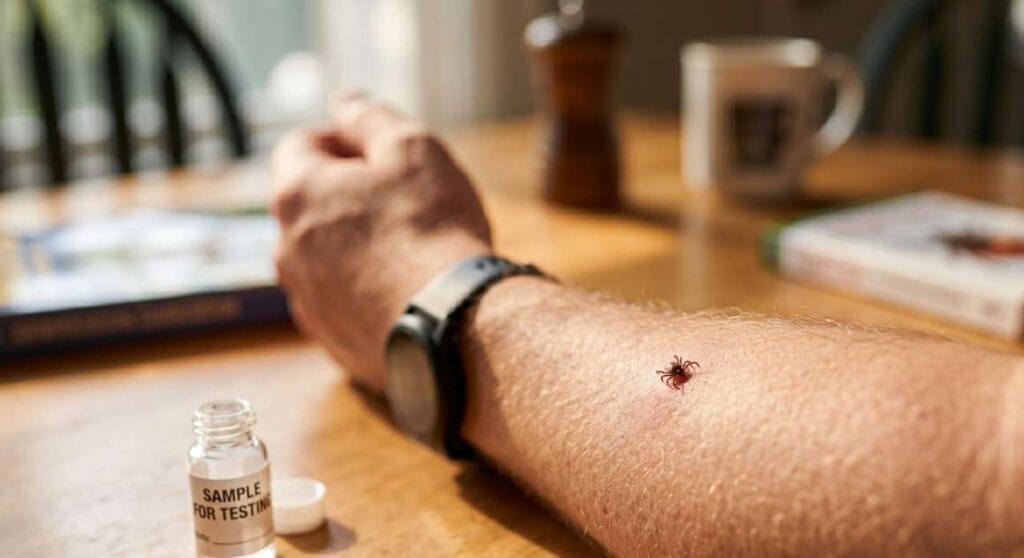
You found a tick on your body. Maybe it’s still attached, maybe you already pulled it off. Either way, what you do in the next few minutes and hours matters. New Jersey has some of the highest Lyme disease rates in the country—over 21,000 cases were reported between 2022 and 2024—so taking tick bites seriously isn’t paranoia. It’s common sense.
Your Immediate Checklist
If the tick is still attached:
- Don’t panic—but don’t wait either
- Get fine-tipped tweezers (not the flat, blunt kind)
- Remove the tick using proper technique (detailed in the next section)
- Clean the bite area with rubbing alcohol or soap and water
- Save the tick in a sealed bag or container
If you already removed the tick:
- Clean the bite site if you haven’t already
- Note the date, time, and location on your body
- Take a photo of the bite site for reference
- Save the tick if you still have it
- Begin monitoring for symptoms
Why Timing Matters
According to the CDC’s guidance on what to do after a tick bite, prompt removal significantly reduces disease transmission risk.
Most tick-borne pathogens—including the Lyme disease bacteria—require 36-48 hours of attachment to transfer to the host. A tick removed within 24 hours is unlikely to have transmitted Lyme disease.
But here’s the catch: you probably don’t know exactly when the tick attached.
Did it climb on during your morning walk or your afternoon gardening session? Was it there overnight? The uncertainty is why professional evaluation at a walk-in clinic makes sense for many tick bites in Northern NJ.
How to Remove a Tick Safely at Home
Proper tick removal technique can mean the difference between a minor inconvenience and an increased infection risk.
Most people can remove ticks at home—but doing it wrong can push infected fluids into the wound or leave mouthparts embedded in the skin.
Step-by-Step Removal Process
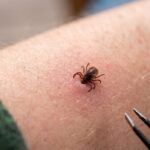
What you need: Fine-tipped, pointy tweezers. Not the flat cosmetic kind.
- Grasp the tick as close to the skin as possible. You want to grab the head and mouthparts, not the body.
- Pull upward with steady, even pressure. Don’t twist, jerk, or yank. A slow, firm pull is most effective.
- Don’t squeeze the tick’s body. Compressing the abdomen can inject saliva and gut contents—including pathogens—into the bite wound.
- Check that the entire tick came out. Look for the head and mouthparts. If they’re missing, they may still be in the skin.
- Clean the area thoroughly. Use rubbing alcohol, iodine scrub, or soap and water on both the bite site and your hands.
- Dispose of the tick properly. Flush it, seal it in tape, or submerge it in alcohol. Better yet—save it for identification.
What NOT to Do
Folk remedies don’t work and can make things worse:
- No nail polish or petroleum jelly. These don’t make ticks “back out” and may cause them to regurgitate into the wound.
- No heat or matches. Burning a tick while it’s attached is dangerous and ineffective.
- No twisting. Twisting can break the mouthparts off in the skin.
- No squeezing the body. Compression increases infection risk.
Save the Tick
If possible, place the tick in a sealed plastic bag or small container. Identifying the tick species helps providers assess your risk level. Deer ticks (black-legged ticks) transmit Lyme disease. Dog ticks do not. Lone Star ticks carry different pathogens entirely.
Rutgers University’s Center for Vector Biology provides tick identification resources and accepts submissions through their research programs.
When to Visit Urgent Care for Tick Evaluation
Do I need to go to urgent care for a tick bite in NJ? Not every tick bite requires medical attention—but many do.
Here’s how to decide whether you need professional urgent care tick evaluation.
Visit Urgent Care If:
The tick was attached for more than 24 hours (or you’re unsure how long). Extended attachment increases disease transmission risk and may qualify you for prophylactic treatment.
You couldn’t remove the tick completely. Embedded tick extraction requires proper instruments and technique. Leftover mouthparts won’t transmit disease but can cause infection.
The tick was deeply embedded. If you can’t grasp it properly with tweezers, don’t dig around—let a provider handle it.
You develop any symptoms. Rash, fever, fatigue, headache, muscle aches, or joint pain in the days or weeks following a bite warrant evaluation.
The bite site looks infected. Increasing redness, swelling, warmth, or pus suggests secondary bacterial infection.
You’re in a high-risk area. New Jersey qualifies. The state reported 6,256 Lyme disease cases in 2024 alone.
Where to Go in Northern NJ
For Essex County tick bite urgent care, A+ Urgent Care in Bloomfield offers same-day evaluation and treatment. Bergen County tick removal clinic services are available at the Cresskill location.
Both facilities provide:
- Professional tick extraction for embedded ticks
- Clinical evaluation of bite sites and symptoms
- Prophylactic antibiotics when CDC criteria are met
- Guidance on symptom monitoring
- Referrals for Lyme disease testing when appropriate
Walk-in appointments are available—no need to wait for your primary care doctor or sit in an emergency room for hours.
Tick Bite Clinical Treatment Protocols
What happens when you visit urgent care for a tick bite? Understanding tick bite clinical treatment protocols helps you know what to expect and what questions to ask.
The Evaluation Process
A provider—like Dr. Ajay Jetley at A+ Urgent Care—will assess several factors:
Tick identification. If you brought the tick, the provider will examine it to determine the species. Deer tick bites warrant more concern than dog tick bites for Lyme disease specifically.
Attachment duration. How engorged was the tick? A flat tick was recently attached. A fully engorged, round tick has been feeding for 48-72+ hours.
Bite site examination. Any rash? Redness? Signs of infection?
Symptom review. Fever, fatigue, headache, joint pain?
Medical history. Allergies to antibiotics? Previous tick-borne illness?
Prophylactic Doxycycline Protocol
The New Jersey Department of Health Lyme disease guidelines and CDC recommendations support prophylactic antibiotics in specific situations. A single 200mg dose of doxycycline may be prescribed if:
- The tick is identified as a deer tick (Ixodes scapularis)
- Attachment duration was 36 hours or more (or the tick was engorged)
- Prophylaxis can begin within 72 hours of tick removal
- The patient is not pregnant and is over 8 years old
Prophylactic tick bite treatment isn’t appropriate for every situation.
Low-risk bites—short attachment duration, dog tick identification, no symptoms—may only require monitoring instructions.
What About Testing?
Will an urgent care test the tick I removed? Unfortunately, most clinical facilities don’t perform tick pathogen testing.
Decisions are based on visual species identification, attachment duration, and symptoms.
Blood tests for Lyme disease detect antibodies, which take 2-6 weeks to develop.
Testing immediately after a bite usually produces false negatives. Your provider may recommend testing later if symptoms develop.
Tick Bite Infection Signs to Watch For
Even if your urgent care visit goes smoothly and you receive prophylactic treatment, monitoring for tick bite infection signs over the following weeks remains important.
The incubation period for Lyme disease ranges from 3-30 days, so symptoms may not appear immediately.
Early Signs of Lyme Disease After a Bite
Erythema migrans (bullseye rash). The hallmark sign. A red area that expands outward from the bite site, often clearing in the center to create a ring or bullseye pattern.
Appears in 70-80% of Lyme cases, typically 7-14 days after the bite.
Fever and chills. Low-grade fever is common in early Lyme disease.
Fatigue. Not ordinary tiredness—the kind of exhaustion that interferes with daily activities.
Headache and stiff neck. Can indicate the infection is affecting the nervous system.
Muscle and joint aches. Generalized achiness, sometimes migrating from one joint to another.
Swollen lymph nodes. Particularly near the bite site.
How Long Should I Monitor a Tick Bite for a Rash?
Monitor the bite site daily for at least 30 days. Take photos every few days to track any changes. A rash may appear anywhere from 3-30 days after the bite—and not always at the bite location itself.
Later-Stage Symptoms
If early Lyme disease goes untreated, more serious symptoms can develop weeks to months later:
- Multiple rashes on different body areas
- Facial paralysis (Bell’s palsy)
- Heart palpitations or irregular heartbeat
- Severe joint swelling, especially in the knees
- Numbness or tingling in extremities
- Cognitive difficulties
Other Tick-Borne Pathogens
Lyme disease isn’t the only concern. New Jersey ticks also carry:
| Disease | Symptoms | Onset |
| Anaplasmosis | Fever, headache, muscle pain | 1-2 weeks |
| Babesiosis | Fever, fatigue, hemolytic anemia | 1-4 weeks |
| Ehrlichiosis | Fever, headache, fatigue | 1-2 weeks |
| Powassan virus | Fever, headache, encephalitis | 1-4 weeks |
The first known death from Alpha-gal syndrome—a Lone Star tick-transmitted condition causing red meat allergy—occurred in a New Jersey man in 2024, highlighting that tick-borne illness extends beyond Lyme disease.
Nymph vs. Adult Tick Exposure: Does Size Matter?
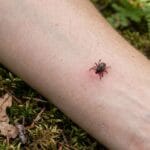
You found a tiny speck attached to your skin. Is that a tick? Does the size affect your risk level? Understanding nymph versus adult tick exposure helps contextualize your situation.
Nymph Stage Ticks
Size: About the size of a poppy seed—extremely small and easy to miss.
Peak season: Late spring through summer (May-July).
Why they’re dangerous: Their tiny size means they often go unnoticed for longer periods, increasing attachment duration and disease transmission risk. Nymphs are responsible for the majority of Lyme disease transmission.
Identification challenge: At this size, distinguishing deer tick nymphs from other species is difficult without magnification.
Adult Ticks
Size: Sesame seed to apple seed sized—much easier to spot.
Peak season: Fall and early spring.
Transmission risk: Still significant, but adults are noticed and removed more quickly on average.
Does Size Affect Treatment Decisions?
Not directly—but it affects attachment duration estimates. If you found a tiny nymph that was fully engorged, it’s been there a while. If you found a large adult tick that was still flat, attachment was recent.
The clinical evaluation focuses on:
- Species identification (deer tick vs. dog tick vs. Lone Star tick)
- Estimated attachment duration (based on engorgement level)
- Time since removal (for prophylaxis eligibility)
- Presence of symptoms
Bring the tick—regardless of size—to your urgent care visit if possible.
Tick Prevention for Northern NJ Residents
The best tick bite treatment is avoiding the bite entirely. Rutgers research confirms that ticks are becoming more common throughout New Jersey, making prevention strategies essential for anyone who spends time outdoors.
Personal Protection
Use EPA-registered repellents. According to CDC tick bite prevention guidelines, products containing DEET, picaridin, IR3535, or oil of lemon eucalyptus effectively repel ticks.
Apply to exposed skin when hiking, gardening, or spending time in tick habitat.
Treat clothing with permethrin. The Global Lyme Alliance tick repellent guide recommends 0.5% permethrin products for clothing, shoes, and gear. Permethrin kills ticks on contact and remains effective through several washes.
Dress strategically:
- Long sleeves and long pants in tick habitat
- Light-colored clothing (ticks are easier to spot)
- Pants tucked into socks (looks silly, works great)
- Closed-toe shoes
Stay on trails. Walk in the center of hiking paths. Avoid brushing against vegetation where ticks wait for hosts.
After Outdoor Activity
Shower within two hours. Showering can wash off unattached ticks and provides an opportunity for a thorough check.
Perform a full-body tick check. Examine carefully:
- Under arms
- In and around ears
- Inside belly button
- Behind knees
- Between legs
- Around the waist
- In hair and along hairline
Tumble dry clothing on high heat. Ten minutes on high heat kills ticks on dry clothing.
Check pets and gear. Ticks hitchhike on dogs, backpacks, and jackets.
Yard Management
If you have outdoor space in Northern NJ:
- Clear leaf litter regularly
- Mow the lawn frequently
- Create a 3-foot wood chip or gravel barrier between lawn and wooded areas
- Keep play areas away from yard edges
- Consider professional tick treatment in spring
Frequently Asked Questions
Do I need to go to urgent care for a tick bite in NJ?
Not every tick bite requires urgent care, but many do.
Seek evaluation if: the tick was attached for more than 24 hours, you couldn’t remove it completely, you develop symptoms like rash or fever, or you’re unsure about the species or attachment duration.
New Jersey has among the highest Lyme disease rates nationally, so erring on the side of caution is reasonable.
How long should I monitor a tick bite for a rash?
Monitor the bite site daily for at least 30 days after the bite. The erythema migrans (bullseye rash) typically appears 7-14 days after infection but can develop anywhere from 3-30 days post-bite.
Take photos every few days to track changes. A rash may also appear at locations other than the original bite site.
Will an urgent care test the tick I removed?
No, most urgent care clinics don’t perform pathogen testing on ticks.
Treatment decisions are based on visual species identification, estimated attachment duration, and patient symptoms.
Rutgers University accepts tick submissions for research purposes, but results aren’t available quickly enough to guide clinical decisions. Bring the tick anyway—species identification helps assess risk.
What are the early signs of Lyme disease after a bite?
Early Lyme disease symptoms include: an expanding red rash (erythema migrans) that may form a bullseye pattern, fever and chills, fatigue, headache, muscle and joint aches, stiff neck, and swollen lymph nodes.
Symptoms typically appear 3-30 days after the bite. About 20-30% of infected people never develop a visible rash, so monitor for other symptoms even without skin changes.
How soon after a tick bite can I get tested for Lyme disease?
Blood tests for Lyme disease detect antibodies, which take 2-6 weeks to develop.
Testing immediately after a bite usually produces false negatives.
The most reliable testing window is 4-6 weeks post-bite. If you have symptoms consistent with Lyme disease, providers may treat based on clinical presentation rather than waiting for test results.
Can I get antibiotics for a tick bite without symptoms?
Yes, in specific circumstances. CDC guidelines support a single prophylactic dose of doxycycline if: the tick was a deer tick, attachment lasted 36+ hours, treatment begins within 72 hours of removal, and you have no contraindications.
Your provider will assess these factors during evaluation. Not all tick bites warrant prophylactic antibiotics.
Where can I get urgent care tick removal in Bloomfield NJ?
A+ Urgent Care in Bloomfield offers same-day tick bite evaluation, embedded tick extraction, prophylactic treatment when indicated, and symptom monitoring guidance. Walk-in appointments are available with no ER wait times.
The Cresskill location provides identical services for Bergen County residents.
About Dr. Ajay Jetley & A+ Urgent Care
Dr. Ajay Jetley is a board-certified emergency medicine physician with over 15 years of clinical experience treating acute illnesses and injuries across Northern New Jersey.
As Medical Director of A+ Urgent Care, he oversees tick bite evaluations, Lyme disease assessments, and comprehensive urgent care services at locations in both Bloomfield and Cresskill.
Dr. Jetley’s patient-centered approach ensures thorough evaluation and clear communication about treatment options—including prophylactic doxycycline protocol when CDC guidelines are met.
The brand-new Bloomfield location already holds a 4.8-star rating on Google—see what patients are saying. If you’re experiencing symptoms after a tick bite or need professional extraction, walk into A+ Urgent Care in Bloomfield or Cresskill today.
Meet the Author

Dr. Ajay V. Jetley, MD, is a Emergency Medicine certified physician with over 15 years of clinical experience. As the Medical Director for A+ Urgent Care in Bloomfield and Cresskill, NJ, he is dedicated to providing high-quality, accessible outpatient care for acute illnesses, minor injuries, and wellness services. Dr. Jetley combines his extensive medical expertise and affiliations with premier institutions like Englewood Hospital with a thorough, patient-centered approach to serving the Northern New Jersey community.