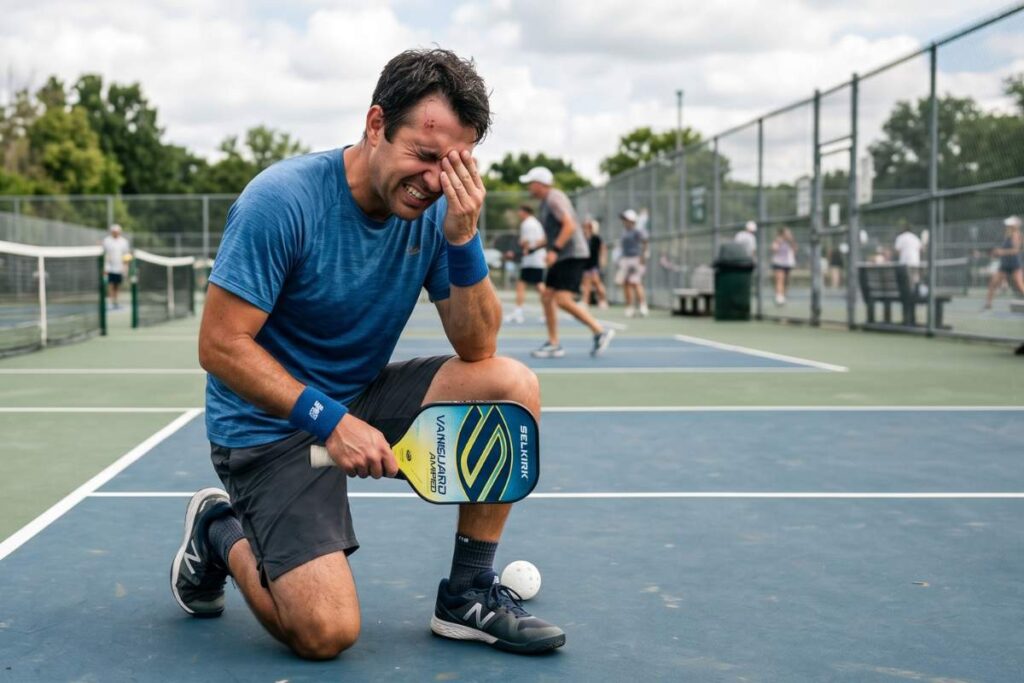
Took a pickleball to the face? Learn how to tell a black eye from a scratched cornea, when urgent care can help, and when to head to the ER instead.

Key Takeaways:
- Getting hit in the eye with a pickleball happens more often than players expect—the small court and fast ball speeds create a perfect setup for facial impacts.
- Most pickleball eye injuries are corneal abrasions (scratched corneas) that urgent care can diagnose same-day using a fluorescent eye stain test and treat with antibiotic eye drops.
- Certain symptoms—visible blood in the eye, sudden vision loss, or flashing lights—require emergency care, not urgent care.
Table of Contents
- Why Pickleball Eye Injuries Are So Common
- Immediate First Aid After a Pickleball Hit to the Face
- Black Eye vs. Scratched Cornea: How to Tell the Difference
- Signs You Need to Visit Urgent Care
- When to Go to the ER Instead
- Frequently Asked Questions
Why Pickleball Eye Injuries Are So Common
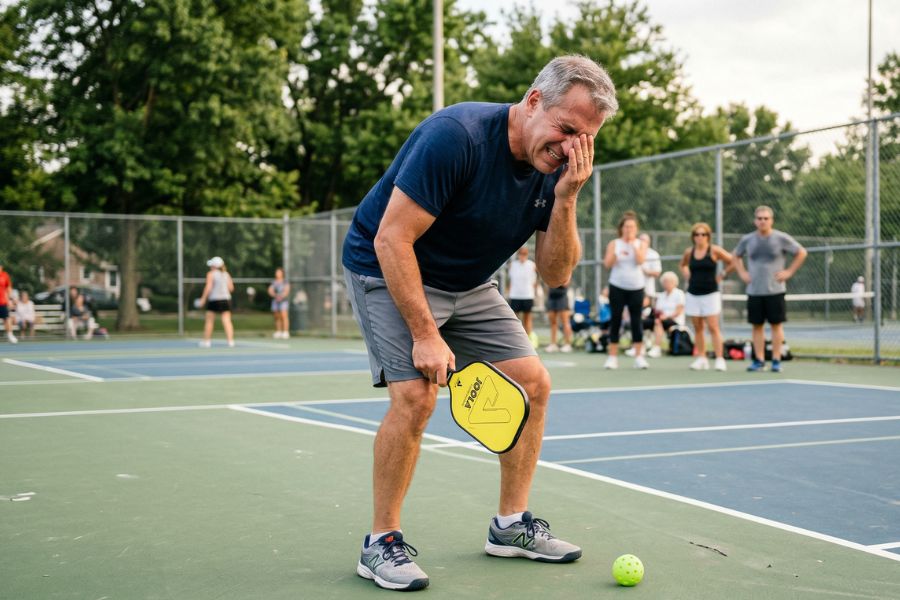
A pickleball court is small. Really small. At the kitchen line, you’re standing just fourteen feet from your opponent—and when a ball leaves their paddle at 40 mph, you’ve got roughly a quarter of a second to react. That’s barely enough time to blink, let alone dodge.
Add in the unpredictability of paddle deflections, and you’ve got a recipe for balls flying directly at faces. Dr. Ajay Jetley, Medical Director at A+ Urgent Care and an avid pickleball player himself, has witnessed these injuries happen on court. One moment everyone’s having fun, the next someone’s clutching their eye and asking if they need to go to the hospital.
The answer depends on what happened and what symptoms develop. A pickleball eye injury can range from a simple bruise (black eye) to a scratched cornea to serious internal damage. Knowing the difference helps you decide where to go and how urgently.
Immediate First Aid After a Pickleball Hit to the Face
What should you do in the first few minutes after taking a ball or paddle to the eye? Your instincts will probably be wrong, so here’s what actually helps.
Do This Immediately
Stop playing. Don’t try to finish the point or the game. Adrenaline masks pain and you won’t know how bad it is until you calm down.
Don’t rub your eye. This is the hardest instruction to follow because rubbing feels instinctive. But if you have a scratched cornea, rubbing will make it worse—potentially dragging debris across the damaged surface or deepening the scratch.
Apply a cold compress to the orbital bone. Notice I said around the eye, not on it. A bag of ice or cold pack held gently against the cheekbone and brow helps reduce swelling without putting pressure on the eyeball itself. Wrap ice in a cloth; don’t put it directly on skin.
Keep the eye closed if possible. Blinking over a scratched cornea is painful and can cause additional irritation.
Remove contact lenses if you wear them. If you can do this without rubbing or touching the eyeball excessively, take them out. Contacts can trap debris against a damaged cornea.
Don’t Do This
- Don’t rinse with tap water unless you have visible debris you’re trying to flush out
- Don’t apply pressure to the eyeball
- Don’t try to remove anything embedded in the eye
- Don’t assume you’re fine just because you can still see
Black Eye vs. Scratched Cornea: How to Tell the Difference
Both injuries happen from getting hit in the eye with a pickleball, but they affect different structures and require different responses.
Black Eye (Periorbital Contusion)
A black eye is bruising of the soft tissue around the eye socket—the eyelids, the skin, sometimes the orbital bone area. The eyeball itself isn’t damaged.
Symptoms:
- Swelling around the eye
- Discoloration (red at first, then purple/blue, eventually yellow-green as it heals)
- Tenderness when touching the area
- Vision is normal once swelling goes down
- No sensation of something in the eye
What to do: Ice, rest, and patience. Most black eyes heal on their own within 1-2 weeks. If swelling is severe or you have pain when moving the eye, get it checked to rule out orbital bone trauma.
Scratched Cornea (Corneal Abrasion)
The cornea is the clear front surface of your eye. When it gets scratched, it’s incredibly painful—way more painful than the injury might seem to warrant.
Symptoms:
- Intense sensation of “sand” or “grit” in the eye
- Pain that worsens with blinking
- Excessive tearing
- Light sensitivity (photophobia)
- Redness in the white of the eye
- Blurry vision in the affected eye
What to do: Visit urgent care. A scratched cornea needs proper diagnosis and treatment to prevent infection and ensure proper healing. Don’t tough it out—corneal infections can cause permanent vision problems.
Quick Comparison
| Factor | Black Eye | Scratched Cornea |
| Pain location | Around the eye | In the eye itself |
| “Grit” sensation | No | Yes, very pronounced |
| Vision affected | Only if swelling blocks view | Often blurry |
| Light sensitivity | Minimal | Often severe |
| Needs medical care? | Usually no | Yes |
Signs You Need to Visit Urgent Care
How do you know when a pickleball eye injury requires professional evaluation? Watch for these symptoms.
The “Sand in My Eye” Feeling
If you feel like there’s something stuck in your eye—gritty, scratchy, persistant—you likely have a corneal abrasion. Even tiny scratches on the cornea produce this sensation because the cornea has more nerve endings per square millimeter than almost any other part of your body.
Blurry Vision After Getting Hit in the Eye
Some blur immediately after impact is normal—your eye is watering, you’re in pain, you can’t keep it open. But if blurry vision persists after 15-20 minutes of resting with the eye closed, that suggests actual damage to the cornea or internal structures.
Pain That Doesn’t Improve
Initial pain from impact should gradually decrease over the first hour. Pain that stays constant or gets worse indicates something that won’t resolve on its own.
Redness That Spreads
A red spot or bloodshot appearance in the white of the eye after impact warrants evaluation to determine the cause and severity.
What Happens at Urgent Care
At A+ Urgent Care locations in Bloomfield and Cresskill, evaluation for eye injuries follows a straightforward process:
- Visual acuity check — Can you read the eye chart with each eye?
- External examination — Looking for swelling, bruising, foreign bodies
- Fluorescent eye stain test — Orange dye drops are placed in the eye, then examined under blue light. Scratches on the cornea light up bright green, making even tiny abrasions visible.
- Treatment — Antibiotic eye drops to prevent infection, pain management, and instructions for follow-up
Most patients are in and out within an hour with a diagnosis and treatment plan. No ER wait times, no emergency room bills.
When to Go to the ER Instead
Urgent care handles most pickleball eye injuries—but some symptoms indicate damage beyond what a walk-in clinic can manage. Go directly to the emergency room or call 911 if you experience:
Visible Blood Inside the Eye
If you can see blood pooling in the front of the eye (between the cornea and iris), you may have a hyphema. This is a medical emergency that requires immediate ophthalmologist evaluation to prevent permanent vision loss.
Sudden Vision Loss
Complete or significant loss of vision in the affected eye suggests serious internal damage—potentially a retinal tear or detachment. Time matters with these injuries.
Flashing Lights or “Floaters”
New onset of flashing lights, a “curtain” across your vision, or a sudden shower of floaters can indicate retinal problems that require emergency specialist care.
Obvious Deformity
If the eye socket appears misshapen or the eyeball looks abnormal, you may have orbital bone trauma or a ruptured globe—both require emergency treatment.
Double Vision That Persists
Seeing double after the initial shock wears off suggests damage to the muscles that control eye movement or to the orbital bones.
When in doubt, call first. A+ Urgent Care staff can help you determine over the phone whether your symptoms are appropriate for urgent care or require the ER.
Frequently Asked Questions
What should I do if a pickleball hits me in the eye?
Stop playing immediately. Don’t rub the eye. Apply a cold compress to the area around the eye (not directly on the eyeball). Keep the eye closed if comfortable. If you experience persistent pain, gritty sensation, blurry vision, or light sensitivity, visit urgent care for evaluation.
Can urgent care treat a scratched cornea?
Yes. Urgent care can diagnose corneal abrasions using a fluorescent eye stain test and prescribe antibiotic eye drops to prevent infection. Most scratched corneas heal within 24-72 hours with proper treatment.
How do I know if my eye injury is serious?
Warning signs of serious eye injury include: visible blood inside the eye, sudden vision loss, flashing lights, a curtain effect across your vision, double vision, or obvious deformity of the eye or eye socket. These symptoms require emergency care, not urgent care.
Is there urgent care for eye injuries near Hillsdale NJ?
A+ Urgent Care in Cresskill serves the Hillsdale area and offers same-day eye injury evaluation, including fluorescent dye testing for corneal abrasions. The Bloomfield location provides the same services for patients in that region.
How long does a scratched cornea take to heal?
Most minor corneal abrasions heal within 24-72 hours. Deeper scratches may take several days to a week. Using prescribed antibiotic drops prevents infection and supports proper healing. Avoid wearing contact lenses until fully healed and cleared by a provider.
Should I wear eye protection when playing pickleball?
Yes. The American Academy of Ophthalmology recommends wrap-around polycarbonate safety goggles with Z87+ impact rating for racquet sports including pickleball. Regular glasses and sunglasses don’t provide adequate protection and can shatter on impact.
About Dr. Ajay Jetley & A+ Urgent Care
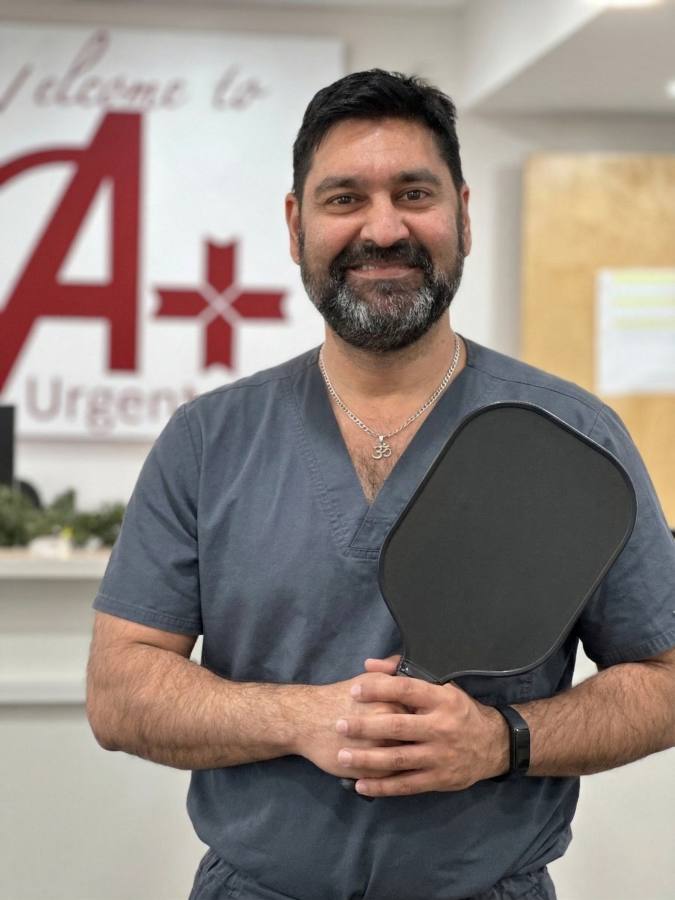
Dr. Ajay Jetley is a board-certified emergency medicine physician and avid pickleball player who has seen eye injuries happen on court firsthand.
As Medical Director of A+ Urgent Care, he oversees locations in Bloomfield and Cresskill, NJ where same-day eye injury evaluation includes fluorescent stain testing, antibiotic eye drops, and specialist referrals when needed.
The brand-new Bloomfield location already holds a 4.8-star rating on Google—see what patients are saying. If you took a pickleball to the face and need urgent care for an eye injury in Bergen County, skip the ER and get evaluated today.