Tick bite ER visits in New Jersey are at their highest level in a decade. Learn prevention strategies, how to remove ticks safely, and when to visit urgent care for Lyme disease concerns.
April 26, 2026
NJ Tick Bites Hit a 10-Year High: Urgent Care Prevention for 2026

Key Takeaways:
- Tick bite urgent care visits in New Jersey are running well above historic averages this spring, with CDC data showing 13 tick-related ER visits per 100,000—and the peak season hasn’t even arrived yet.
- New Jersey ranks third in the nation for Lyme disease cases, with over 21,000 infections reported between 2022 and 2024, making tick prevention and early treatment critical for residents across the state.
- Urgent care clinics can provide same-day tick removal, clinical evaluation, and prophylactic antibiotics when appropriate—saving you hours in an emergency room waiting area.
Table of Contents
- Why Tick Bites in NJ Are Spiking in 2026
- What Does a Tick Bite Look Like?
- How to Safely Remove a Tick
- When to Go to Urgent Care for a Tick Bite
- Lyme Disease Testing and Treatment
- Other Tick-Borne Illnesses in New Jersey
- Prevention Strategies That Work
- Frequently Asked Questions
Why Tick Bites in NJ Are Spiking in 2026
Emergency room visits for tick bites have reached their highest level in nearly a decade. Nationally, the CDC reports 71 tick-related ER visits per 100,000—compared to a typical average of about 30 per 100,000 at this time of year.
The Northeast is seeing the heaviest impact, and New Jersey sits right in the middle of it.
The Numbers Are Alarming
According to CDC data updated on April 12, 2026, New Jersey recorded 13 tick-related complaints per 100,000 ER visits.
Hospital visits related to tick bites are up 25% nationwide compared to April of last year. And tick season typically peaks in May—meaning the worst is likely still ahead.
“We’re running well above historic average and even well above last year,” Dr. John J. Halperin, chair of the New Jersey Stroke Care Advisory Panel and a Lyme disease specialist at Atlantic Health Overlook Medical Center, told ABC News. “The ticks have started a little earlier. There seems to be a lot of them.”
Why Are There More Ticks?
Several factors are contributing to the surge in ticks in Northern NJ and across the state:
- Warmer winters allow more ticks to survive into spring
- Expanding deer populations provide hosts for adult ticks
- Suburban development pushes humans closer to tick habitats (Rutgers research confirms this trend)
- Increased awareness means more people are seeking medical care (though the tick population itself has genuinely grown)
New Jersey has the third highest number of Lyme disease cases in the country. Between 2022 and 2024, the state reported over 21,000 cases.
Ocean County alone saw 570 people contract Lyme disease in 2025.
What Does This Mean for You?
If you spend any time outdoors in New Jersey—hiking, gardening, playing sports, walking your dog—you need a tick prevention strategy.
And if you find a tick on your body, you need to know what to do next and where to go for tick bite treatment if symptoms develop.
What Does a Tick Bite Look Like?
Most people don’t feel a tick bite when it happens. Ticks secrete a numbing agent in their saliva, which is why they can remain attached for days without detection. So how do you know if you’ve been bitten? Check out this gallery of tick bites search images from Google.
Immediately After the Bite
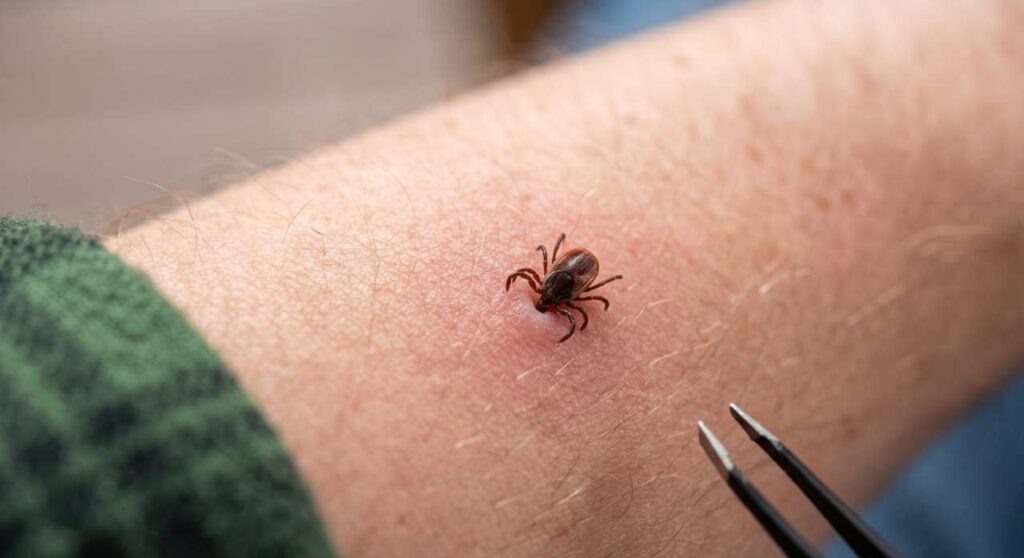
A fresh tick bite often looks like a small red bump—similar to a mosquito bite. You might notice:
- A tiny dark spot (the tick itself, if still attached)
- Mild redness around the bite area
- Slight swelling
- Minimal itching
At this stage, the bite isn’t particularly distinctive. Many people dismiss it as an insect bite and move on.
The Bullseye Rash (Erythema Migrans)
The most recognizable sign of Lyme disease is the bullseye rash, clinically called erythema migrans. Not everyone develops it—estimates suggest 70-80% of Lyme patients see the rash—but when it appears, it’s a clear signal.
Characteristics of the bullseye rash:
- Appears 3-30 days after the bite (average is about 7 days)
- Starts as a red spot and expands outward
- Center may clear, creating a ring or “bullseye” pattern
- Can grow to 12 inches or more in diameter
- Usually not painful or itchy
- May feel warm to the touch
When the Rash Looks Different
Not all Lyme rashes form a perfect bullseye. Some appear as solid red patches. Others look like bruises. If you have any expanding rash near a known or suspected tick bite site, treat it seriously.
No Rash Doesn’t Mean No Infection
About 20-30% of people with Lyme disease never develop a visible rash. If you were bitten by a tick and develop flu-like symptoms—fever, fatigue, headache, muscle aches—within a few weeks, seek clinical evaluation even without a rash present.
How to Safely Remove a Tick
Found a tick attached to your skin? Don’t panic, but do act quickly.
The longer a tick remains attached, the higher the risk of disease transmission. Most tick-borne pathogens require 24-36 hours of attachment to transfer, though some (like Powassan virus) can transmit much faster.
Step-by-Step Tick Removal
What you need: Fine-tipped tweezers (not the wide, flat kind)
- Grasp the tick as close to the skin as possible. You want to grab the head/mouthparts, not the body.
- Pull upward with steady, even pressure. Don’t twist, jerk, or squeeze. A slow, firm pull works best.
- Don’t crush the tick’s body. Squeezing can push infected fluids into the bite wound.
- Clean the bite area. Use rubbing alcohol, iodine, or soap and water.
- Dispose of the tick properly. Flush it down the toilet, seal it in tape, or place it in alcohol. Don’t crush it with your fingers.
What NOT to Do
Some folk remedies make the situation worse:
- Don’t use nail polish, petroleum jelly, or heat to make the tick “back out.” These methods don’t work and may cause the tick to regurgitate into the wound.
- Don’t grab the tick by the body. Squeezing the abdomen can inject more pathogens into your skin.
- Don’t wait for the tick to detach on its own. Time matters.
Save the Tick If Possible
If you can safely preserve the tick in a sealed bag or container, bring it to your urgent care visit. Identifying the tick species helps providers assess your risk level. Deer ticks (black-legged ticks) carry Lyme disease. Lone Star ticks can cause Alpha-gal syndrome. Different ticks carry different diseases.
Rutgers University runs a program called “NJ Ticks for Science” that accepts tick submissions for testing and research. You can contribute to tracking tick-borne illness trends across the state.
When to Go to Urgent Care for a Tick Bite
Should I go to the doctor for a tick bite? Not every tick bite requires medical attention—but many do. Here’s how to decide.
Visit Urgent Care If:
- The tick was attached for more than 24 hours (or you’re unsure how long)
- You couldn’t remove the tick completely (mouthparts remained in the skin)
- You develop a rash at or near the bite site
- You experience flu-like symptoms within 30 days of the bite: fever, fatigue, headache, muscle aches, joint pain
- The bite area becomes increasingly red, swollen, or painful
- You’re in a high-risk area (New Jersey qualifies)
What Happens at a Tick Bite Urgent Care Visit?
At A+ Urgent Care locations in Bloomfield and Cresskill, a tick bite evaluation typically includes:
- Clinical evaluation of the bite site and any rash
- Review of symptoms and tick attachment duration
- Tick identification if you brought the specimen
- Discussion of prophylactic treatment when appropriate
- Instructions for monitoring and follow-up
Prophylactic Antibiotics: When Are They Prescribed?
In certain situations, providers may prescribe a single dose of doxycycline to prevent Lyme disease before symptoms develop. The CDC guidelines for prophylactic antibiotics include:
- The tick was identified as a deer tick (black-legged tick)
- The tick was attached for 36 hours or more
- Prophylaxis can be started within 72 hours of tick removal
- The patient is not pregnant or under 8 years old (doxycycline contraindications)
Not everyone who gets bitten needs antibiotics. A provider’s clinical evaluation helps determine the right approach for your situation.
Lyme Disease Testing and Treatment
If you’re concerned about Lyme disease after a tick bite, understanding the testing timeline and treatment options helps set realistic expectations.
When to Test for Lyme Disease
Blood tests for Lyme disease detect antibodies your immune system produces in response to infection. The problem? Antibodies take time to develop.
Testing timeline:
| Time Since Bite | Test Reliability |
| 0-2 weeks | Tests often negative even if infected |
| 2-4 weeks | Antibodies may begin appearing |
| 4-6 weeks | Most reliable window for testing |
Testing too early often produces false negatives. If you have symptoms consistent with Lyme disease, providers may treat based on clinical presentation rather than waiting for blood test confirmation.
Symptoms of Lyme Disease by Stage
Lyme disease is progressive. Early treatment prevents advancement to more serious stages.
Early symptoms (7-14 days after bite):
- Bullseye rash (erythema migrans)
- Fatigue
- Fever and chills
- Headache
- Muscle and joint aches
- Stiff neck
- Swollen lymph nodes
Second-stage symptoms (weeks to months):
- Multiple rashes on different body areas
- Facial paralysis (Bell’s palsy)
- Heart palpitations
- Dizziness or shortness of breath
- Numbness or tingling in extremities
- Severe headaches
Late-stage symptoms (months to years if untreated):
- Swollen, painful joints (especially knees)
- Cognitive difficulties
- Nerve damage
- Chronic fatigue
Treatment Is Effective—When Started Early
Lyme disease responds well to antibiotics. Most patients receive a 10-21 day course of doxycycline, amoxicillin, or cefuroxime. Early treatment typically results in full recovery.
However, 5-15% of patients develop Post-Treatment Lyme Disease Syndrome (PTLDS), experiencing symptoms for months or even years after completing antibiotics. Researchers believe immune system dysregulation and nerve damage may contribute to persistent symptoms.
Early detection and treatment reduce the risk of complications. If you suspect a tick bite and develop symptoms, don’t wait—visit a walk-in clinic for evaluation.
Other Tick-Borne Illnesses in New Jersey
Lyme disease gets most of the attention, but it’s not the only tick-borne illness affecting New Jersey residents. Ticks carry multiple pathogens, and some are expanding their range into the Northeast.
Anaplasmosis and Ehrlichiosis
Both are bacterial infections transmitted by deer ticks (anaplasmosis) and Lone Star ticks (ehrlichiosis). Symptoms resemble Lyme disease: fever, headache, muscle pain, fatigue. Unlike Lyme, these infections rarely produce a rash.
Treatment involves doxycycline, similar to Lyme disease protocols.
Babesiosis
A parasitic infection that attacks red blood cells. Primarily found in the Northeast and upper Midwest.
Many people have no symptoms; others experience flu-like illness. Severe cases can be life-threatening, especially for people with weakened immune systems or without a spleen.
Powassan Virus
A rare but serious viral infection. Unlike Lyme disease, Powassan virus can transmit within minutes of tick attachment—the 24-hour window doesn’t apply here.
Symptoms include fever, headache, vomiting, and potentially encephalitis. No specific treatment exists; care focuses on managing symptoms.
Alpha-Gal Syndrome
Perhaps the strangest tick-borne condition. A bite from a Lone Star tick can trigger an allergic reaction to red meat and dairy products—sometimes severe enough to cause anaphylaxis.
The reaction typically occurs 3-6 hours after eating meat, making it difficult to connect to the meal.
In 2024, researchers documented the first known death from Alpha-gal syndrome in a New Jersey man who experienced a fatal allergic reaction after eating a hamburger.
The case, published in the Journal of Allergy and Clinical Immunology in November 2025, has drawn increased attention to this expanding problem.
The Lone Star tick is spreading northward and is now established throughout the Eastern states, including New Jersey.
Prevention Strategies That Work
The best tick bite treatment is avoiding the bite in the first place. Prevention requires a combination of personal protection and environmental management.
Personal Protection
Use EPA-registered insect repellent. Products containing DEET, picaridin, IR3535, or oil of lemon eucalyptus are effective against ticks.
Apply to exposed skin when spending time outdoors.
Treat clothing with permethrin. Products containing 0.5% permethrin can be applied to clothing, boots, and camping gear. Permethrin kills ticks on contact and remains effective through several washes.
You can also purchase pre-treated clothing.
Dress strategically. When hiking or working in tick habitat:
- Wear long sleeves and long pants
- Tuck pants into socks (it looks ridiculous but works)
- Choose light-colored clothing so ticks are easier to spot
- Avoid open-toed shoes in grassy or wooded areas
Stick to trails. Walk in the center of hiking paths. Avoid brushing against vegetation where ticks wait for hosts.
After Outdoor Activity
Shower within two hours. Showering can wash off unattached ticks and provides an opportunity to do a thorough check.
Do a full-body tick check. Nymph stage ticks are tiny—about the size of a poppy seed. Check carefully in hidden spots:
- Under arms
- In and around ears
- Inside belly button
- Behind knees
- Between legs
- Around the waist
- In hair and along the hairline
Tumble dry clothing on high heat. Heat kills ticks. If clothes are dry, 10 minutes on high heat is sufficient. Wet clothes need longer.
Check pets and gear. Ticks can hitch rides on dogs, backpacks, and jackets. Inspect everything that went outdoors.
Make Your Yard Less Tick-Friendly
If you have outdoor space, reduce tick habitat:
- Clear leaf litter regularly
- Mow the lawn frequently
- Create a 3-foot barrier of wood chips or gravel between lawn and wooded areas
- Keep playground equipment and patios away from yard edges and trees
- Remove brush piles and debris
- Consider treating your yard with acaricides (tick pesticides) in spring
Frequently Asked Questions
What should I do after a tick bite?
Remove the tick immediately using fine-tipped tweezers, pulling straight up with steady pressure.
Clean the bite area with alcohol or soap and water. Save the tick if possible for identification.
Monitor the bite site for rash development and watch for flu-like symptoms over the following 30 days. If symptoms develop or the tick was attached for more than 24 hours, visit urgent care for evaluation.
How long does a tick need to be attached to transmit Lyme disease?
Most research indicates that a tick must be attached for 36-48 hours to transmit the Lyme disease bacteria (Borrelia burgdorferi).
Removing a tick within 24 hours significantly reduces infection risk. However, other tick-borne pathogens like Powassan virus can transmit much faster, so prompt removal is always important.
Should I go to the doctor for a tick bite?
Not every tick bite requires a medical visit.
Seek care if: the tick was attached for more than 24 hours, you couldn’t remove it completely, you develop a rash or flu-like symptoms, or you’re uncertain about the risks.
In New Jersey, where Lyme disease rates are among the highest in the nation, erring on the side of caution is reasonable.
Can urgent care test for Lyme disease?
Yes, urgent care can order blood tests for Lyme disease.
However, testing too early (within 2 weeks of a bite) often produces false negatives because antibodies haven’t developed yet.
Providers may recommend waiting 4-6 weeks for testing or may treat based on clinical symptoms if the presentation is consistent with Lyme disease.
What does a Lyme disease rash look like?
The classic Lyme disease rash (erythema migrans) appears as an expanding red area that may clear in the center, creating a bullseye pattern.
It typically appears 3-30 days after the bite and can grow to 12 inches or more. Not all Lyme rashes look like bullseyes—some appear as solid red patches—and 20-30% of Lyme patients never develop a visible rash.
Is there a vaccine for Lyme disease?
Currently, no Lyme disease vaccine is available for humans in the United States. Prevention relies on avoiding tick bites through repellent use, protective clothing, tick checks, and environmental management.
Several vaccine candidates are in development and may become available in coming years. For more information on tick trends in New Jersey,NJ Spotlight News covers ongoing research.
What is Alpha-gal syndrome?
Alpha-gal syndrome is an allergic condition triggered by Lone Star tick bites. It causes allergic reactions—sometimes severe—to red meat and dairy products.
Symptoms typically appear 3-6 hours after eating, making the connection difficult to identify. The first documented death from Alpha-gal syndrome occurred in a New Jersey man in 2024.
Where can I get a tick bite evaluated in Northern NJ?
A+ Urgent Care locations in Bloomfield and Cresskill offer same-day tick bite evaluation, clinical assessment, and treatment when indicated.
Walk-in appointments are available, and the facilities provide comprehensive urgent care services for tick-related concerns without the long wait times of emergency rooms.
About Dr. Ajay Jetley & A+ Urgent Care
Dr. Ajay Jetley is a board-certified emergency medicine physician with over 15 years of clinical experience treating acute illnesses and injuries across Northern New Jersey.
As Medical Director of A+ Urgent Care, he oversees locations in both Bloomfield and Cresskill where patients receive same-day evaluation for tick bites, Lyme disease concerns, and a full range of urgent care needs.
On-site diagnostic capabilities allow for rapid assessment, and Dr. Jetley’s patient-centered approach ensures thorough care in a comfortable environment.
The brand-new Bloomfield location already holds a 4.8-star rating on Google—see what patients are saying. If you’ve found a tick, developed a rash, or have concerns about tick-borne illness, walk in today for expert care.
Meet the Author

Dr. Ajay V. Jetley, MD, is a Emergency Medicine certified physician with over 15 years of clinical experience. As the Medical Director for A+ Urgent Care in Bloomfield and Cresskill, NJ, he is dedicated to providing high-quality, accessible outpatient care for acute illnesses, minor injuries, and wellness services. Dr. Jetley combines his extensive medical expertise and affiliations with premier institutions like Englewood Hospital with a thorough, patient-centered approach to serving the Northern New Jersey community.