
Prevent tick bites in New Jersey with proven strategies: EPA-registered repellents, permethrin-treated clothing, thorough tick checks, and tick-safe yard management.
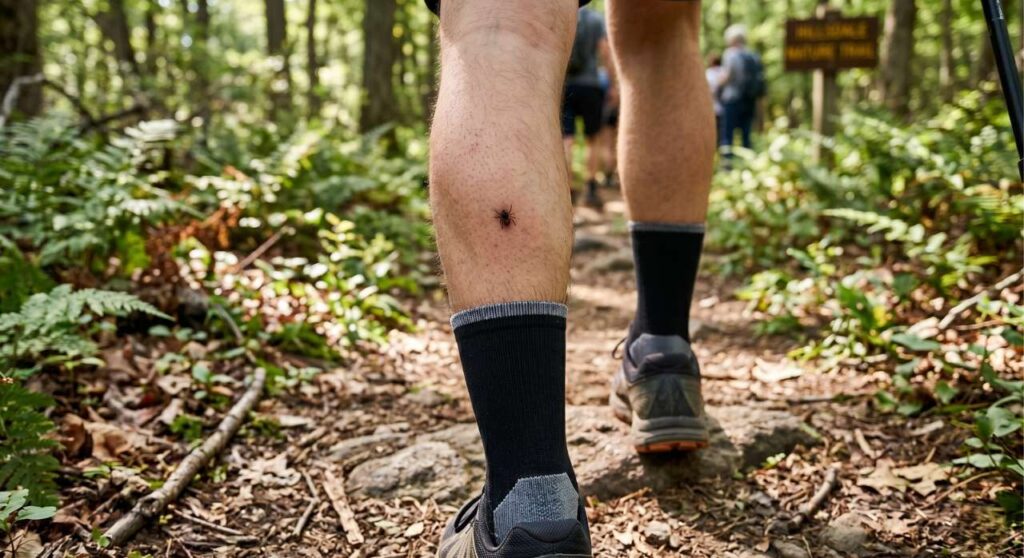

Key Takeaways:
- Tick-borne illness prevention in New Jersey requires a multi-layered approach: EPA-registered repellents on skin, permethrin-treated clothing, thorough post-outdoor tick checks, and strategic yard management.
- New Jersey has the third highest Lyme disease rate in the nation, with endemic tick populations throughout Bergen County, Essex County, and Northern NJ—making prevention essential for anyone who spends time outdoors.
- When prevention fails and you find a tick, A+ Urgent Care locations in Bloomfield and Cresskill offer same-day evaluation, tick removal, and prophylactic treatment when indicated.
Table of Contents
- Why Tick Prevention Matters More Than Ever in NJ
- Personal Protection: Repellents That Work
- Clothing and Gear Treatment Protocols
- Post-Outdoors Protocol: The Tick Check
- Environmental Control: Creating a Tick-Safe Property
- Common Myths About Ticks (And the Truth)
- What to Do When Prevention Fails
- Frequently Asked Questions
Why Tick Prevention Matters More Than Ever in NJ
New Jersey isn’t just a state where ticks exist—it’s one of the most heavily affected states in the country for tick-borne illness.
According to the New Jersey Department of Health, the Garden State consistently ranks among the top three for Lyme disease cases nationally.
Between 2022 and 2024, over 21,000 residents were diagnosed with the infection.
The 2026 Surge
And 2026 is shaping up to be worse. CDC data shows tick-related emergency visits are running at their highest level in nearly a decade. Hospital visits for tick bites are up 25% compared to last year, and peak tick season—May through July—hasn’t even arrived yet.
“We’re running well above historic average and even well above last year,” Dr. John J. Halperin, a Lyme disease specialist at Atlantic Health Overlook Medical Center, told ABC News. “The ticks have started a little earlier. There seems to be a lot of them.”
Who Needs to Worry?
If you live in Northern NJ—Bergen County, Essex County, or anywhere in the surrounding area—tick exposure is a real and present concern. Ticks thrive in:
- Wooded areas and hiking trails
- Suburban yards that border woods
- Tall grass and overgrown vegetation
- Leaf litter and ground cover
- Parks, playgrounds, and athletic fields near natural areas
Rutgers research confirms that endemic tick populations are expanding throughout the state, moving from rural areas into suburban neighborhoods. Your backyard might be tick habitat whether you realize it or not.
Prevention isn’t optional—it’s necessary.
Personal Protection: Repellents That Work
What is the best tick repellent for humans? The answer depends on your needs, but the science is clear: EPA-registered repellents containing specific active ingredients provide proven protection against ticks.
The Most Effective Active Ingredients
According to CDC tick bite prevention guidelines, these active ingredients offer reliable tick protection:
DEET (N,N-Diethyl-meta-toluamide)
- The most studied and widely used repellent
- Concentrations of 20-30% provide several hours of protection
- Safe for children over 2 months when used as directed
- Apply to exposed skin, avoiding eyes and mouth
Picaridin
- Comparable effectiveness to DEET
- Less greasy feel, doesn’t damage plastics or synthetic fabrics
- Concentrations of 20% provide long-lasting protection
- Good option for those who dislike DEET’s texture
IR3535
- Effective against ticks and mosquitoes
- Gentler formulation, sometimes preferred for sensitive skin
- Common in European products, increasingly available in the US
Oil of Lemon Eucalyptus (OLE) / PMD
- Plant-derived alternative
- NOT the same as pure lemon eucalyptus essential oil
- Effective but requires more frequent reapplication
- Not recommended for children under 3 years
2-Undecanone
- Newer option derived from tomato plants
- Effective but less research than DEET or picaridin
Finding the Right Product
The EPA’s repellent search tool lets you filter by active ingredient, protection time, pest type, and other factors to find products that match your specific needs. It’s worth the two minutes to find a repellent that actually suits your situation.
Application Tips
- Apply repellent to all exposed skin, not just ankles and legs
- Reapply according to product directions, especially after swimming or sweating
- Don’t apply under clothing—repellent works on exposed surfaces
- Wash treated skin when you return indoors
- Keep repellent out of eyes, mouth, and open wounds
Clothing and Gear Treatment Protocols
Repellent on skin is step one. Step two is treating your clothing and gear with permethrin—a synthetic insecticide that kills ticks on contact.
What Is Permethrin?
Permethrin is a synthetic version of a natural insecticide found in chrysanthemum flowers. When applied to fabric, it binds to the fibers and remains effective through multiple washes.
Ticks that crawl onto permethrin-treated clothing die before they can reach your skin.
How to Use Permethrin
Option 1: Spray-on treatment
- Purchase 0.5% permethrin spray (available at outdoor retailers and pharmacies)
- Treat clothing, shoes, socks, hats, and gear outdoors in a well-ventilated area
- Allow items to dry completely before wearing (usually 2-4 hours)
- One treatment lasts through approximately 6 washes
Option 2: Pre-treated clothing
- Several brands sell clothing factory-treated with permethrin
- Treatment lasts through 70+ washes
- Available in outdoor/hiking apparel, work wear, and everyday clothing
- More expensive upfront but longer-lasting protection
What to Treat
- Pants (especially the lower legs)
- Socks
- Hiking boots and shoes
- Shirts and jackets
- Hats
- Backpacks and daypacks
- Camping gear (tents, sleeping bags)
Important Safety Notes
- Permethrin is for fabrics only—never apply directly to skin
- Toxic to cats when wet; keep treated items away from cats until fully dry
- Safe for dogs once dry
- Safe for humans when used as directed
Dressing for Tick Country
Beyond treatment, how you dress matters:
- Long pants and long sleeves reduce exposed skin
- Light-colored clothing makes ticks easier to spot
- Pants tucked into socks (yes, it looks dorky—do it anyway)
- Closed-toe shoes instead of sandals
- Hat or bandana in areas with overhanging vegetation
Post-Outdoors Protocol: The Tick Check
You used repellent. You treated your clothing. You stayed on trails. You still need to check for ticks when you get home. Prevention reduces risk; it doesn’t eliminate it.
The Two-Hour Window
Showering within two hours of coming indoors serves two purposes: it washes off unattached ticks, and it provides an opportunity for a thorough body check.
Ticks often crawl around for a while before attaching, so catching them early prevents bites entirely.
How to Check for Ticks After Hiking (Or Any Outdoor Activity)
Conduct a full-body examination, paying special attention to places ticks like to hide:
Head and neck:
- Scalp (part hair and look carefully)
- Behind ears
- Inside ears
- Along hairline
- Back of neck
Upper body:
- Under arms (armpits are tick favorites)
- Inside belly button
- Around waist and beltline
- Under bra band
Lower body:
- Groin area
- Between legs
- Behind knees
- Between toes
- Around ankles
What You’re Looking For
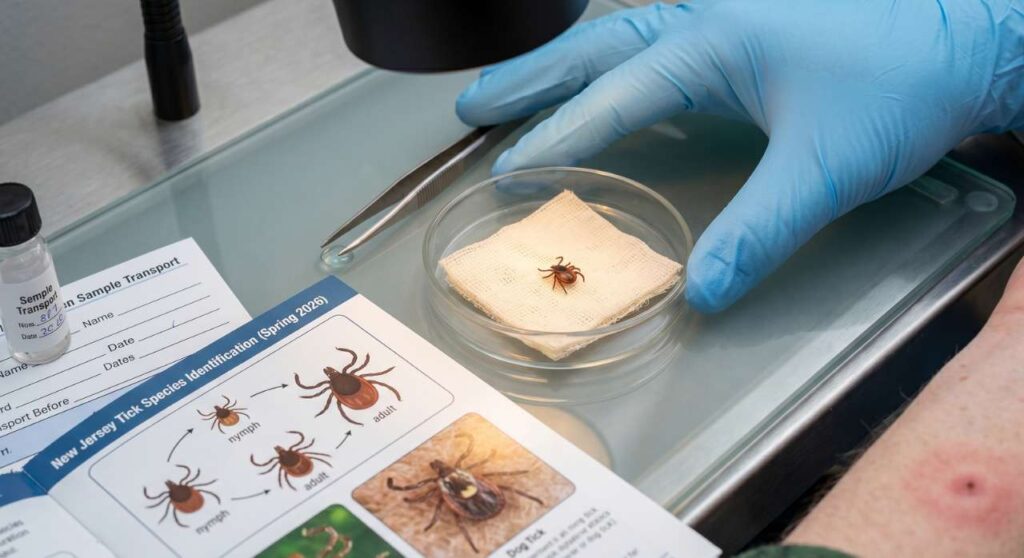
The University of Rhode Island’s Tick Encounter Resource Center provides excellent visual guides for tick identification. Know what you’re searching for:
Nymph stage ticks: About the size of a poppy seed. These are the most dangerous because they’re so easy to miss. Nymph stage ticks cause the majority of Lyme disease transmission.
Adult ticks: About the size of a sesame seed (unfed) to an apple seed (engorged). Easier to spot but still hide effectively in hair and skin folds.
Check Clothing and Gear
Ticks hitchhike. Before coming inside:
- Examine clothing visually
- Check backpacks, hats, and gear
- Tumble dry clothes on high heat for 10 minutes (this kills ticks; washing alone doesn’t)
Check Pets
Dogs can bring ticks into the house. After outdoor time, run your hands over their entire body, checking:
- Around and inside ears
- Around eyelids
- Under collar
- Under front legs
- Between back legs
- Between toes
- Around tail
Environmental Control: Creating a Tick-Safe Property
You can’t control the woods, but you can manage your own yard. Tick-safe landscaping significantly reduces tick populations on your property.
How Do You Keep Ticks Out of Your Yard in NJ?
The Rutgers New Jersey Agricultural Experiment Station provides extensive guidance on tick management specific to New Jersey’s climate and tick species. Key strategies include:
Reduce tick habitat:
- Clear leaf litter regularly (ticks need moisture to survive)
- Mow the lawn frequently
- Remove tall grasses and brush
- Clear vegetation around stone walls and wood piles
- Keep ground cover trimmed
Create barriers:
- Install a 3-foot wide barrier of wood chips or gravel between lawn and wooded areas
- Ticks rarely cross dry, exposed barriers
- This simple measure significantly reduces tick migration into yards
Manage the edge:
- Keep play structures, patios, and high-traffic areas away from yard edges
- Create sunny, dry zones where children play
- Trim tree branches to allow more sunlight (ticks prefer shade)
Discourage wildlife hosts:
- Remove bird feeders near the house (they attract rodents)
- Fence gardens to discourage deer
- Clean up fallen fruit
- Seal gaps where rodents might nest
Professional Tick Treatment
Consider professional yard treatment in early spring and again in fall. Options include:
- Conventional acaricides: Chemical tick killers applied by licensed applicators
- Tick tubes: Cotton treated with permethrin, placed where mice nest (mice are a major tick host)
- Natural options: Some companies offer botanical-based treatments
Discuss options with local pest management professionals who understand Northern NJ’s specific tick pressures.
Common Myths About Ticks (And the Truth)
Misinformation about ticks leads to poor prevention choices. Here’s what’s true and what’s not.
Myth: Ticks Fall from Trees
Truth: Ticks don’t fall, jump, or fly. They “quest”—climbing to the tips of grass, brush, or low vegetation and extending their front legs to grab onto passing hosts. Most tick encounters happen at ankle to knee height, not from above.
Do ticks fall from trees or live in grass? They live in grass, leaf litter, and low vegetation. The tree-dropping myth persists but isn’t supported by tick biology.
Myth: Ticks Are Only in the Woods
Truth: Ticks thrive anywhere their hosts go—including suburban backyards, parks, playgrounds, and gardens.
Ocean County alone saw 570 Lyme disease cases in 2025, and many of those exposures happened in residential areas, not deep wilderness.
Myth: You’ll Feel a Tick Bite
Truth: You almost certainly won’t. Tick saliva contains numbing agents that make attachment painless. Most people never feel the bite—which is why visual checks are essential.
Myth: Ticks Are Only Active in Summer
Truth: Adult deer ticks are most active in fall and early spring. Nymph stage ticks peak in late spring and early summer. Ticks can be active any time temperatures are above freezing. In New Jersey, that’s most of the year.
Myth: Essential Oils Repel Ticks as Well as DEET
Truth: While some essential oils have mild repellent properties, none match the proven effectiveness of DEET, picaridin, or permethrin. If you’re in tick country—and Northern NJ qualifies—use products with proven track records.
Myth: If the Tick Isn’t Engorged, You’re Safe
Truth: While longer attachment increases transmission risk, the “safe” window varies by pathogen. Powassan virus can transmit within minutes. Don’t dismiss a bite just because the tick was small or flat.
What to Do When Prevention Fails
You did everything right—and still found a tick attached to your skin. Now what? Prevention reduces risk but doesn’t eliminate it. Knowing what to do when you find a tick is part of a complete prevention strategy.
Immediate Removal
Remove the tick as quickly as possible using fine-tipped tweezers:
- Grasp the tick as close to the skin as possible
- Pull upward with steady, even pressure
- Don’t twist, jerk, or squeeze the body
- Clean the bite site with rubbing alcohol or soap and water
- Save the tick in a sealed bag for identification
Monitor for Symptoms
Watch for these signs over the following 30 days:
- Expanding rash at or near the bite site
- Fever and chills
- Fatigue beyond normal tiredness
- Headache and stiff neck
- Muscle and joint aches
- Swollen lymph nodes
When to Seek Medical Care
Visit A+ Urgent Care for a same-day evaluation if:
- The tick was attached for more than 24 hours
- You couldn’t remove the tick completely
- The tick was engorged (suggesting long attachment)
- You develop any symptoms
- The bite site becomes infected
- You’re concerned about your risk level
For urgent care tick prevention guidance and post-bite evaluation in Bloomfield (Essex County) or tick safety in Cresskill NJ (Bergen County), both A+ Urgent Care locations offer walk-in appointments with experienced providers who understand the specific tick pressures affecting Bergen County tick season and Essex County tick prevention needs.
Prophylactic Treatment
When indicated by CDC guidelines, a single dose of doxycycline can prevent Lyme disease if taken within 72 hours of tick removal.
Dr. Ajay Jetley and the team at A+ Urgent Care can assess whether prophylactic treatment is appropriate for your specific situation.
Frequently Asked Questions
What is the best tick repellent for humans?
EPA-registered repellents containing DEET (20-30%), picaridin (20%), or oil of lemon eucalyptus provide the most reliable tick protection. The EPA’s repellent search tool helps you find products matched to your specific needs. For maximum protection, combine skin repellent with permethrin-treated clothing.
How do you keep ticks out of your yard in NJ?
Create tick-safe landscaping by: clearing leaf litter regularly, mowing frequently, installing a 3-foot wood chip or gravel barrier between lawn and wooded areas, keeping play areas in sunny zones away from yard edges, and removing brush and tall grass. The Rutgers NJAES tick management program provides New Jersey-specific guidance.
Do ticks fall from trees or live in grass?
Ticks don’t fall from trees. They “quest” on grass, leaf litter, and low vegetation—typically at ankle to knee height—waiting to grab onto passing hosts.
The tree-dropping myth is persistent but not supported by tick biology. Focus prevention on lower body protection and ground-level habitat management.
How to check for ticks after hiking?
Shower within two hours of returning indoors. Conduct a full-body examination, paying special attention to hidden areas: scalp and hairline, behind and inside ears, armpits, belly button, waistline, groin, behind knees, and between toes.
Use a mirror for hard-to-see areas. The TickEncounter Resource Center provides visual guides for identifying ticks at different life stages.
When is tick season in New Jersey?
Tick season in New Jersey runs roughly from March through November, with nymph stage ticks most active May through July and adult deer ticks most active in fall and early spring.
However, ticks can be active any time temperatures are above freezing. Prevention should be year-round in Northern NJ.
Can I prevent tick-borne illness if I spend a lot of time outdoors?
Yes, with consistent prevention practices. Use EPA-registered repellents, treat clothing with permethrin, stay on trails when hiking, perform thorough tick checks after outdoor activity, and manage your property to reduce tick habitat.
No method is 100% effective, but layered prevention significantly reduces risk even for people who spend substantial time outdoors.
Should I get tested for Lyme disease after finding a tick?
Testing immediately after a tick bite isn’t useful—antibodies take 2-6 weeks to develop. If you develop symptoms like rash, fever, or joint pain in the weeks following a bite, testing may be appropriate.
If you meet criteria for prophylactic antibiotics (deer tick, 36+ hour attachment, within 72 hours of removal), treatment can prevent infection without waiting for test results.
About Dr. Ajay Jetley & A+ Urgent Care
Dr. Ajay Jetley is a board-certified emergency medicine physician with over 15 years of clinical experience treating acute illnesses and injuries across Northern New Jersey.
As Medical Director of A+ Urgent Care, he oversees tick bite evaluations, Lyme disease assessments, and comprehensive urgent care services at locations in both Bloomfield (Essex County) and Cresskill (Bergen County).
Dr. Jetley understands the specific tick pressures affecting Northern NJ residents and provides thorough evaluation, clear communication, and evidence-based treatment recommendations.
The brand-new Bloomfield location already holds a 4.8-star rating on Google—see what patients are saying. If prevention fails and you need same-day tick bite evaluation, walk into A+ Urgent Care in Bloomfield or Cresskill today.