
Vomiting, cramps, and constant bathroom trips leave most people wondering: is this food poisoning or a stomach bug? The two feel almost identical but have different causes, timelines, and a few telling clues. Learn how …


Key Takeaways
- The fastest way to tell food poisoning from a stomach bug is timing. Food poisoning usually hits hard and fast — often within 2-6 hours of eating something contaminated. A stomach bug builds more gradually, typically 1-2 days after you were exposed to someone sick.
- A few other clues help: stomach bugs more often bring fever and body aches and are highly contagious, while food poisoning tends to cause stronger, faster digestive symptoms and often strikes several people who ate the same meal.
- Most cases of both resolve at home with rest and hydration within a few days. The key is knowing the warning signs — like signs of dehydration, bloody stool, high fever, or symptoms lasting more than a few days — that mean it’s time to get care.
Table of Contents
- They Feel the Same — Here’s What Actually Differs
- What Is Food Poisoning?
- What Is a Stomach Bug?
- Food Poisoning vs. Stomach Bug: Side by Side
- How to Tell Which One You Have
- How Long Does Each One Last?
- How to Treat Both at Home
- What to Eat (and What to Avoid)
- Is It Contagious? Preventing the Spread
- When to See a Doctor
- When It’s an Emergency
- Frequently Asked Questions
- Get Walk-In Care in Bloomfield and Cresskill
It always seems to start the same way: a wave of nausea, a churning stomach, and then several miserable hours you’d rather forget. Somewhere between trips to the bathroom, the question surfaces — was it something I ate, or did I catch a bug going around? It’s one of the most common health questions there is, and the answer isn’t always obvious, because food poisoning and a stomach bug can feel almost identical.
They’re not the same thing, though. Food poisoning comes from contaminated food, while a stomach bug — properly called viral gastroenteritis — is a contagious virus you catch from other people. They have different causes, slightly different symptoms, and different timelines. Figuring out which one you’re dealing with helps you treat it correctly, know how long to expect it to last, and recognize when it’s serious enough to need care.
The good news is that most cases of both clear up on their own with rest and fluids. This guide walks through how to tell the two apart using timing and a few telling clues, how to care for yourself at home, and the warning signs that mean it’s time to walk into a clinic. When a stomach illness has you wondering whether to wait it out or get help, knowing the difference takes a lot of the guesswork out of it.
They Feel the Same — Here’s What Actually Differs
Before getting into each one, it helps to understand why these two get confused so often — and what genuinely separates them.
Why the Confusion
Both food poisoning and stomach bugs cause the same core misery: nausea, vomiting, diarrhea, and stomach cramps. When you’re hunched over feeling awful, the symptoms themselves don’t announce their cause. That’s why even doctors often rely on the story around the illness — the timing, what you ate, who else is sick — rather than the symptoms alone.
The Core Difference
The fundamental distinction comes down to the source:
- Food poisoning comes from eating or drinking something contaminated with harmful bacteria, viruses, parasites, or their toxins
- A stomach bug is a viral infection you catch from another person or a contaminated surface, like any other contagious virus
That difference in source drives everything else — the timing, the contagiousness, and a few symptom patterns that help you tell them apart.
Why It Matters
Knowing which one you have shapes a few practical things: how long you can expect to feel sick, whether you’re contagious and need to protect others, and what warning signs to watch for. For most people, the care is similar, but the context helps you make smart decisions about rest, isolation, and when to seek help.
What Is Food Poisoning?
Food poisoning, also called foodborne illness, happens when you consume food or water contaminated with harmful organisms or the toxins they produce.
Common Causes
The usual culprits are bacteria and the toxins they create:
- Salmonella — often from undercooked poultry, eggs, or unwashed produce
- E. coli — from undercooked beef, raw produce, or contaminated water
- Listeria — from deli meats, unpasteurized dairy, and certain ready-to-eat foods
- Campylobacter — frequently from undercooked poultry
- Staphylococcus and Clostridium — often from food left out too long at unsafe temperatures
Contamination usually happens when food is undercooked, left unrefrigerated too long, handled with unwashed hands, or cross-contaminated during preparation.
How It Behaves
The hallmark of food poisoning is speed. Symptoms often come on suddenly and intensely, frequently within 2-6 hours of eating the contaminated food, though depending on the organism it can range from 30 minutes to a few days. Because the body is working hard to expel what’s harming it, the digestive symptoms — vomiting, diarrhea, cramping — tend to be strong and fast.
The CDC estimates that foodborne illness affects roughly 48 million people in the U.S. each year, making it extremely common.
The Telltale Clue
Food poisoning often comes with a giveaway: a clear link to a recent meal, and frequently multiple people getting sick after eating the same thing. If you and three others who shared the same potluck dish all start feeling ill a few hours later, food poisoning is the likely answer.
What Is a Stomach Bug?
A stomach bug — medically known as viral gastroenteritis, and casually as the “stomach flu” — is a contagious viral infection of the stomach and intestines.
An Important Clarification
Despite the nickname “stomach flu,” this has nothing to do with influenza. Influenza is a respiratory illness causing cough, congestion, and fever. The stomach bug is a separate set of viruses that attack the digestive system. The names get muddled, but they’re entirely different illnesses.
Common Causes
A handful of viruses cause most stomach bugs:
- Norovirus — the most common cause, notorious for outbreaks on cruise ships, in schools, and in nursing homes
- Rotavirus — especially common in young children
- Adenovirus and others — additional viral culprits
These spread easily from person to person — through direct contact with someone sick, touching contaminated surfaces, or the fecal-oral route (often unwashed hands after using the bathroom or changing a diaper).
How It Behaves
Unlike food poisoning’s fast onset, a stomach bug usually develops more gradually. Symptoms typically appear 1-2 days after exposure to the virus, building over time rather than hitting all at once. Stomach bugs are also more likely to bring whole-body symptoms — fever, chills, fatigue, and muscle aches — alongside the digestive distress, since your immune system is fighting off a virus.
The Telltale Clue
The giveaway for a stomach bug is contagion in your circle: someone you were around a day or two ago was sick, or there’s a bug “going around” at work, school, or daycare. If one family member gets sick and others fall ill over the following days, that staggered pattern points to a contagious virus.

Food Poisoning vs. Stomach Bug: Side by Side
Here’s the clearest way to see the differences at a glance.
| Feature | Food Poisoning | Stomach Bug (Viral) |
| Cause | Contaminated food or water | Contagious virus (norovirus, etc.) |
| Onset | Fast — often 2-6 hours after eating | Gradual — usually 1-2 days after exposure |
| Source clue | Recent specific meal | Recent contact with a sick person |
| Who gets sick | Often several who ate the same food | Spreads person to person over days |
| Fever & body aches | Less common (stronger GI symptoms) | More common |
| Duration | Often shorter (hours to ~3 days) | Usually 1-3 days, can linger longer |
| Contagious? | Usually not person-to-person | Highly contagious |
The Two Questions That Settle Most Cases
If you want a quick mental shortcut, ask yourself:
- How fast did it come on after eating? Within a few hours of a specific meal leans toward food poisoning. A gradual build a day or two after being around someone sick leans toward a stomach bug.
- Did others get sick too — and how? Everyone who ate the same dish getting sick together points to food poisoning. People falling ill one after another over several days points to a contagious virus.
These two questions resolve the majority of cases without any testing at all.
How to Tell Which One You Have
Beyond the two key questions, a few additional clues help you narrow it down when the picture isn’t obvious.
Look at the Timing
Onset speed is the single most useful clue. The faster and more suddenly symptoms appeared after a meal, the more likely it’s food poisoning. The more gradual the build, the more likely it’s viral.
Look at the Symptoms
While there’s overlap, some patterns lean one way:
- More fever, chills, and body aches → leans viral (stomach bug)
- Sudden, violent vomiting and diarrhea shortly after eating → leans food poisoning
- Bloody stool or severe cramping → can indicate certain food poisoning bacteria and warrants medical attention
- Watery diarrhea without blood → common with viral bugs
Look at the Context
The story around the illness often tells you more than the symptoms:
- A shared meal where multiple people got sick → food poisoning
- A sick coworker, classmate, or family member days earlier → stomach bug
- A known outbreak “going around” → likely viral
- A meal at a restaurant or picnic in hot weather → consider food poisoning
When You Can’t Tell
Sometimes there’s no clear answer, and that’s okay. For most healthy people, the treatment is the same either way — rest and hydration. The distinction matters most for knowing whether you’re contagious and for spotting the warning signs covered later. If symptoms are severe or you’re unsure, a provider can help sort it out.
How Long Does Each One Last?
Knowing the expected timeline helps you gauge whether your illness is running its normal course or dragging on longer than it should.
Food Poisoning Timeline
Food poisoning often resolves relatively quickly. Many cases pass within hours to about 1-3 days as the body clears the offending toxin or organism. Some bacterial infections can last longer, and recovery can be slowed by dehydration, but in general food poisoning tends to be intense but brief.
Stomach Bug Timeline
Viral stomach bugs typically last 1-3 days, though the exact duration depends on the specific virus. Some cases linger longer — up to a week or even 10 days in certain situations, particularly in young children, older adults, or anyone with a weakened immune system. The acute, worst phase is usually the first day or two.
When the Timeline Is a Red Flag
Regardless of which one you have, symptoms that persist beyond a few days warrant attention. Most healthy people are clearly improving within 2-3 days. If you’re not — or if you’re getting worse rather than better — that’s a sign to check in with a provider, since prolonged symptoms can lead to dehydration or signal something that needs treatment.
How to Treat Both at Home
For most people, food poisoning and stomach bugs are managed the same way at home, and the cornerstone is hydration.
Stay Hydrated — The Most Important Step
Both illnesses drain fluids through vomiting and diarrhea, so replacing them is the top priority:
- Sip fluids frequently rather than gulping large amounts, which can trigger more vomiting
- Take small, frequent sips of water, clear broth, or an oral rehydration solution
- Use electrolyte drinks (like Pedialyte or sports drinks) to replace lost salts
- Suck on ice chips if keeping liquids down is hard
- Avoid alcohol, caffeine, and very sugary drinks, which can worsen dehydration
Hydration is so central that when home fluids aren’t enough, IV fluids become the treatment — more on that below.
Rest and Let It Run Its Course
Your body is working to clear the illness. Rest supports that process. Both conditions generally need to run their course; antibiotics don’t help viral stomach bugs and aren’t needed for most food poisoning.
A Note on Anti-Diarrheal Medication
It’s tempting to reach for anti-diarrheal medicine, but use caution. Diarrhea is partly how your body expels the virus or toxin, and slowing it down can sometimes prolong the illness — particularly with certain bacterial food poisoning. When in doubt, check with a provider before using these, especially if you have a fever or bloody stool.
Managing Other Symptoms
- Acetaminophen can help with fever and aches (easier on the stomach than ibuprofen for some people)
- A heating pad can ease abdominal cramping
- Rest in a way that lets you reach a bathroom easily
What to Eat (and What to Avoid)
Getting food back in once the worst has passed speeds recovery — as long as you ease into it.
Start Slow
Don’t rush back to normal eating. Once vomiting has settled and you can keep fluids down:
- Begin with bland, easy-to-digest foods
- Eat small amounts at first
- Stop if nausea returns and give it more time
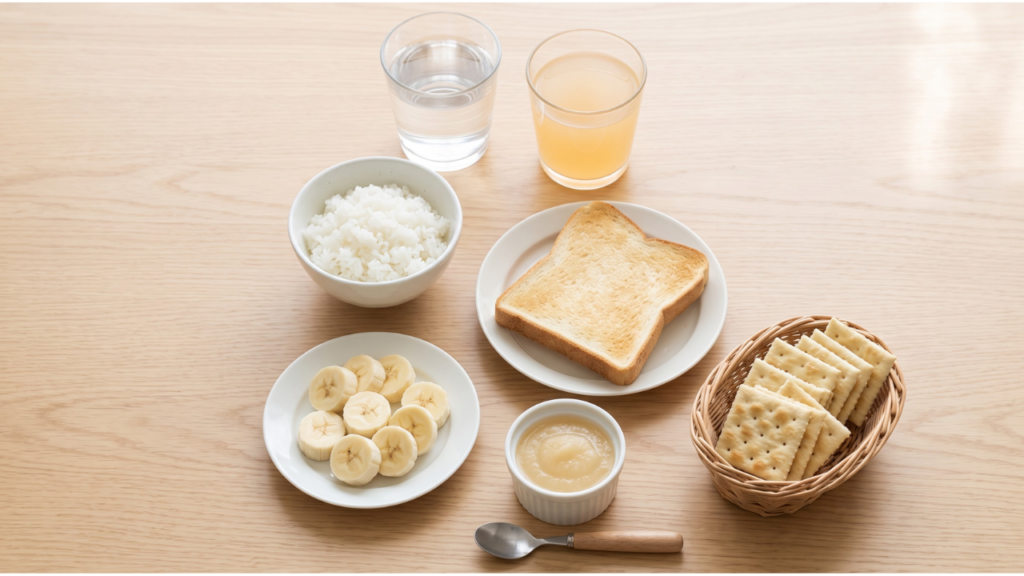
Good Foods for Recovery
The classic gentle foods are gentle for a reason:
- Bananas — easy on the stomach, replace potassium
- Rice — plain, white
- Applesauce
- Toast — plain or dry
- Crackers — saltines help settle the stomach
- Clear broth — adds fluids and a little salt
- Plain potatoes — boiled or mashed without heavy toppings
This roughly follows the well-known BRAT approach (bananas, rice, applesauce, toast), a sensible starting point.
What to Avoid Until You’re Better
Some foods make things worse while your gut recovers:
- Dairy products — can be hard to digest after a stomach illness
- Fatty, greasy, or fried foods
- Spicy foods
- Caffeine and alcohol
- Very sugary foods and drinks
- High-fiber foods until your system settles
Reintroduce normal foods gradually over a day or two as you feel better.
Is It Contagious? Preventing the Spread
This is where the food poisoning vs. stomach bug distinction really matters for the people around you.
Stomach Bugs Are Highly Contagious
Viral gastroenteritis spreads very easily — norovirus is notorious for ripping through households, schools, and offices. If you have a stomach bug, you can pass it to others before, during, and even for a while after your symptoms. Precautions matter:
- Wash hands thoroughly and often with soap and water (hand sanitizer is less effective against norovirus)
- Disinfect high-touch surfaces — doorknobs, counters, remotes, faucet handles
- Don’t share food, drinks, utensils, or towels
- Stay home from work or school while symptomatic and ideally for a day or two after
- Avoid preparing food for others while sick and shortly after
Food Poisoning Is Usually Not Person-to-Person
Most food poisoning doesn’t spread from person to person — it came from the contaminated food, not from other people. That said, some organisms (like norovirus in food, or certain bacteria) can spread, so good hand hygiene is still wise. The bigger prevention focus for food poisoning is food safety.
Preventing Food Poisoning
A few habits dramatically cut the risk:
- Cook foods to safe temperatures, especially meat and poultry
- Refrigerate perishables promptly — don’t leave food out more than 1-2 hours, less in hot weather
- Wash hands, produce, and surfaces during food prep
- Avoid cross-contamination — separate cutting boards for raw meat and produce
- When in doubt, throw it out — especially food left out at a summer cookout
When to See a Doctor
Most cases resolve at home, but certain signs mean it’s time to get medical care — most often because of dehydration, the main complication of both illnesses.
Signs of Dehydration to Watch For
Dehydration is the biggest risk with any stomach illness. Watch for:
- Excessive thirst and dry mouth
- Urinating less, or dark-colored urine
- Dizziness or lightheadedness, especially standing up
- Fatigue and weakness
- In children: no wet diapers, no tears when crying, sunken eyes, unusual lethargy
When dehydration sets in and you can’t keep fluids down, IV fluids may be needed — our guide on when dehydration is an emergency and signs you need IV fluids covers this in detail.
Other Reasons to Seek Care
Get evaluated if you have:
- Symptoms lasting more than 3 days without improvement, or worsening
- A high fever (above 101-102°F)
- Bloody stool or bloody vomit
- Severe abdominal pain
- Inability to keep any fluids down for 24 hours
- Signs of significant dehydration
Who Should Seek Care Sooner
Some people should be more cautious and seek care earlier:
- Infants and young children
- Older adults
- Pregnant women
- Anyone with a weakened immune system or chronic conditions like diabetes or kidney disease
For these groups, dehydration develops faster and complications are more likely, so don’t wait as long before getting evaluated. Walk-in urgent care is a practical option — A+ Urgent Care can assess symptoms, treat dehydration with IV fluids if needed, and check for anything more serious at both Bloomfield and Cresskill locations.
When It’s an Emergency
A small number of situations need emergency care rather than a walk-in visit.
Go to the ER or Call 911 For:
- Severe dehydration — confusion, fainting, no urination, rapid heartbeat
- Persistent vomiting preventing any fluid intake at all
- Bloody vomit or significant blood in stool
- Severe, constant abdominal pain
- A very high fever that won’t come down
- Signs of a severe reaction — difficulty breathing, swelling (possible with certain food-related allergic reactions)
- Neurological symptoms — blurred vision, muscle weakness, slurred speech, or tingling, which can rarely signal botulism, a medical emergency
The Botulism Note
While extremely rare, botulism is a serious form of food poisoning that affects the nervous system, causing symptoms like blurred or double vision, drooping eyelids, slurred speech, and muscle weakness. If these appear alongside or after gastrointestinal symptoms, seek emergency care immediately — botulism is a medical emergency.
For Most Cases, Though
These emergencies are uncommon. The large majority of food poisoning and stomach bugs are uncomfortable but not dangerous, resolving at home with rest and fluids. Knowing the red flags simply helps you act quickly in the rare case something more serious is happening. For help deciding between walk-in care and the ER, our urgent care vs. ER guide breaks down the choice.
Frequently Asked Questions
How do I know if it’s food poisoning or a stomach bug?
The biggest clue is timing. Food poisoning usually hits fast — within 2-6 hours of eating contaminated food — while a stomach bug develops gradually, 1-2 days after exposure to someone sick. Also consider context: several people sick after the same meal suggests food poisoning, while illness spreading person-to-person over days suggests a contagious virus. Fever and body aches lean more toward a stomach bug.
How long does food poisoning last?
Most food poisoning resolves within hours to about 1-3 days as your body clears the toxin or organism. Some bacterial causes last longer, and dehydration can slow recovery. If symptoms persist beyond a few days, worsen, or include blood or high fever, see a provider.
How long does a stomach bug last?
A viral stomach bug typically lasts 1-3 days, though some cases linger up to a week or even 10 days, especially in young children, older adults, or those with weakened immune systems. The worst phase is usually the first day or two. Persistent symptoms beyond a few days warrant a check-in with a provider.
Is food poisoning contagious?
Usually not person-to-person — most food poisoning comes from contaminated food rather than from other people. However, some organisms can spread, so good hand hygiene is still wise. Stomach bugs, by contrast, are highly contagious and spread easily between people.
What should I eat after food poisoning or a stomach bug?
Start slow with bland, easy-to-digest foods once vomiting settles and you can keep fluids down: bananas, rice, applesauce, toast, crackers, clear broth, and plain potatoes. Avoid dairy, fatty or greasy foods, spicy foods, caffeine, alcohol, and very sugary foods until you’ve recovered. Reintroduce normal eating gradually over a day or two.
Should I take anti-diarrheal medicine?
Use caution. Diarrhea is partly how your body expels the toxin or virus, and slowing it can sometimes prolong the illness, especially with certain bacterial food poisoning. Avoid anti-diarrheals if you have a fever or bloody stool, and check with a provider before using them if you’re unsure.
How do I know if I’m dehydrated from a stomach illness?
Watch for excessive thirst, dry mouth, reduced or dark urine, dizziness (especially standing up), and fatigue. In children, look for no wet diapers, no tears when crying, sunken eyes, and unusual lethargy. Significant dehydration that won’t improve with sipping fluids may need IV fluids at urgent care.
When should I go to urgent care for vomiting and diarrhea?
Seek care if symptoms last more than 3 days, you have a high fever, bloody stool or vomit, severe abdominal pain, or signs of dehydration you can’t correct by drinking. Infants, older adults, pregnant women, and those with chronic conditions should seek care sooner. Urgent care can treat dehydration with IV fluids and check for anything more serious.
Can urgent care help with food poisoning or a stomach bug?
Yes. Urgent care can assess your symptoms, provide IV fluids for dehydration, prescribe anti-nausea medication, check for signs of a more serious infection, and advise on recovery. For mild-to-moderate cases that need more than home care, it’s faster and more affordable than the ER. A+ Urgent Care handles these at both locations, seven days a week.
Why do I have a fever with my stomach illness?
Fever is more common with viral stomach bugs, as it’s a sign your immune system is fighting the virus, and it often comes with chills and body aches. Some bacterial food poisoning can also cause fever. A high fever (above 101-102°F) or one that won’t come down is a reason to seek medical care.
Can a stomach bug or food poisoning be dangerous?
For most healthy people, both are uncomfortable but not dangerous, resolving with rest and fluids. The main risk is dehydration. Serious complications are uncommon but possible, especially in vulnerable groups, and certain signs — bloody stool, severe pain, neurological symptoms, severe dehydration — warrant emergency care.
Where can I get same-day care for a stomach illness in NJ?
A+ Urgent Care provides walk-in evaluation and treatment for food poisoning and stomach bugs at both Bloomfield (Essex County) and Cresskill (Bergen County) locations, including IV fluids for dehydration and anti-nausea treatment. Most patients are seen within 15-45 minutes. For severe symptoms, go to the ER or call 911.
Get Walk-In Care in Bloomfield and Cresskill
Whether it was something you ate or a bug going around, a stomach illness is miserable either way — but for most people it’s a short-lived misery that rest and steady fluids will carry you through. The timing of your symptoms and the context around them usually reveal which one you’re dealing with, and that helps you know what to expect and whether you need to protect the people around you.
The most important thing is staying hydrated and watching for the warning signs. If you can’t keep fluids down, you’re showing signs of dehydration, or symptoms drag on beyond a few days, you don’t have to tough it out. Walk in for evaluation — a quick visit, IV fluids if you need them, and anti-nausea treatment can get you back on the road to feeling human again.
About A+ Urgent Care
A+ Urgent Care provides walk-in medical care for families across Essex and Bergen counties, with locations in Bloomfield and Cresskill open seven days a week, including evenings and weekends.
Led by Dr. Ajay Jetley, a board-certified emergency medicine physician with more than 15 years of experience, the team treats stomach illnesses, dehydration, infections, and injuries — with on-site IV fluids, labs, and a full range of services that get most patients evaluated and treated in a single visit. For non-emergencies that can’t wait for the regular doctor, walk in during operating hours; for any life-threatening emergency, call 911.