Most dehydration is easily fixed with water and rest — but some cases need more. Learn how to tell mild dehydration from the serious kind, the warning signs that mean you need IV fluids, and …


Key Takeaways
- Most dehydration is mild and fixes itself with water, rest, and maybe some electrolytes. The question of when dehydration is an emergency comes down to a few specific warning signs — confusion, fainting, a racing heart, no urine, or being unable to keep any fluids down.
- IV fluids work faster than drinking when someone is vomiting, can’t keep liquids down, or is too depleted for water alone to catch up. They deliver hydration straight into the bloodstream, bypassing the gut.
- Mild-to-moderate dehydration is handled well at urgent care with same-day IV fluids. Severe dehydration — the emergency kind — needs the ER or 911. Knowing which is which gets you the right care fast.
Table of Contents
- What Dehydration Actually Is
- How Do I Know If I’m Dehydrated?
- Mild vs. Moderate vs. Severe Dehydration
- When Is Dehydration an Emergency?
- Signs You Need IV Fluids
- How IV Hydration Works (and Why It’s Faster)
- Can Urgent Care Give You IV Fluids?
- What Causes Dehydration in the First Place
- Dehydration in Children and Older Adults
- How to Prevent Dehydration
- Frequently Asked Questions
- Get Same-Day IV Hydration in Bloomfield and Cresskill
Everyone gets a little dehydrated now and then — a long day in the sun, a tough workout, a stomach bug that won’t quit. Most of the time, the fix is simple: drink water, rest, and you bounce back within a few hours. But dehydration exists on a spectrum, and at the far end it stops being a nuisance and becomes a genuine medical problem, sometimes one that water alone can’t fix.
The tricky part is knowing where you are on that spectrum. Mild dehydration and the early stage of serious dehydration can feel similar at first — a headache, some fatigue, feeling parched. The difference shows up in a handful of specific warning signs, and recognizing them is what separates “drink a glass of water and lie down” from “you need medical fluids now.”
This guide walks through how to tell how dehydrated you really are, the red flags that mean you need IV fluids, when dehydration crosses into emergency territory, and where to get same-day treatment. The goal is simple: help you know when you can handle it at home, when a quick urgent care visit makes sense, and when something needs the ER.
What Dehydration Actually Is
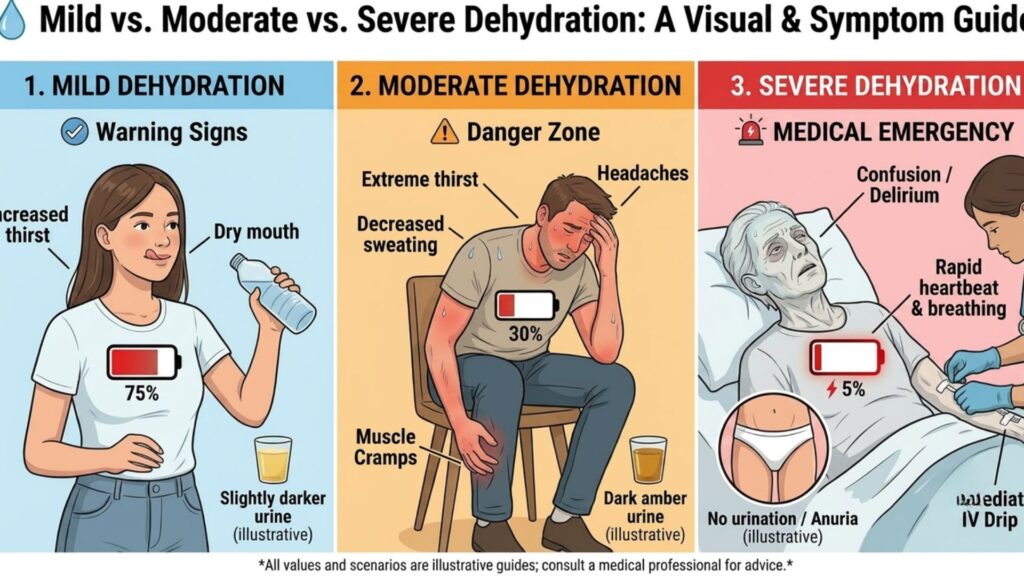
Dehydration happens when your body loses more fluid than it takes in, leaving it without enough water to function normally. It sounds simple, but the effects reach further than most people realize.
Why Water Matters So Much
Your body is roughly 60% water, and nearly every system depends on it. Fluid carries nutrients, regulates temperature, cushions joints, flushes waste through the kidneys, and keeps blood volume high enough to circulate properly. When fluid levels drop, all of those processes start to struggle, which is why dehydration produces such a wide range of symptoms — from a simple headache to dizziness, rapid heartbeat, and confusion.
It’s Not Just About Water
Dehydration isn’t only a water problem. When you sweat or lose fluids through vomiting and diarrhea, you also lose electrolytes — sodium, potassium, and other minerals your body needs to function. Severe fluid loss throws off this balance, which is part of why serious dehydration can affect your heart rhythm, muscles, and brain. It’s also why electrolyte drinks, and sometimes IV fluids with balanced electrolytes, matter more than plain water in significant cases.
How Fast It Happens
Dehydration can develop gradually over a hot day or strike quickly during an illness with heavy vomiting and diarrhea. The speed depends on how fast you’re losing fluid and how little you’re taking in. A stomach bug that prevents you from keeping anything down can move someone from fine to seriously dehydrated within hours — faster in children and older adults.
How Do I Know If I’m Dehydrated?
Your body gives several signals as fluid levels drop. Learning to read them helps you act before mild dehydration becomes serious.
Early Signs
The first indicators of mild dehydration are easy to miss or brush off:
- Thirst — often the first sign, though not always reliable, especially in older adults
- Dry mouth and lips
- Dark yellow urine — one of the most reliable everyday indicators
- Urinating less often than usual
- Headache
- Fatigue or sluggishness
- Mild dizziness
The Urine Check
One of the simplest at-home gauges is urine color. Pale yellow, like lemonade, generally means you’re well-hydrated. Dark yellow or amber suggests you need more fluids. Little or no urine over many hours is a sign of more significant dehydration and a reason to take it seriously.
As It Progresses
When dehydration moves beyond mild, the signs intensify:
- Increased thirst and very dry mouth
- Noticeably reduced urination with dark urine
- Dizziness, especially when standing up
- Rapid heartbeat
- Headache that won’t ease
- Muscle cramps
- Lethargy or irritability
These are the signals that drinking water isn’t keeping up, and that it may be time for medical evaluation, especially if you can’t take in or hold down fluids.
Mild vs. Moderate vs. Severe Dehydration
Dehydration is generally grouped into three levels, and knowing which one you’re dealing with points you toward the right response.
The Three Levels Side by Side
| Level | Common Signs | What It Usually Needs |
| Mild | Thirst, dry mouth, dark urine, mild headache | Drink water/electrolytes, rest at home |
| Moderate | Very dry mouth, dizziness, reduced urination, fast heartbeat, lethargy | Oral rehydration, often IV fluids if not improving or unable to drink |
| Severe | Confusion, fainting, little/no urine, sunken eyes, rapid weak pulse, can’t keep fluids down | Emergency care — IV fluids, ER, or 911 |
Mild Dehydration
This is the everyday kind — the parched feeling after exercise or a hot afternoon. It resolves on its own with water and rest, usually within a few hours. No medical care needed; just steady fluids.
Moderate Dehydration
Here, oral fluids may not be enough on their own, particularly if illness is causing ongoing losses. Someone with moderate dehydration feels genuinely unwell — dizzy, weak, with a fast heartbeat and minimal urination. This is the level where IV fluids at urgent care often make sense, especially if vomiting or nausea makes drinking difficult.
Severe Dehydration
Severe dehydration is a medical emergency. The body is so depleted that vital functions start to falter — hence the confusion, fainting, and rapid weak pulse. This level requires immediate medical treatment, typically in an emergency room, and should never be managed at home or by waiting it out.
When Is Dehydration an Emergency?
This is the core question, so here are the clear red flags. If any of these are present, dehydration has become an emergency that needs the ER or 911 — not home care, and not a walk-in clinic.
Emergency Red Flags
Seek emergency care or call 911 for:
- Confusion, disorientation, or difficulty staying awake
- Fainting or loss of consciousness
- No urination for 8 or more hours, or very little dark urine
- Rapid heartbeat with a weak pulse
- Rapid breathing
- Dizziness that doesn’t improve when lying down
- Inability to keep any fluids down due to persistent vomiting
- Sunken eyes, extreme lethargy, or no tears (especially in children)
- Seizures
- A high fever that won’t come down alongside dehydration
Why These Signs Are Serious
Each of these reflects dehydration affecting major systems. Confusion and fainting mean the brain isn’t getting enough blood flow. A racing, weak pulse signals the heart is struggling to circulate reduced blood volume. No urine output suggests the kidneys aren’t getting enough fluid to function. These aren’t situations to monitor at home — they need rapid medical rehydration and assessment.
When You’re Unsure
If someone seems seriously unwell and you can’t tell how bad the dehydration is, treat it as an emergency. The cost of an unnecessary ER visit is far lower than the cost of waiting out a true emergency. For the in-between situations — feeling rough but still clear-headed and able to drink a little — urgent care can evaluate and treat, which the next sections cover. Our guide on urgent care vs. the ER breaks down that decision in more detail.
Signs You Need IV Fluids
Not all dehydration needs an IV — most doesn’t. But certain situations call for fluids delivered directly into the bloodstream rather than sipped from a glass.
The Key Indicators
IV fluids are typically the better option when:
- You can’t keep fluids down — persistent vomiting means water you drink comes right back up
- Severe nausea makes drinking nearly impossible
- Diarrhea is severe and ongoing, outpacing what you can replace by mouth
- Dizziness and weakness persist despite trying to drink
- You’re too depleted for oral fluids to catch up in a reasonable time
- Symptoms are worsening rather than improving with home rehydration
Why Drinking Isn’t Always Enough
When you’re significantly dehydrated, the gut absorbs fluid more slowly, and if you’re vomiting, oral fluids may not stay down long enough to help at all. IV fluids bypass the digestive system entirely, delivering water and electrolytes straight into the bloodstream where the body can use them immediately. That’s why IV hydration produces faster relief in moderate cases — and why it’s the standard approach when the gut isn’t cooperating.
The Common Scenarios
A few situations frequently lead people to seek IV fluids:
- Stomach viruses with vomiting and diarrhea
- Food poisoning
- Heat exhaustion after too long in the sun — see our World Cup heat safety guide for more on heat-related dehydration
- Intense exercise or labor in hot weather
- Illness with high fever and poor fluid intake
In each, the common thread is that the body is losing or failing to absorb fluid faster than drinking can fix.
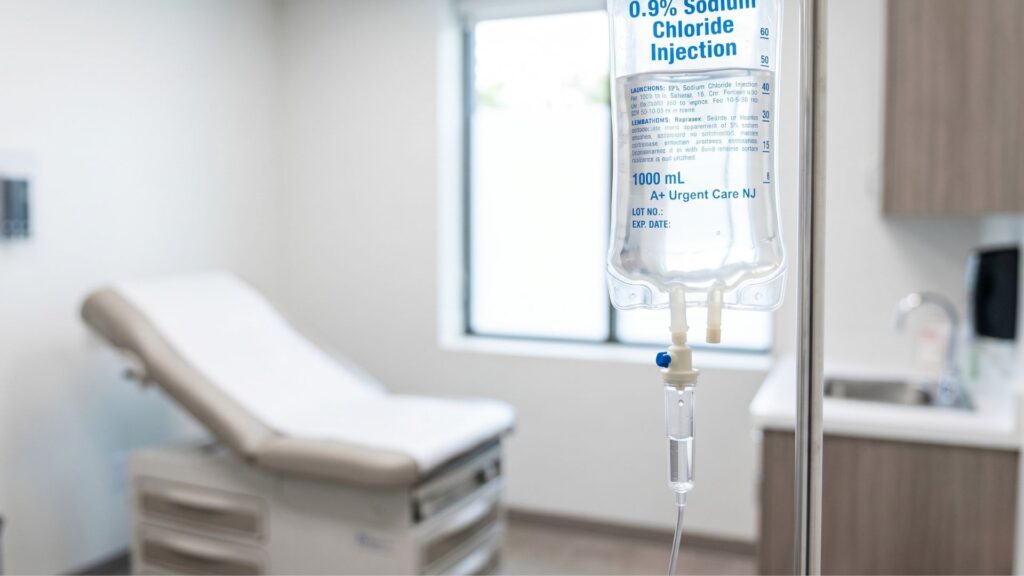
[insert inside photo 3]
How IV Hydration Works (and Why It’s Faster)
Understanding what IV fluids actually do helps explain when they’re worth it.
What’s in the Bag
IV fluids are a sterile solution of water and electrolytes — most commonly normal saline (salt water matched to the body’s needs) or a balanced solution like lactated Ringer’s, which more closely matches the electrolyte makeup of blood. Sometimes additional electrolytes, glucose, or medications for nausea are added depending on the situation.
The Process
Getting IV fluids is straightforward:
- A provider assesses your hydration and vital signs
- A small catheter is placed in a vein, usually in the arm or hand
- The fluid bag connects to the catheter and drips in over time
- You rest comfortably while the fluids run
- The provider monitors how you respond
Why It Works So Quickly
When you drink water, it has to travel through your stomach and intestines and be absorbed before it reaches your bloodstream — a process that takes time and slows further when you’re dehydrated or nauseated. IV fluids skip all of that, entering circulation directly. Many people start feeling noticeably better before the bag even finishes. A typical IV hydration session runs somewhere in the range of 30 minutes to an hour, depending on how much fluid is needed.
What It Feels Like
Beyond the small pinch of the catheter placement, IV hydration is generally comfortable. The fluid can feel slightly cool going in. Most people feel their energy, alertness, and nausea improve as the session progresses, which is part of why it’s such an effective treatment for moderate dehydration.
Can Urgent Care Give You IV Fluids?
Yes — IV hydration for mild-to-moderate dehydration is a common urgent care service, and it’s often the ideal middle ground between toughing it out at home and an expensive ER trip.
When Urgent Care Is the Right Choice
Walk-in care with IV fluids is well-suited for:
- Dehydration from a stomach bug or food poisoning, when you can’t keep fluids down but aren’t showing emergency red flags
- Heat-related dehydration that needs more than rest and water
- Dehydration from illness with fever
- Feeling significantly depleted but still alert and stable
At A+ Urgent Care, providers assess your hydration level and vital signs, administer IV fluids when appropriate, treat underlying causes like nausea, and give clear guidance on recovery — all typically faster and far less expensive than an emergency room.
When to Choose the ER Instead
Urgent care handles mild-to-moderate dehydration. Severe dehydration belongs in the ER, where continuous monitoring, advanced testing, and higher-level interventions are available. Go straight to the ER or call 911 for confusion, fainting, no urine output, a rapid weak pulse, seizures, or inability to keep down any fluids at all. If you arrive at urgent care and the team determines your dehydration is severe, they’ll stabilize you and arrange transfer to the appropriate facility.
The Cost and Time Advantage
For appropriate cases, urgent care IV hydration is a fraction of the cost of an ER visit and comes with much shorter wait times — most patients are seen within 15-45 minutes. For the many dehydration cases that fall into the mild-to-moderate range, it’s the practical choice. Both A+ Urgent Care locations offer this service; you can reach them through the contact page.
What Causes Dehydration in the First Place
Understanding the common causes helps you anticipate and prevent dehydration before it becomes a problem.
Illness
The most frequent cause of significant dehydration is illness involving:
- Vomiting — losing fluids and unable to replace them
- Diarrhea — rapid fluid and electrolyte loss
- Fever — increases fluid loss through sweating and faster metabolism
Stomach viruses and food poisoning are leading culprits, especially because they hit fluid intake and fluid loss at the same time.
Heat and Activity
- Hot weather that increases sweating
- Intense exercise or physical labor
- Working outdoors in summer heat
- High humidity, which makes the body work harder to cool itself
Inadequate Intake
Sometimes dehydration is simply about not drinking enough — common during busy days, while traveling, or among older adults whose thirst signals weaken with age.
Other Contributors
- Alcohol, which is a diuretic and promotes fluid loss
- Certain medications, including some diuretics and blood pressure drugs
- Uncontrolled diabetes, which can cause excessive urination
- Caffeine in large amounts
Dehydration in Children and Older Adults
Two groups deserve special attention because they dehydrate faster and show different warning signs.
Children
Kids, especially infants and young children, are at higher risk because their smaller bodies have less fluid reserve and they lose fluid quickly during illness. Watch for:
- No wet diapers for 3 or more hours, or significantly reduced urination
- No tears when crying
- Dry mouth and tongue
- Sunken eyes or sunken soft spot on a baby’s head
- Unusual sleepiness, irritability, or listlessness
- Refusing to drink
Children can move from mild to severe dehydration faster than adults, so err toward seeking care sooner. For infants and any child showing these signs, prompt evaluation is important.
Older Adults
Seniors are also high-risk for several reasons: the sense of thirst diminishes with age, kidney function changes, and some medications increase fluid loss. Dehydration in older adults can show up as confusion or sudden behavior changes that get mistaken for other conditions. Reduced urination, dizziness, fatigue, and any new confusion in an elderly person warrant attention, since dehydration is a common and easily missed cause.
Why Early Action Matters for Both
For both children and older adults, the window between mild and serious dehydration is shorter, and the consequences come faster. When in doubt with either group, getting evaluated sooner rather than later is the safer call.
How to Prevent Dehydration
Prevention is far easier than treatment, and a few habits handle the vast majority of cases.
Everyday Hydration
- Drink regularly throughout the day rather than waiting until you’re thirsty
- Keep water accessible — a bottle on your desk or in your bag
- Check your urine color as a quick gauge (aim for pale yellow)
- Eat water-rich foods like fruits and vegetables
In the Heat or During Exercise
- Pre-hydrate before spending time in the sun or working out
- Drink more than usual on hot, humid days
- Use electrolyte drinks for long, sweaty activity, not just water
- Take shade and water breaks during outdoor work or sports
- Limit alcohol and caffeine in hot weather
During Illness
- Sip fluids frequently even when you don’t feel like it
- Use oral rehydration solutions for vomiting or diarrhea
- Watch for the warning signs that home rehydration isn’t keeping up
- Don’t wait too long to seek care if you can’t keep fluids down
Know Your Risk
If you or a family member falls into a higher-risk group — young children, older adults, people with diabetes, outdoor workers — build in extra fluids and stay alert to early signs. A little prevention sidesteps the more serious situations entirely.
Frequently Asked Questions
When is dehydration an emergency?
Dehydration becomes an emergency when it causes confusion, fainting, no urination for 8+ hours, a rapid weak pulse, rapid breathing, seizures, or an inability to keep any fluids down. These signs mean dehydration is affecting vital functions and require immediate care — call 911 or go to the ER. Mild-to-moderate dehydration without these red flags can be handled at home or at urgent care.
What are the signs I need IV fluids?
You likely need IV fluids if you can’t keep liquids down due to vomiting, have severe nausea that prevents drinking, are experiencing ongoing diarrhea outpacing your intake, or feel persistently dizzy and weak despite trying to rehydrate. IV fluids bypass the gut and work faster than drinking when oral rehydration isn’t enough or isn’t possible.
Can urgent care give you IV fluids for dehydration?
Yes. Urgent care commonly provides IV hydration for mild-to-moderate dehydration — a good fit when you can’t keep fluids down but aren’t showing emergency signs. It’s faster and far less expensive than the ER. Severe dehydration, with confusion or fainting, needs the ER instead. A+ Urgent Care offers IV fluids at both locations with same-day walk-in availability.
How long does an IV for dehydration take?
A typical IV hydration session runs about 30 minutes to an hour, depending on how much fluid you need. Many people start feeling better partway through, as the fluids enter the bloodstream directly and the body begins recovering before the bag is even empty.
Is IV hydration better than drinking water?
For mild dehydration, no — drinking water and electrolytes is perfectly effective and the right approach. IV hydration is better specifically when you can’t drink or keep fluids down, when you’re significantly depleted, or when you need faster rehydration than the gut can manage. For everyday mild dehydration, water is the answer.
When should I go to the ER for dehydration?
Go to the ER or call 911 for severe dehydration: confusion, fainting, no urine output, a rapid weak pulse, seizures, persistent vomiting that prevents keeping anything down, or extreme lethargy. In children, no wet diapers, no tears, sunken eyes, or unusual listlessness warrant emergency evaluation. These are signs the body needs immediate medical rehydration.
How can I tell how dehydrated I am?
Urine color is the simplest gauge: pale yellow means well-hydrated, dark yellow or amber means you need fluids, and little or no urine signals significant dehydration. Combine that with how you feel — thirst and dry mouth suggest mild, while dizziness, rapid heartbeat, and confusion point to more serious dehydration needing medical care.
What causes dehydration most often?
The most common causes are illnesses with vomiting, diarrhea, or fever, which drain fluids while reducing intake. Heat, intense exercise, and outdoor work are also frequent causes, along with simply not drinking enough. Alcohol, certain medications, and uncontrolled diabetes can contribute as well.
How quickly can dehydration become dangerous?
It varies. A hot day might cause gradual dehydration over hours, while severe vomiting and diarrhea can cause dangerous dehydration within hours, especially in children and older adults. The faster you’re losing fluid and the less you’re able to replace it, the quicker it progresses — which is why illness with persistent vomiting deserves close attention.
Can dehydration cause confusion?
Yes. Significant dehydration reduces blood flow to the brain and can disrupt electrolyte balance, leading to confusion, disorientation, or difficulty concentrating. In older adults especially, sudden confusion can be a primary sign of dehydration. Confusion is an emergency red flag that warrants immediate medical care.
Do I need IV fluids for a stomach bug?
Not always — many stomach bugs resolve with small, frequent sips of fluids and oral rehydration solutions. IV fluids become helpful when vomiting is persistent enough that you can’t keep anything down, when you’re getting weak and dizzy, or when symptoms drag on and home rehydration can’t keep up. Urgent care can assess and provide IV fluids when needed.
Where can I get same-day IV fluids in NJ?
A+ Urgent Care provides same-day IV hydration for mild-to-moderate dehydration at both Bloomfield (Essex County) and Cresskill (Bergen County) locations, with walk-in availability seven days a week. Most patients are seen within 15-45 minutes. For severe dehydration with emergency signs, go to the ER or call 911 instead.
Get Same-Day IV Hydration in Bloomfield and Cresskill
Most dehydration is a minor, fixable thing — drink water, rest, and you’re back to normal. The key is recognizing the smaller number of cases that need more: when vomiting won’t let you keep fluids down, when dizziness and weakness won’t lift, or when the warning signs point to something serious. For the mild-to-moderate middle ground, IV fluids at urgent care get you rehydrated and feeling human again quickly. For the severe, emergency end of the spectrum, the ER is the right call without delay.
If you’re worn down by a stomach bug, the heat, or an illness that’s left you unable to keep fluids down, you don’t have to wait it out and hope. Walk in for evaluation, and if IV fluids are what you need, you can be rehydrated and on the mend within the hour.
About A+ Urgent Care
A+ Urgent Care provides walk-in medical care for families across Essex and Bergen counties, with locations in Bloomfield and Cresskill open seven days a week, including evenings and weekends.
Led by Dr. Ajay Jetley, a board-certified emergency medicine physician with more than 15 years of experience, the team offers same-day treatment for dehydration, illness, and injury — including on-site IV fluids, labs, and X-rays — so most patients get evaluated and treated in a single visit.
For non-emergencies that can’t wait for the regular doctor, walk in during operating hours; for any life-threatening emergency, call 911.