A fever isn’t the enemy — it’s the immune system doing its job. But age changes everything, and some situations can’t wait. Learn the temperature thresholds by age, why your child’s behavior matters more than …

Key Takeaways
- Age matters more than the number. Any fever of 100.4°F or higher in a baby under 3 months needs immediate emergency evaluation — no exceptions. For older kids, the temperature alone matters much less.
- Watch the child, not the thermometer. A playful, drinking, alert child at 102°F is less concerning than a listless, hard-to-rouse child at 100.8°F.
- Fever medicine is for comfort, not for controlling the number. A fever that isn’t bothering your child doesn’t necessarily need treating — fever is part of how the immune system fights infection.
Table of Contents
- What Counts as a Fever
- Why Fever Isn’t the Enemy
- Under 3 Months: The One Absolute Rule
- Fever Thresholds by Age
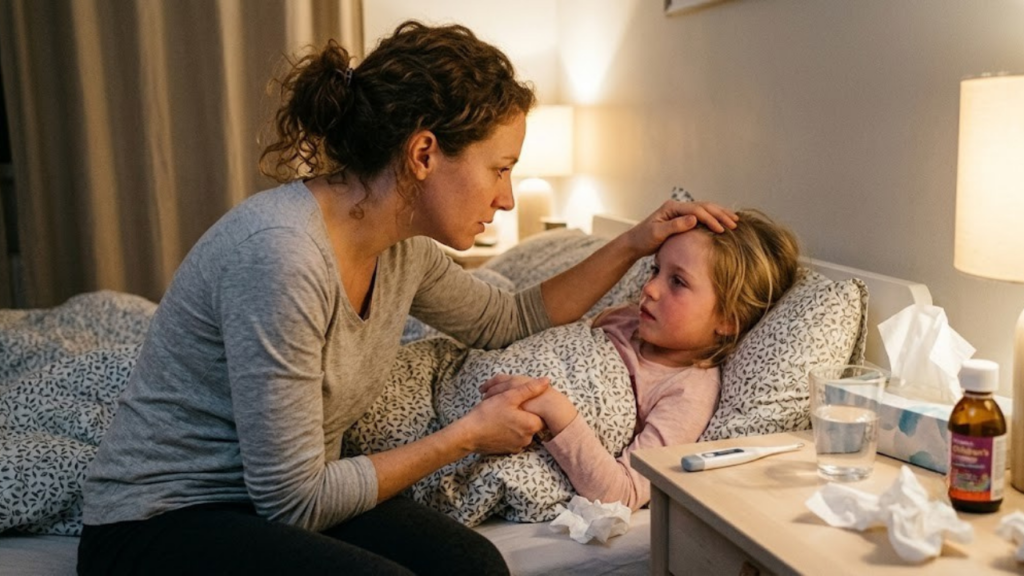
- Watch the Child, Not the Thermometer
- Warning Signs That Need Care Now
- How to Take an Accurate Temperature
- Treating a Fever at Home
- Fever Medicine: What to Know
- Myths Worth Retiring
- Urgent Care or the ER?
- Frequently Asked Questions
- Get Same-Day Pediatric Care in Bloomfield and Cresskill
It’s 11 p.m., your child feels hot, and the thermometer reads 102.6°F. Your stomach drops. Do you call someone? Go somewhere? Give medicine and hope it comes down?
Fever is one of the most common reasons parents seek medical care, and one of the most misunderstood. The instinct is to focus on the number — but pediatricians will tell you the number is one of the least useful pieces of information on its own. What actually matters is your child’s age, how they’re behaving, and whether specific warning signs are present.
This guide covers the age-based thresholds that genuinely matter, why a fever itself usually isn’t dangerous, the red flags that mean get seen tonight, and how to keep your child comfortable in the meantime. There’s one absolute rule for the youngest babies, and after that, a lot more room to breathe than most parents expect.
What Counts as a Fever
A fever is a body temperature of 100.4°F (38°C) or higher. Anything below that isn’t technically a fever, even if your child feels warm.
How you measure changes the reliability:
- Rectal — the gold standard, and the only reliable method for infants under 3 months
- Temporal (forehead) — convenient and reasonably accurate for older children
- Ear (tympanic) — not reliable under 6 months
- Oral — good for children old enough to hold the thermometer properly, usually around age 4+
- Axillary (underarm) — least accurate; useful as a screen, but confirm elsewhere
If an underarm or forehead reading is borderline and your child is very young, confirm with a rectal temperature.
Why Fever Isn’t the Enemy
This reframe is the most useful thing most parents can hear.
Fever is not an illness. It’s the immune system’s response to one — a deliberate raising of body temperature that helps the body fight infection. The fever is a signal that something is happening, not the problem itself.
And typical fevers don’t cause brain damage. The brain regulates body temperature and keeps infection-driven fevers from climbing dangerously high — generally topping out around 103-104°F, occasionally 105°F. The dangerously high temperatures people fear come from external heat sources, like a child left in a hot car, not from infection.
So a 104°F fever with the flu is a call-your-doctor situation, not a brain-damage situation. That distinction lets you focus on what actually matters: how your child looks and acts.
Under 3 Months: The One Absolute Rule
Everything above changes for the youngest infants.
Any rectal temperature of 100.4°F (38°C) or higher in a baby under 3 months requires immediate medical evaluation. No exceptions, no waiting to see, no giving fever medicine and reassessing in the morning.
Newborns have immature immune systems, and a fever can be the only sign of a serious bacterial infection. The American Academy of Pediatrics has published a full clinical practice guideline specifically for evaluating well-appearing febrile infants 8 to 60 days old, precisely because this age group needs a different, more cautious approach.
Where to go: if you can’t reach your pediatrician immediately, go to the emergency department — not urgent care. Infants this age may need blood work, urine testing, and sometimes a spinal tap to rule out serious infection, which requires hospital resources.
Also: don’t give fever medication to a baby under 3 months unless a doctor specifically directs you to.
Fever Thresholds by Age
| Age | When to Seek Care |
| Under 3 months | Any fever 100.4°F+ — emergency evaluation, immediately |
| 3-6 months | Fever 101°F+, or any fever with poor feeding, lethargy, or irritability |
| 6 months-3 years | Fever 102.2°F+, fever lasting more than 24 hours, or any concerning behavior |
| Over 3 years | Judge by behavior more than temperature; call if fever lasts 3+ days or symptoms worsen |
Per CHOC’s pediatric fever guidance, for children over 3 who continue to play, eat and drink well, stay alert, and have normal skin color, a fever is generally not cause for concern.
Regardless of age, call if the fever lasts more than three days, keeps returning after resolving, or comes with any of the warning signs below.
Watch the Child, Not the Thermometer
This is the principle pediatricians rely on most, and it’s the one that lets parents relax about the number.
Reassuring Signs
- Still playing or at least engaging between fever spikes
- Drinking fluids and making wet diapers or urinating normally
- Alert and responsive when awake
- Normal skin color
- Perks up when the fever comes down with medication
- Consoled by usual comfort measures
Concerning Signs
- Unusually listless or floppy
- Hard to wake, or not fully alert when awake
- Inconsolable crying that doesn’t respond to comfort
- Refusing fluids or showing signs of dehydration
- No improvement in behavior even after the fever comes down
- Just seems “off” in a way you can’t quite name
That last one counts. Parental instinct is a legitimate clinical signal — if your child seems wrong to you, get them seen regardless of the temperature.
Warning Signs That Need Care Now
Certain symptoms warrant evaluation at any temperature.
Go to the ER or call 911 for:
- Difficulty breathing — fast breathing, retractions (skin pulling in around ribs), grunting, or bluish lips
- Unresponsiveness or extreme difficulty waking
- A seizure
- Stiff neck, severe headache, or extreme sensitivity to light
- A rash that doesn’t fade when you press on it (a glass pressed against it stays visible)
- Severe dehydration — no wet diaper in 8+ hours, no tears, sunken eyes, dry mouth
- Persistent vomiting preventing fluid intake
- Any fever in an infant under 3 months
- Confusion or unusual behavior
Get same-day care for:
- Fever lasting more than 3 days
- Fever above 104°F that doesn’t respond to medication
- Fever with significant ear pain, sore throat, or painful urination
- Fever returning after being gone for 24+ hours
- Your child seeming significantly worse rather than better
How to Take an Accurate Temperature
- Under 3 months: rectal only. It’s the only reliable method at this age, and accuracy genuinely matters.
- 3 months-3 years: rectal is most accurate; temporal is a reasonable alternative.
- Over 4 years: oral works well if your child can hold the thermometer under their tongue with a closed mouth.
- Any age: wait 15-30 minutes after a hot bath, bundling, or a hot drink before measuring.
Use a digital thermometer, not an old mercury one, and don’t add or subtract degrees to “convert” between methods — just note which method you used when you talk to a provider.
Treating a Fever at Home
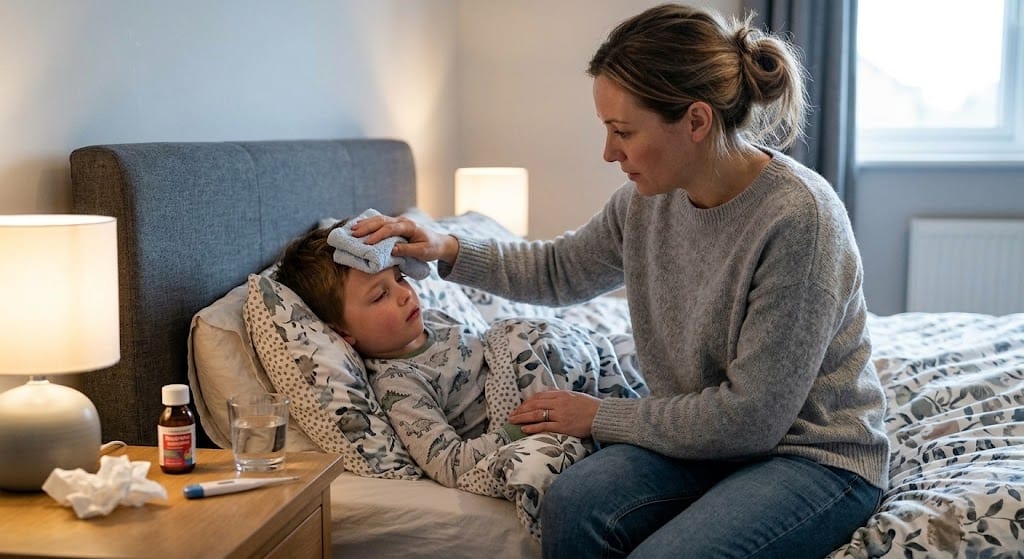
For most children over 3 months with no warning signs, home care is the right approach.
- Offer fluids frequently — hydration matters more than the temperature. Water, milk, formula, breastmilk, diluted juice, or oral rehydration solution
- Dress them lightly — one layer; no bundling, which traps heat
- Keep the room comfortable, not cold
- Let them rest, but don’t force bed rest if they want to play quietly
- Offer food if they want it; reduced appetite for a day or two is normal
- Use a lukewarm bath if it’s comforting — never cold water, ice baths, or alcohol rubs, which can cause shivering and raise core temperature
Fever Medicine: What to Know
The Options
- Acetaminophen (Tylenol) — approved from 2 months of age
- Ibuprofen (Advil, Motrin) — 6 months and older only
- Never aspirin for anyone under 18 — it’s linked to Reye syndrome, a rare but life-threatening condition
Dose by Weight, Not Age
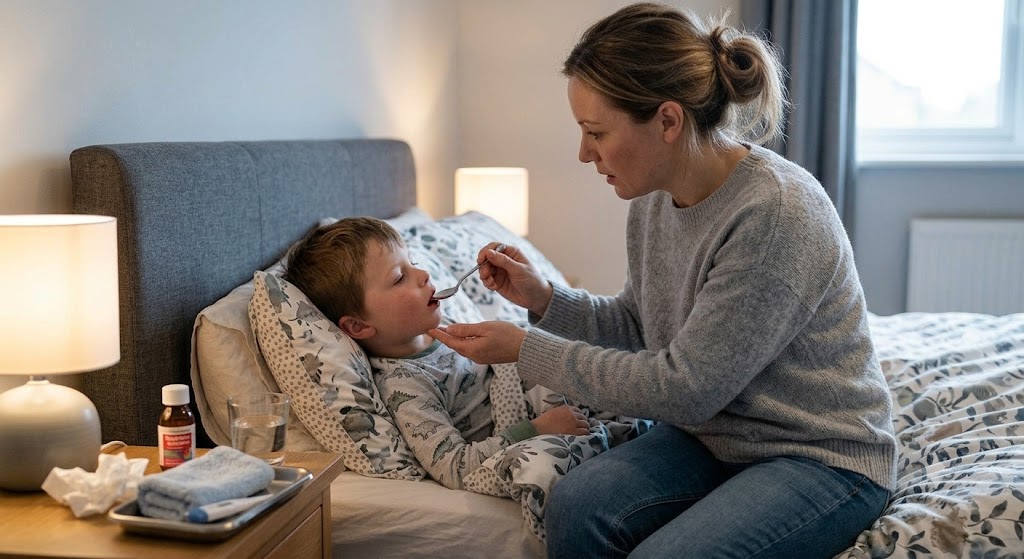
Dosing is based on your child’s weight, not age. Use the measuring device that comes with the medication — kitchen spoons aren’t accurate. If you’re unsure of the correct dose, call your pediatrician or pharmacist.
On Alternating Medications
Some parents alternate acetaminophen and ibuprofen. The AAP advises caution here — alternating increases the risk of dosing errors and accidental overdose. If your pediatrician recommends it for a specific reason, follow their exact instructions; otherwise, stick with one.
Treat Comfort, Not the Number
Fever medicine exists to make your child feel better, not to normalize the thermometer. A child with a 102°F fever who’s playing and drinking doesn’t necessarily need medication. And don’t wake a sleeping child to give fever medicine — sleep is part of recovery, and a sleeping child is comfortable by definition.
Myths Worth Retiring
“Teething causes fever.” According to the AAP, there’s no evidence teething causes true fevers. Mild warmth, maybe — but a temperature of 100.4°F or higher during teething means something else is going on and shouldn’t be dismissed.
“High fever means serious illness.” Not reliably. A mild virus can cause 104°F; a serious bacterial infection can cause 100.8°F. The height of the fever correlates poorly with how sick a child actually is — which is why behavior matters more.
“Fevers cause brain damage.” Infection-driven fevers don’t reach the temperatures that would cause harm. The body regulates this.
“You have to bring the fever down.” You have to keep your child comfortable and hydrated. The number itself isn’t the treatment target.
Urgent Care or the ER?
Urgent Care Works Well For
- Fever in children over 3 months with no red-flag symptoms
- Fever with a likely identifiable cause — ear pain, sore throat, cough
- Fever lasting more than 3 days
- When you can’t reach your pediatrician and want your child evaluated
- Rapid testing for strep, flu, or COVID
A visit typically includes an exam, a check for the source of the fever, and on-site testing where useful. Many childhood fevers turn out to be ear infections, strep throat, or ordinary viruses — all things urgent care can identify and treat the same day.
Go to the ER For
- Any fever in an infant under 3 months
- Difficulty breathing, unresponsiveness, seizure, stiff neck
- A non-blanching rash
- Severe dehydration
- Any situation where your child seems seriously unwell
Our urgent care vs. ER guide covers the broader decision.
Frequently Asked Questions
What temperature is considered a fever in a child?
100.4°F (38°C) or higher. Below that isn’t technically a fever, even if your child feels warm. For infants under 3 months, take the temperature rectally — it’s the only reliable method at that age, and accuracy matters because any fever 100.4°F+ in that age group requires immediate evaluation.
When should I worry about my child’s fever?
Age drives the answer. Under 3 months, any fever 100.4°F+ is an emergency. From 3 months to 3 years, a fever of 102.2°F+ or lasting over 24 hours warrants a call. Over 3 years, judge by behavior. At any age, warning signs — difficulty breathing, unresponsiveness, stiff neck, seizure, non-blanching rash, severe dehydration — mean seek care immediately.
How high is too high for a child’s fever?
There’s no single dangerous number for infection-driven fever. The body regulates temperature and keeps these fevers from reaching harmful levels. A fever above 104°F that doesn’t respond to medication warrants a call, but a child’s behavior is far more informative than the number. Playing and drinking at 103°F is more reassuring than listless at 101°F.
Do I need to treat every fever?
No. Fever medicine is for comfort, not for normalizing the thermometer. If your child is comfortable, drinking, and behaving reasonably, medication isn’t required — fever helps the immune system fight infection. Treat when your child is uncomfortable, and don’t wake a sleeping child to medicate.
Can teething cause a fever?
No. Per the AAP, there’s no evidence teething causes true fevers. Slight warmth may occur, but a temperature of 100.4°F or higher during teething should be attributed to something else and evaluated accordingly — don’t dismiss a real fever as teething.
Can I alternate Tylenol and Motrin?
The AAP advises caution because alternating increases the risk of dosing errors and accidental overdose. If your pediatrician recommends it for a specific reason, follow their instructions precisely. Otherwise, sticking with one medication, dosed by weight, is safer and generally sufficient.
How long should a fever last?
Most viral fevers last 2-3 days. Call your provider if a fever lasts more than three days, returns after being gone for 24 hours or more, or if your child seems to be getting worse rather than better. Persistent fever warrants a look for an identifiable source.
Should I give my baby under 3 months fever medicine?
Not unless a doctor specifically directs you to. Any fever of 100.4°F or higher in a baby under 3 months needs immediate medical evaluation, and giving medication can mask a fever that clinicians need to assess. Go to the emergency department if you can’t reach your pediatrician.
What is a febrile seizure?
A seizure triggered by a rapid rise in temperature, most common between 6 months and 5 years. They’re frightening but usually brief and harmless. Any first seizure warrants emergency evaluation. During one, place your child on their side on a safe surface, don’t put anything in their mouth, and call 911 if it lasts more than five minutes.
When can my child go back to school or daycare?
Most schools require a child to be fever-free for 24 hours without fever-reducing medication before returning. Beyond the fever itself, your child should be eating, drinking, and feeling well enough to participate. Check your specific school’s policy, as requirements vary.
Where can I get same-day care for my child’s fever in NJ?
A+ Urgent Care provides walk-in pediatric care at both Bloomfield (Essex County) and Cresskill (Bergen County) locations, seven days a week including evenings and weekends, with on-site rapid testing for strep, flu, and COVID. Note that infants under 3 months with a fever should go to an emergency department rather than urgent care.
Get Same-Day Pediatric Care in Bloomfield and Cresskill
A fever means your child’s immune system is working — and for most kids over 3 months, it’s not the emergency it feels like at 11 p.m. What matters is their age, how they’re behaving, and whether any warning signs are present. A child who’s playing between doses and drinking fluids is usually fine to watch at home. A child who’s listless, won’t drink, or just seems wrong to you should be seen, whatever the thermometer says.
The one hard line: any fever in a baby under 3 months means immediate emergency evaluation. For everyone else, when you’d like your child looked at and can’t reach the pediatrician, walking in gets you an exam, rapid testing if useful, and an answer the same day.
About A+ Urgent Care
A+ Urgent Care provides walk-in medical care for families across Essex and Bergen counties, with locations in Bloomfield and Cresskill open seven days a week, including evenings and weekends. From pediatric fevers and infections to injuries and on-site rapid testing, the team handles what comes up between pediatrician visits through a full range of services. Led by Dr. Ajay Jetley, a board-certified emergency medicine physician with more than 15 years of experience, most patients are seen within minutes. No appointment necessary; for any life-threatening emergency, call 911.