Three of the most common childhood coughs sound alike at 2 a.m. but behave very differently. Here’s how to recognize croup’s barking cough, RSV’s fast breathing, and an ordinary cold — plus the specific breathing …


Read This Part First
Before anything else, here are the signs that mean call 911 or go to the ER now, regardless of which illness it is:
- Struggling to breathe — skin pulling in around the ribs, neck, or collarbone with each breath
- Bluish or gray lips, face, or fingernails
- Grunting with each breath
- Nostrils flaring with each breath
- Unable to speak, cry, or drink because of breathing effort
- Very fast breathing or long pauses in breathing
- Drooling or unable to swallow
- Extreme lethargy — limp, hard to wake
- Stridor at rest — noisy breathing when calm, not just when crying
- Any fever in an infant under 3 months
Everything below assumes none of these are present.
Key Takeaways
- Croup announces itself with a barking, seal-like cough and noisy breathing on the way in, usually worse at night.
- RSV starts as an ordinary cold and worsens around days 3-5, with fast breathing, wheezing, and feeding difficulty in infants.
- How your child is breathing matters far more than how the cough sounds. Working hard to breathe means emergency care.
Table of Contents
- Croup
- RSV
- Ordinary Colds and Coughs
- Quick Comparison
- What Helps at Home
- When to Walk In
- Frequently Asked Questions
- Same-Day Pediatric Care
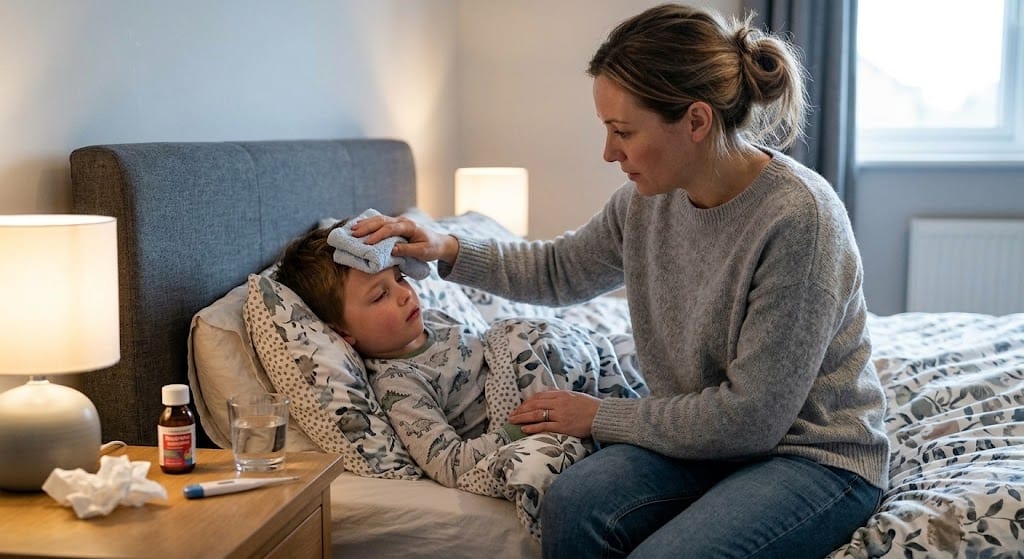
Most parents can describe the 2 a.m. version of this: a cough that sounds alarming, a child who can’t settle, and no clear sense of whether this is a wait-till-morning situation or a get-in-the-car situation.
Croup, RSV, and ordinary colds account for most of it — and while they overlap early, each has a signature worth recognizing.
Croup
The sound is the diagnosis. A harsh, barking cough that people compare to a seal. Once you’ve heard it, you don’t forget it.
Croup is a viral infection that swells the tissue around the voice box and windpipe. Because young children have narrow airways, that swelling makes a disproportionate difference.
What you’ll notice:
- Barking, seal-like cough
- Stridor — a high-pitched noise when breathing in
- Hoarse voice or cry
- Usually starts with a cold for a day or two
- Dramatically worse at night, often between midnight and 4 a.m.
- Worse when the child is upset or crying
- Low-grade fever sometimes
Who gets it: most common between 6 months and 3 years, peaking in fall and early winter.
The pattern parents describe: fine during the day, terrifying at night, better again by morning. Usually worst on nights two and three, lasting 3-5 days total.
The rule that matters: stridor only when crying or upset is generally manageable at home. Stridor at rest, when your child is calm, means get seen right away.
RSV
RSV (respiratory syncytial virus) is a common respiratory virus that most children get before age two. In older kids and adults it’s usually a bad cold. In infants and babies under 12 months, it can be considerably more serious — it’s a leading cause of hospitalization in that age group.
The trajectory is the tell. RSV starts unremarkably — runny nose, mild cough, low fever — and then worsens around days 3-5, which is the opposite of how a cold behaves.
What to watch for:
- Fast breathing
- Wheezing on the way out
- Persistent, wet-sounding cough
- Poor feeding — in infants, this is often the first real warning sign
- Fewer wet diapers
- Irritability and poor sleep
- In young infants: pauses in breathing (apnea) — a medical emergency
Higher risk: babies under 6 months, premature infants, children with heart or lung conditions, and immunocompromised kids.
In infants, watch feeding closely. A baby who’s working to breathe can’t coordinate sucking and breathing well. Feeding difficulty and reduced wet diapers often signal trouble before anything else does.

Ordinary Colds and Coughs
Most childhood coughs are just colds, and they follow a recognizable arc:
- Gradual onset with runny nose and congestion
- Cough that’s loose or dry but not barking
- No stridor, no wheezing
- Low-grade fever for a day or two
- Peaks around days 3-5, then steadily improves
- Child still playing, eating, and drinking reasonably
A lingering cough is normal. Post-viral coughs commonly persist 2-3 weeks after everything else resolves. A cough alone, in a child who’s otherwise recovering and breathing comfortably, usually isn’t cause for concern.
Our guide on when to worry about a child’s fever covers the fever side of these illnesses.
Quick Comparison
| Croup | RSV | Cold | |
| Cough | Barking, seal-like | Wet, persistent | Loose or dry |
| Noisy breathing | Stridor (breathing in) | Wheezing (breathing out) | None |
| Worst at night | Markedly | Somewhat | Somewhat |
| Trajectory | Worst nights 2-3 | Worsens days 3-5 | Improves after day 3-5 |
| Typical age | 6 mo – 3 yrs | Under 2 (severe under 6 mo) | Any |
| Key concern | Airway swelling | Breathing effort, feeding | Usually none |
What Helps at Home
For croup:
- Stay calm — crying tightens the airway and worsens symptoms. Your composure is genuinely therapeutic here.
- Cool air — many parents find a few minutes by an open window or outside on a cool night helps
- Steam — sit in a bathroom with a hot shower running
- Upright positioning
- Fluids
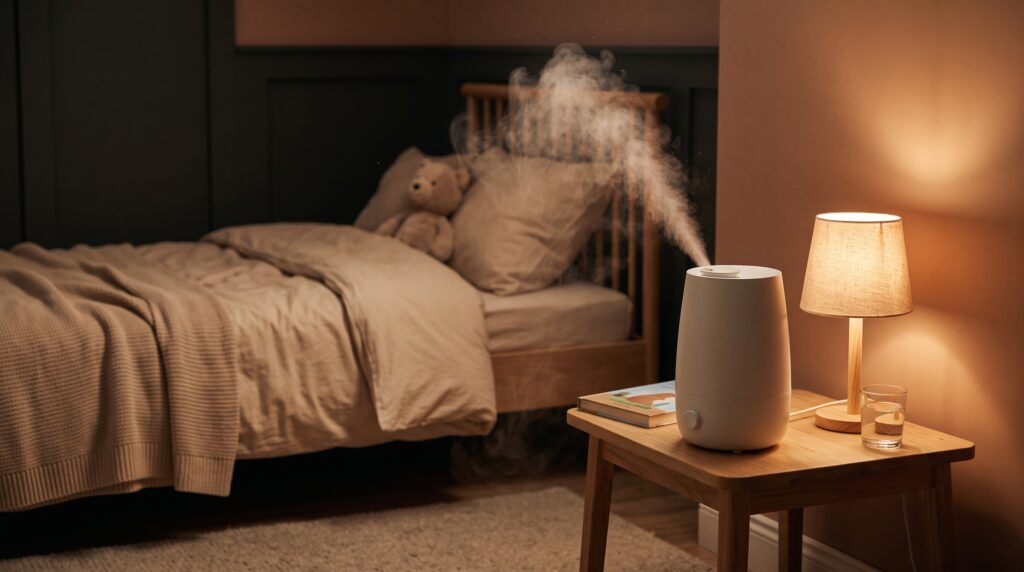
- Cool-mist humidifier overnight
For RSV and colds:
- Nasal saline drops with gentle suction for infants — clearing the nose makes a real difference for feeding
- Fluids in small, frequent amounts
- Cool-mist humidifier
- Upright positioning for comfort
- Monitor breathing and wet diapers more than the cough itself
Skip: cough and cold medicines for children under 4 (not recommended, and not effective), honey for babies under 1 (botulism risk), and steam from hot water close enough to burn.
When to Walk In
Come in for:
- A barking cough with stridor when upset
- Cough worsening after day 5 instead of improving
- Fast breathing without severe distress
- Reduced feeding or fewer wet diapers
- Fever lasting more than three days
- Wheezing without significant distress
- Not sure what you’re dealing with
Go to the ER or call 911 for anything in the list at the top of this page. In particular: stridor at rest, retractions, bluish color, grunting, or a child too breathless to drink.
Frequently Asked Questions
How do I know if my child has croup?
The barking, seal-like cough is distinctive, usually with a hoarse voice and stridor — a high-pitched noise when breathing in. It’s dramatically worse at night, typically between midnight and 4 a.m., and often follows a day or two of cold symptoms. Most cases occur between 6 months and 3 years.
What’s the difference between croup and RSV?
Croup causes a barking cough and noisy breathing in (stridor), from swelling around the voice box. RSV causes wheezing on the way out, fast breathing, and a wet cough, from inflammation deeper in the small airways. Croup is worst at night; RSV worsens progressively around days 3-5.
When is a child’s cough an emergency?
When breathing is affected: skin pulling in around the ribs or neck, bluish lips or face, grunting, flaring nostrils, stridor at rest, inability to speak or drink, very fast breathing, or pauses in breathing. Extreme lethargy also warrants emergency care. How the cough sounds matters less than how your child is breathing.
How long does croup last?
Typically 3-5 days, with the worst symptoms usually on nights two and three. The barking cough may linger a few days longer as it improves. If symptoms worsen instead of improving after night three, or if stridor appears at rest, get seen.
When is RSV dangerous?
Most concerning in infants under 6 months, premature babies, and children with heart or lung conditions. Warning signs include fast or labored breathing, poor feeding, fewer wet diapers, and — in young infants — pauses in breathing, which is an emergency. RSV typically peaks around days 3-5.
Why is croup worse at night?
Airway swelling tends to worsen overnight, and lying flat adds to it. Cortisol levels, which naturally reduce inflammation, are also lower at night. The classic pattern is a child who seems fine during the day and alarming at 2 a.m.
Can adults get croup or RSV?
Adults rarely get croup, because their airways are wide enough that the same swelling doesn’t cause symptoms. Adults do get RSV, usually as a cold — though it can be more serious in older adults and people with lung conditions.
How long should a child’s cough last?
The acute illness typically runs 7-10 days, but a lingering post-viral cough for 2-3 weeks afterward is normal and not concerning on its own, as long as your child is breathing comfortably and otherwise recovering. A cough that’s worsening, or accompanied by breathing difficulty or fever, warrants evaluation.
Where can I get same-day care for my child in NJ?
A+ Urgent Care provides walk-in pediatric care at Bloomfield (Essex County) and Cresskill (Bergen County), seven days a week including evenings and weekends. For severe breathing difficulty, stridor at rest, bluish color, or any fever in an infant under 3 months, go to an emergency department instead.
Same-Day Pediatric Care
The shorthand: barking cough with noisy breathing in means croup. A cold that gets worse around day four or five, with fast breathing or poor feeding, means think RSV. Steady improvement after day three means an ordinary cold running its course.
But the sound of the cough is secondary. What matters most is breathing — effort, rate, color, and whether your child can still drink and settle. If breathing looks hard, that’s an emergency regardless of the diagnosis.
About A+ Urgent Care
A+ Urgent Care provides walk-in medical care for families across Essex and Bergen counties, with locations in Bloomfield and Cresskill open seven days a week — weekdays 8 AM to 8 PM, weekends 9 AM to 5 PM. Services include pediatric care, on-site rapid testing, X-rays, and labs. Led by Dr. Ajay Jetley, a board-certified emergency medicine physician with more than 15 years of experience. No appointment necessary; for any life-threatening emergency, call 911.