Poison ivy and a true allergic reaction can look alike at first, but they behave very differently — and one of them can turn dangerous fast. Learn how to tell a poison ivy rash from …

Key Takeaways
- A poison ivy rash is technically a type of allergic reaction — allergic contact dermatitis — but it behaves very differently from the hives and swelling people usually mean by “allergic reaction.” Poison ivy stays where the plant touched you and appears 1-3 days later; hives can pop up anywhere and appear within minutes.
- The location and timing of your symptoms are the biggest clues. A streaky rash on your forearm two days after gardening points to poison ivy. Sudden welts across your body after a new food or medication points to an allergic reaction that may need faster attention.
- Most poison ivy rashes are treated at urgent care or at home. But a true allergic reaction with facial swelling, widespread hives, or any trouble breathing is a medical emergency that needs the ER immediately.
Table of Contents
- Poison Ivy Is an Allergic Reaction — Just a Specific Kind
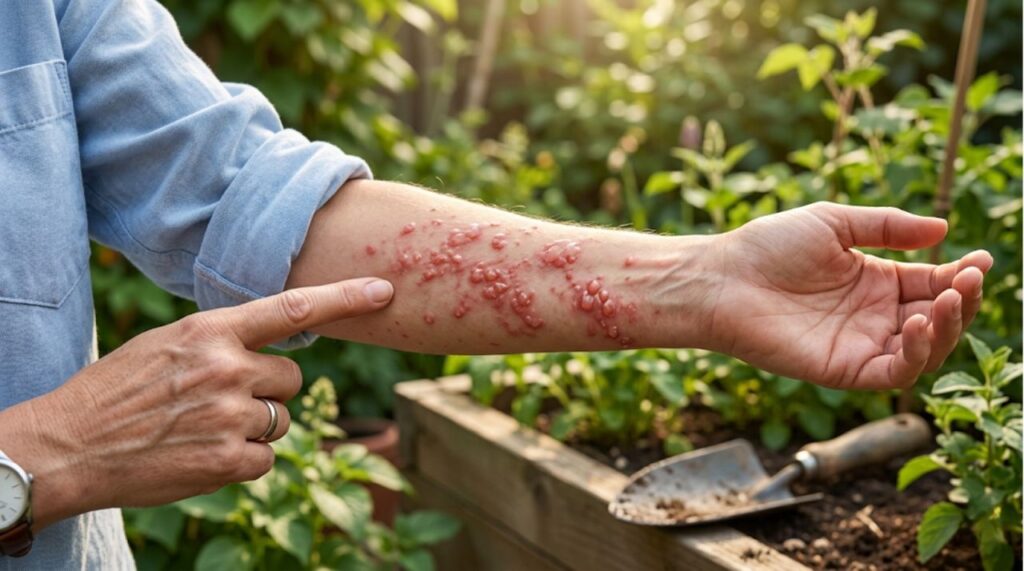
- What a Poison Ivy Rash Looks and Feels Like
- What a True Allergic Reaction Looks Like
- Poison Ivy vs. Hives: Telling Them Apart
- When an Allergic Reaction Becomes an Emergency
- Can Urgent Care Treat Poison Ivy and Allergic Reactions?
- Other Rashes That Get Confused With Poison Ivy
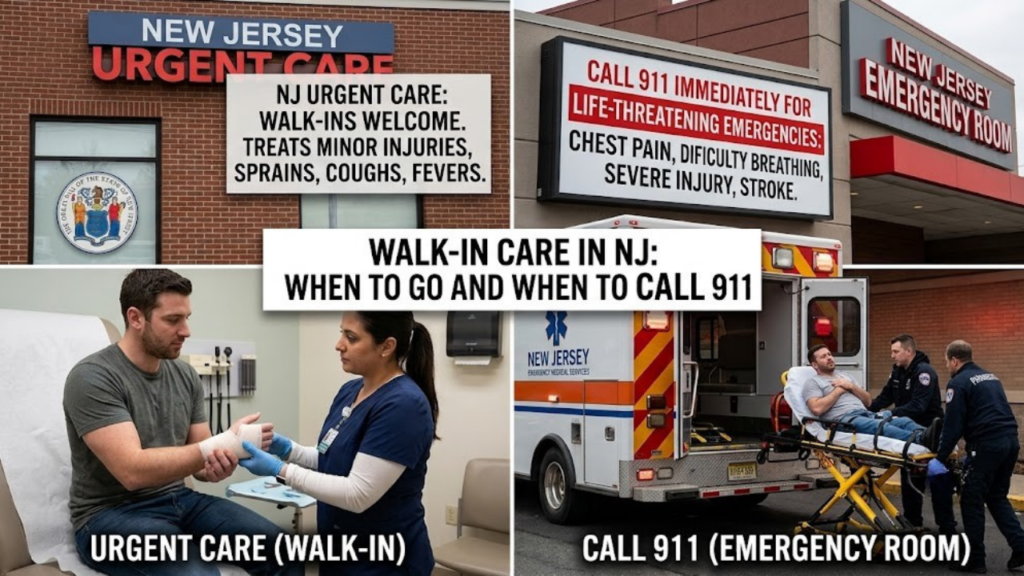
- When to Choose Urgent Care vs. the ER
- Frequently Asked Questions
- Get Same-Day Rash Treatment in Bloomfield and Cresskill
You’ve got a rash, and you’re trying to figure out what you’re dealing with. Maybe you were outside over the weekend. Maybe you tried a new soap, or started a new medication, or ate something different.
The rash itches, it’s spreading, and you’re not sure if this is poison ivy or some kind of allergic reaction — and whether you should be worried.
Here’s the thing worth knowing up front: poison ivy actually is an allergic reaction. But it’s a specific, predictable kind that behaves very differently from the hives and swelling most people picture when they hear “allergic reaction.
” Telling the two apart matters, because one usually resolves on its own or with a quick urgent care visit, while the other can occasionally turn into an emergency.
This guide walks through how each one looks and feels, the simple clues that help you tell them apart, and the red flags that mean you should head to the ER rather than wait it out.
For most rashes, same-day care at a walk-in clinic Bloomfield NJ residents trust handles the problem quickly. The goal here is helping you recognize which situation you’re in.
Poison Ivy Is an Allergic Reaction — Just a Specific Kind
Let’s clear up the confusion right away, because it trips a lot of people up.
When you touch poison ivy, your skin reacts to urushiol — the oily resin in the plant. Your immune system treats that oil as a threat and fights back, producing the itchy, blistering rash.
Doctors call this allergic contact dermatitis. So yes, poison ivy is a genuine allergic reaction.
But when most people say “allergic reaction,” they’re picturing something else: hives breaking out across the body, lips or eyes swelling up, maybe trouble breathing.
That’s a different process. It involves a chemical called histamine flooding the body, and it can come on within minutes of exposure to a trigger like a food, a medication, or a bee sting.
Two Different Reactions, Two Different Timelines
The simplest way to think about it:
- Poison ivy (contact dermatitis): Slow and local. The rash shows up where the plant touched you, usually a day or two after contact, and stays put.
- A classic allergic reaction (hives/histamine): Fast and spreading. Welts can appear anywhere on the body within minutes to a couple of hours, and they often move around.
Both are technically “allergic,” but they look different, feel different, and call for different responses. The rest of this guide focuses on telling them apart in real life.
Why the Difference Matters
It comes down to safety. A poison ivy rash is miserable but rarely dangerous — you have time to treat it at home or visit urgent care.
A fast-moving allergic reaction can, in rare cases, progress to a life-threatening emergency called anaphylaxis. Knowing which one you’re looking at tells you whether you have days to act or minutes.
What a Poison Ivy Rash Looks and Feels Like
Poison ivy has a recognizable pattern once you know what to look for. The features all trace back to how urushiol contacts your skin.
The Telltale Signs
- A delayed appearance — the rash typically shows up 12 to 72 hours after you touched the plant, not immediately
- Streaky or linear patterns — often you can see the line where a leaf or stem dragged across your skin
- Located where contact happened — forearms, hands, lower legs, ankles, anywhere skin met the plant
- Intense itching — the dominant symptom, often worse than any pain
- Redness, swelling, and blisters — small fluid-filled blisters that may ooze clear liquid
- A rash that seems to “spread” over days — though it isn’t actually spreading (more on that below)
Why It Looks Like It’s Spreading
A common worry: the rash appears on the arm Tuesday, then the leg Thursday, and it feels like it’s traveling. It isn’t. Different areas of skin absorb urushiol at different rates, so they react on different schedules. The blister fluid contains no urushiol and can’t spread the rash.
New patches days later usually mean different exposure amounts on different body parts, or re-contact with contaminated clothing, tools, or pet fur.
How Long It Lasts
A poison ivy rash generally runs its course in 1-3 weeks. Mild cases respond well to home care; more severe ones benefit from prescription treatment that shortens the misery. For a full breakdown of managing the rash, see our guide on poison ivy treatment at home vs. urgent care.
What a True Allergic Reaction Looks Like
A classic allergic reaction — the histamine-driven kind — behaves differently from poison ivy in almost every way. Recognizing it helps you respond appropriately, especially since some allergic reactions need fast action.
Hives (Urticaria)
Hives are the most common sign of this type of reaction:
- Raised, swollen welts that can be red, pink, or skin-colored
- Appear quickly — often within minutes to a couple of hours of exposure to a trigger
- Can show up anywhere on the body, not just where something touched you
- Move around and change shape — a welt may fade in one spot and appear in another
- Individual welts often disappear within 24 hours, though new ones may keep forming
- Itch intensely but usually don’t blister or ooze the way poison ivy does
Common Triggers
Unlike poison ivy, which requires physical contact with the plant, hives and allergic reactions can be triggered by things that enter the body or circulate through it:
- Foods (nuts, shellfish, eggs, milk)
- Medications (antibiotics, NSAIDs, others)
- Insect stings or bites
- Latex
- Infections
- Sometimes stress, heat, or cold
Angioedema (Deeper Swelling)
Sometimes an allergic reaction causes swelling deeper in the tissues, called angioedema. This often affects the lips, eyes, tongue, hands, or feet. Swelling of the face or lips deserves close attention, because it can be a warning sign that a reaction is escalating toward something more serious.
Poison Ivy vs. Hives: Telling Them Apart
When you’re staring at a rash trying to decide what it is, a few key features separate poison ivy from hives. This comparison covers the most reliable differences.
| Feature | Poison Ivy (Contact Dermatitis) | Hives / Allergic Reaction |
| Timing | Appears 12-72 hours after contact | Appears within minutes to hours |
| Location | Only where the plant touched skin | Anywhere on the body |
| Pattern | Streaky, linear, fixed in place | Scattered, moves and changes |
| Appearance | Blisters that ooze and crust | Raised welts, no blisters |
| Main sensation | Intense itching | Intense itching |
| Individual spots | Persist for days to weeks | Often fade within 24 hours |
| Trigger | Direct contact with urushiol | Food, medication, sting, etc. |
| Duration | 1-3 weeks | Hours to days (acute cases) |
The Quickest Mental Check
If you want a fast gut check, ask two questions:
- When did it appear? Minutes after a trigger leans toward hives. A day or two after being outdoors leans toward poison ivy.
- Where is it? Confined to one area where something touched you leans toward poison ivy. Scattered across your body leans toward an allergic reaction.
These two questions resolve most cases. When the answers are mixed or unclear — or when symptoms go beyond the skin — that’s when professional evaluation helps.
When an Allergic Reaction Becomes an Emergency
This is the most important section of the entire guide. Most rashes are not emergencies, but a small number of allergic reactions are, and recognizing them quickly can be lifesaving.
Call 911 or Go to the ER Immediately If You Notice:
- Difficulty breathing or shortness of breath
- Swelling of the lips, tongue, throat, or face that affects breathing or swallowing
- Wheezing or a tight feeling in the chest or throat
- Trouble swallowing or a sensation that the throat is closing
- Dizziness, lightheadedness, or fainting
- Rapid heartbeat combined with widespread hives
- A sense of impending doom alongside other symptoms
What These Signs Mean
Together, these can signal anaphylaxis — a severe, whole-body allergic reaction that can become life-threatening within minutes. Hives by themselves are uncomfortable but not dangerous. The danger comes when a reaction moves beyond the skin and starts affecting the airway, breathing, or circulation. If someone has a known severe allergy and an epinephrine auto-injector (EpiPen), it should be used right away while calling for emergency help.
Poison Ivy Almost Never Does This
Worth emphasizing for reassurance: a standard poison ivy rash does not cause anaphylaxis. The one rare exception is inhaling smoke from burning poison ivy, which can cause a serious airway reaction.
Outside of that scenario, poison ivy is a skin problem, not a breathing emergency — which is part of why telling it apart from a histamine-driven allergic reaction matters so much.
Can Urgent Care Treat Poison Ivy and Allergic Reactions?
Yes — urgent care handles both poison ivy and mild-to-moderate allergic reactions efficiently. The key word is “mild-to-moderate.” Severe reactions with breathing involvement need the ER.
For Poison Ivy
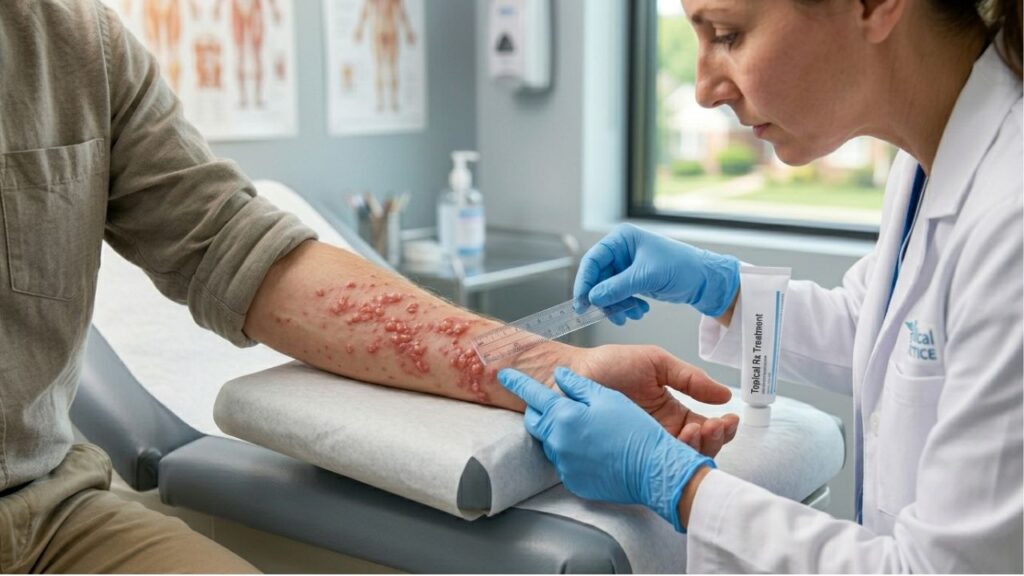
At A+ Urgent Care, poison ivy treatment can include:
- Clinical evaluation to confirm it’s poison ivy and assess severity
- Prescription oral steroids (prednisone) for widespread or severe rashes — often a 10-21 day course
- Prescription-strength topical steroids for more localized rashes
- Steroid injections for fast relief in severe cases
- Antibiotics if scratching has caused a secondary skin infection
- Guidance on symptom management and what to watch for
These prescription options are the main reason to choose urgent care over the drugstore for a serious rash — they’re far stronger than anything available over the counter.
For Mild-to-Moderate Allergic Reactions
Urgent care can also manage allergic reactions that aren’t life-threatening:
- Hives without breathing problems — treated with antihistamines and sometimes steroids
- Localized swelling that isn’t affecting the airway
- Mild reactions to foods, medications, or insect bites
- Evaluation to determine whether the reaction is escalating or stable
Providers assess vital signs and breathing to make sure the reaction is stable. If a reaction shows signs of becoming severe, the urgent care team can begin treatment and arrange emergency transfer if needed.
What Urgent Care Cannot Handle
Anaphylaxis and severe reactions affecting breathing belong in the ER, where IV medications, continuous monitoring, and airway support are immediately available. When in doubt about breathing or throat symptoms, don’t drive to urgent care — call 911.
Other Rashes That Get Confused With Poison Ivy
Poison ivy and hives aren’t the only possibilities. Several other conditions produce rashes that get mistaken for one or the other.
Heat Rash
Common in New Jersey summers, heat rash appears as tiny bumps where sweat ducts get blocked, usually in areas that stay hot and sweaty. Unlike poison ivy, it doesn’t spread and tends to clear on its own once you cool down. It’s prickly rather than intensely itchy.
Eczema (Atopic Dermatitis)
Eczema causes dry, scaly, itchy patches, often on the elbows, knees, hands, and face. It’s a chronic condition that flares and fades, rather than a one-time reaction to contact or a trigger. It can look similar to poison ivy but tends to recur in the same spots over time.
Insect Bites
Bites from mosquitoes, fleas, or other insects can cause itchy red bumps that get confused with early poison ivy. Bites are usually more isolated and centered on a punctum (the bite mark), while poison ivy tends to be streaky.
Other Contact Reactions
Reactions to soaps, detergents, fragrances, nickel jewelry, and latex are all forms of contact dermatitis — the same category as poison ivy, just with a different trigger.
These can look nearly identical to poison ivy and are treated the same way. The American Academy of Dermatology offers helpful detail on the range of contact dermatitis triggers.
When a rash doesn’t fit a clear pattern, a provider can sort out the cause and recommend the right treatment.
When to Choose Urgent Care vs. the ER
Putting it all together, here’s a simple framework for deciding where to go.
Urgent Care Is the Right Call For:
- A poison ivy rash that’s widespread, on the face, or severely itchy
- A poison ivy rash showing signs of infection
- Hives without any breathing or swallowing problems
- A mild allergic reaction to a food, medication, or bite
- Any uncomfortable rash you want diagnosed and treated quickly
For these situations, urgent care for allergic reaction Cresskill and Bloomfield residents need provides same-day evaluation and prescription treatment, typically with patients seen within 15-45 minutes — far faster and more affordable than the ER.
Go Straight to the ER (or Call 911) For:
- Any difficulty breathing or shortness of breath
- Swelling of the lips, tongue, throat, or face affecting breathing or swallowing
- Wheezing or chest tightness
- Dizziness, fainting, or rapid heartbeat with hives
- A known severe allergy with a reaction starting
- Any symptom that feels like it’s rapidly getting worse
When You’re Not Sure
If symptoms are limited to the skin and you can breathe and swallow normally, urgent care is almost always appropriate. If there’s any question about breathing, the airway, or a reaction that’s escalating fast, treat it as an emergency. Calling the clinic first to describe your symptoms can also help you decide quickly.
Frequently Asked Questions
Is poison ivy an allergic reaction?
Yes. A poison ivy rash is a form of allergic reaction called allergic contact dermatitis — your immune system reacting to urushiol, the oil in the plant. But it behaves differently from the histamine-driven reactions (hives, swelling) most people mean by “allergic reaction.” Poison ivy is slow and local; classic allergic reactions are fast and can spread.
How can I tell if my rash is poison ivy or hives?
Check the timing and location. Poison ivy appears 1-3 days after contact and stays where the plant touched you, often in streaks, with blisters. Hives appear within minutes to hours, can show up anywhere on the body, move around and change shape, and don’t blister. Individual hives usually fade within 24 hours, while poison ivy persists for weeks.
Can poison ivy cause a serious allergic reaction?
A standard poison ivy rash does not cause anaphylaxis or breathing problems. The rare exception is inhaling smoke from burning poison ivy, which can trigger a serious airway reaction. Otherwise, poison ivy is uncomfortable but not life-threatening, and there’s no need to fear it will suddenly affect your breathing.
What are the warning signs of a dangerous allergic reaction?
Difficulty breathing, swelling of the lips, tongue, throat, or face, wheezing, trouble swallowing, dizziness or fainting, and a rapid heartbeat with widespread hives. These can signal anaphylaxis, a medical emergency. Call 911 or use an epinephrine auto-injector immediately if available.
Can urgent care give me a steroid shot for poison ivy?
Yes. For severe reactions, A+ Urgent Care providers can administer steroid injections for fast relief, prescribe oral steroids like prednisone, or provide prescription-strength topical steroids — none of which are available over the counter. They can also treat secondary infections if scratching has broken the skin.
How long does an allergic reaction rash last compared to poison ivy?
Acute hives often resolve within hours to a few days once the trigger is removed and treated with antihistamines. Poison ivy lasts much longer — typically 1-3 weeks — because it’s a contact dermatitis that runs a longer inflammatory course. The difference in duration is one more clue to which condition you have.
Should I take Benadryl for poison ivy?
Oral antihistamines like Benadryl can help with itching and improve sleep during a poison ivy rash, though they treat the symptom rather than the rash itself. Avoid topical antihistamine creams on poison ivy, as they can cause their own skin reaction. For hives, oral antihistamines are a first-line treatment and often more directly effective.
Where can I get same-day rash treatment in Northern NJ?
A+ Urgent Care provides walk-in evaluation and same-day treatment for poison ivy, hives, and mild-to-moderate allergic reactions at both Bloomfield (Essex County) and Cresskill (Bergen County) locations. Most patients are seen within 15-45 minutes. For reactions involving breathing difficulty or facial swelling, go to the ER or call 911 instead.
Get Same-Day Rash Treatment in Bloomfield and Cresskill
Telling poison ivy apart from a true allergic reaction comes down to a few simple clues: how fast it appeared, where it showed up, and whether it stays put or spreads and moves.
A streaky, blistering rash a day or two after yard work is almost certainly poison ivy. Sudden welts scattered across your body after a new food or medication point to a histamine-driven allergic reaction.
And any reaction that affects your breathing or causes facial swelling is an emergency, full stop.
For everything short of that — itchy rashes, hives without breathing trouble, poison ivy that won’t quit — you don’t have to guess or suffer through it. Walk in for evaluation and leave with a clear diagnosis and treatment that actually works.
About A+ Urgent Care A+ Urgent Care has become a trusted name for walk-in medical care across Northern New Jersey, with clinics in Bloomfield and Cresskill serving Essex and Bergen County residents seven days a week.
Medical Director Dr. Ajay Jetley — board-certified in emergency medicine with 15+ years treating acute illness and injury — built the practice around what patients actually need: short waits, thorough evaluation, and same-day answers.
From poison ivy and allergic reactions to infections, sprains, and pediatric care, the team handles the conditions that send most people to urgent care, without the cost or wait of an emergency room. The Bloomfield location’s 4.8-star Google rating reflects the community’s response to that approach.