Most people underestimate what a walk-in clinic can handle in a single visit — infections, stitches, fractures, X-rays, physicals, and more. Here’s the complete list of what urgent care treats, plus the emergency symptoms that …

Key Takeaways
- Urgent care handles far more than most people assume — infections, minor injuries, stitches, fractures, physicals, and on-site X-rays and lab work, usually in a single visit under an hour.
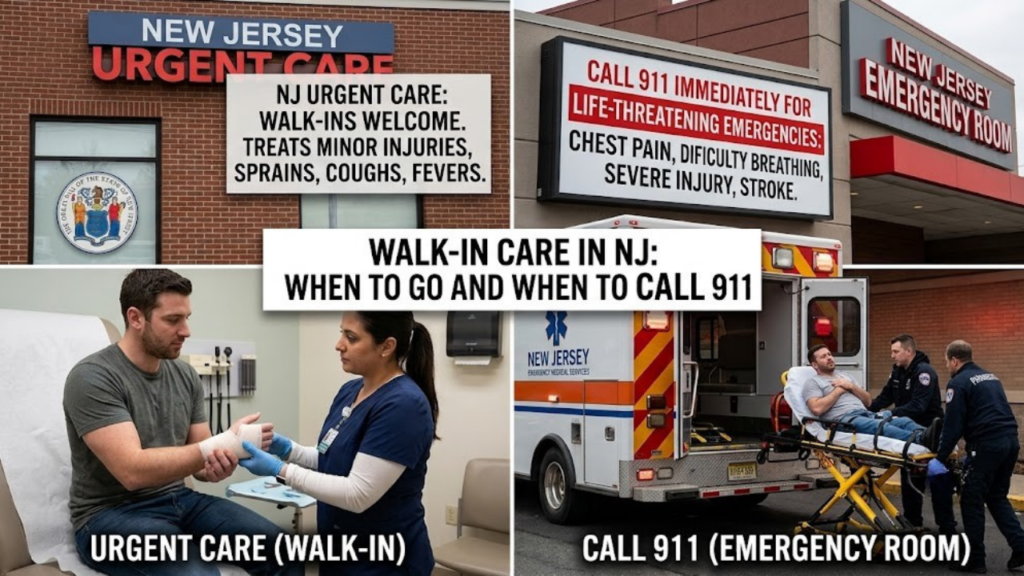
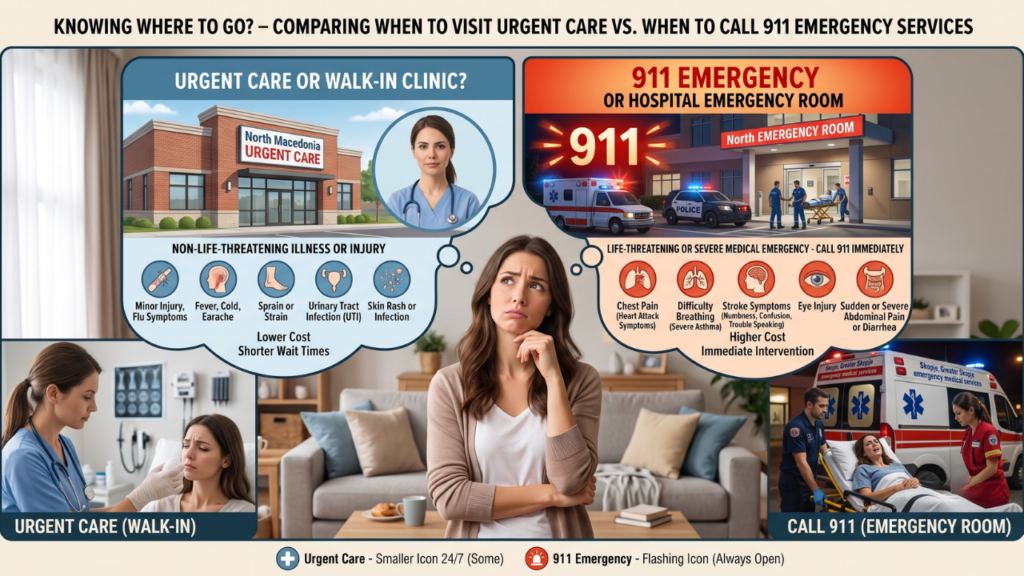
- The dividing line is simple: urgent care treats anything that needs attention today but isn’t life- or limb-threatening. Emergencies go to the ER.
- Walk-in clinics also handle preventive and administrative needs people don’t associate with them — sports physicals, DOT exams, vaccinations, and employer drug testing.
Table of Contents
- The Simple Rule
- Illnesses and Infections
- Injuries and Wound Care
- On-Site Testing and Diagnostics
- Pediatric Care
- Physicals and Preventive Care
- Occupational Health and Employer Services
- Vaccinations
- What Urgent Care Can’t Treat
- Urgent Care vs. Primary Care
- What to Expect at a Visit
- Frequently Asked Questions
- Walk In at Bloomfield or Cresskill
Most people have a narrow mental model of urgent care: a place to go when you probably have strep. That’s true, but it dramatically undersells what a well-equipped walk-in clinic can do.
Modern urgent care handles a wide swath of what used to require either a week-long wait for your primary doctor or an expensive trip to the ER. Stitches. Fractures. X-rays. Lab work. IV fluids. Sports physicals. DOT exams. Most of it in a single visit, without an appointment, in under an hour.
Knowing what’s actually on the menu saves you time and money — and occasionally spares you an unnecessary ER bill. Here’s the complete list, plus an honest account of what urgent care can’t do and where to go instead.
The Simple Rule
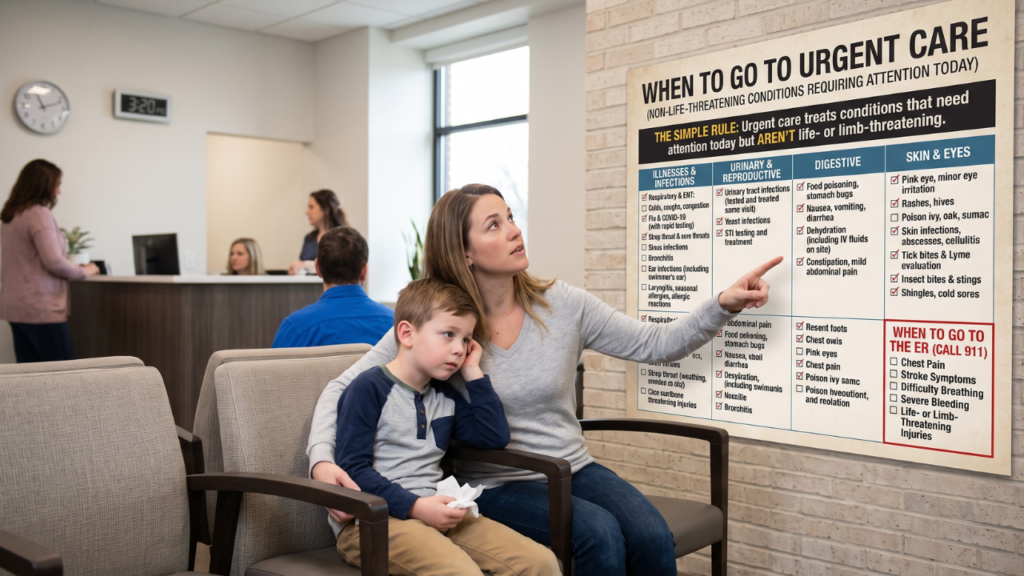
Urgent care treats conditions that need attention today but aren’t life- or limb-threatening.
That single sentence covers the vast majority of decisions. A cut that needs closing, a fever that won’t break, an ankle that might be broken, an infection that needs antibiotics — all urgent care. Chest pain, stroke symptoms, difficulty breathing, severe bleeding — all ER.
For a fuller breakdown of the gray areas, our urgent care vs. ER guide walks through the specific conditions that could go either way.
Illnesses and Infections
The largest category, and what most people come in for.
Respiratory and ENT
- Colds, coughs, and congestion
- Flu and COVID-19 — with rapid testing
- Strep throat and sore throats
- Sinus infections
- Bronchitis
- Ear infections, including swimmer’s ear
- Laryngitis and hoarseness
- Seasonal allergies and allergic reactions
Urinary and Reproductive
- Urinary tract infections — tested and treated same visit
- Yeast infections
- STI testing and treatment
Digestive
- Food poisoning and stomach bugs
- Nausea, vomiting, and diarrhea
- Dehydration — including IV fluids on site
- Constipation and mild abdominal pain
Skin and Eyes
- Pink eye and minor eye irritation
- Rashes and hives
- Poison ivy, oak, and sumac
- Skin infections, abscesses, and cellulitis
- Tick bites and Lyme evaluation
- Insect bites and stings
- Shingles and cold sores
Injuries and Wound Care
The category people most often assume requires an ER — usually wrongly.
Wounds
- Cuts and lacerations needing stitches, glue, or staples
- Scrapes, abrasions, and puncture wounds
- Wound infections
- Suture and staple removal
- Minor burns
- Splinter and foreign object removal
- Animal and insect bites
Musculoskeletal
- Sprains, strains, and many simple fractures
- Dislocated fingers and toes
- Back and neck strain
- Sports injuries
- Splinting and immobilization
Other
- Minor head injuries without red-flag symptoms
- Eye injuries that aren’t sight-threatening
- Heat exhaustion and heat-related illness
- Workers’ comp injuries
- Motor vehicle accident evaluation
On-Site Testing and Diagnostics
What separates a well-equipped urgent care from a basic clinic — and lets most visits end with an answer rather than a referral.
- Digital X-ray — for suspected fractures and injuries
- Rapid strep, flu, and COVID testing — results in 10-20 minutes
- Urinalysis — for UTIs and other concerns
- Blood work and lab panels
- EKG — for cardiac monitoring
- Pregnancy testing
- IV fluids — for dehydration
- Nebulizer treatments — for breathing difficulty
Being able to X-ray an ankle, read it, and splint it in one visit is the difference between a 45-minute stop and a multi-day, multi-appointment process.
Pediatric Care
Urgent care handles most of what comes up between pediatrician visits.
- Fevers (see the exception below)
- Ear infections and sore throats
- Colds, coughs, and flu
- Rashes, including poison ivy in kids
- Minor cuts, scrapes, and burns
- Sprains and sports injuries
- Stomach bugs and dehydration
- Pink eye
- Camp and school/sports physicals
One important exception: any fever of 100.4°F or higher in an infant under 3 months should go to an emergency department, not urgent care. That age group may need hospital-level workup.
Physicals and Preventive Care
Often the fastest way to get required paperwork handled.
- School and sports physicals — on the official NJ form
- Summer camp physicals
- Pre-employment physicals
- DOT physicals for commercial drivers, by certified examiners
- Insurance physicals
- Annual wellness exams
Occupational Health and Employer Services
The category most people don’t know exists at urgent care.
- Employer drug and alcohol testing — DOT and non-DOT
- Pre-employment screening
- Workers’ compensation injury care
- Occupational health screenings
- Return-to-work evaluations
For NJ businesses, having a local walk-in provider handling testing, physicals, and workers’ comp injuries in one place removes a lot of administrative friction.
Vaccinations
- Flu shots
- COVID-19 vaccines
- Tetanus boosters (Tdap)
- Other routine and travel-related vaccines
What Urgent Care Can’t Treat
Being clear about the limits is as useful as the list above.
Go to the ER or Call 911 For
- Chest pain or pressure, especially with shortness of breath or arm/jaw pain
- Stroke symptoms — facial drooping, arm weakness, slurred speech
- Difficulty breathing or severe shortness of breath
- Severe bleeding that won’t stop with pressure
- Head injury with confusion, loss of consciousness, or repeated vomiting
- Severe allergic reaction — throat swelling, difficulty breathing
- Seizures, especially a first-time seizure
- Compound fractures (bone through skin) or severe deformity
- Severe or large burns
- Sudden severe abdominal pain
- Poisoning or overdose
- Pregnancy complications
- Suicidal thoughts or psychiatric emergencies
- Any fever in an infant under 3 months
See Your Primary Doctor For
- Chronic disease management (diabetes, hypertension, thyroid)
- Ongoing medication management and long-term prescriptions
- Routine screenings and referrals to specialists
- Mental health care and counseling
- Anything requiring continuity and your full medical history
Also Not Available at Urgent Care
- Advanced imaging like CT or MRI
- Surgery
- Overnight observation or admission
- Controlled substance prescriptions in most cases
- Complex or ongoing specialty care
Urgent Care vs. Primary Care
Both matter, and they’re not interchangeable.
| Urgent Care | Primary Care | |
| Best for | Acute, needs attention today | Ongoing care and prevention |
| Appointment | Not needed | Usually required |
| Wait to be seen | Minutes | Days to weeks |
| Knows your history | No | Yes |
| Hours | Evenings and weekends | Business hours |
| Cost | Modest copay | Modest copay |
The practical answer for most people: keep a primary doctor for continuity and prevention, use urgent care for the acute things that can’t wait for an opening. Our cost guide breaks down what each typically runs.
What to Expect at a Visit
- Walk in during operating hours — no appointment
- Check in with ID and insurance card
- Brief wait — typically 15-45 minutes
- Evaluation by a physician, NP, or PA
- On-site testing as needed — X-ray, labs, rapid tests
- Treatment, with any prescription sent electronically to your pharmacy
- Clear follow-up instructions
Most visits run 30-60 minutes start to finish.
Bring: photo ID, insurance card, a list of current medications, known allergies, and a rough timeline of your symptoms.
Frequently Asked Questions
What can urgent care treat?
Urgent care treats non-life-threatening illnesses and injuries: infections (strep, UTIs, sinus, ear, pink eye), colds and flu, cuts needing stitches, sprains and many fractures, minor burns, rashes, stomach bugs and dehydration, plus physicals, vaccinations, and on-site X-rays and lab testing. The rule: anything needing attention today that isn’t an emergency.
Can urgent care do X-rays?
Yes, most well-equipped urgent care centers have on-site digital X-ray for suspected fractures, sprains, and injuries. What they don’t have is advanced imaging like CT or MRI, which requires a hospital. A+ Urgent Care offers X-ray at both locations, so most injuries can be imaged and treated in one visit.
Can urgent care prescribe antibiotics?
Yes. Urgent care providers diagnose and prescribe antibiotics for bacterial infections like strep throat, UTIs, skin infections, and bacterial sinus infections, sending prescriptions electronically to your pharmacy. They also determine when antibiotics aren’t appropriate — most colds, sore throats, and sinus infections are viral and don’t benefit from them.
Can urgent care give stitches?
Yes. Laceration repair is a core urgent care service, using sutures, medical glue, or staples depending on the wound. Providers also clean and irrigate the wound, administer tetanus boosters if needed, and handle suture removal later. Very deep wounds with tendon or nerve damage need an ER instead.
Does urgent care treat broken bones?
Many simple fractures, yes — X-ray, diagnosis, splinting, and referral for follow-up. Compound fractures (bone through skin), severe deformities, or fractures with heavy bleeding need the ER, where orthopedic surgery is available.
Can I take my child to urgent care?
Yes, for fevers, ear infections, sore throats, colds, rashes, minor injuries, and stomach bugs. The main exception is infants under 3 months with a fever of 100.4°F or higher, who should go to an emergency department. Serious symptoms — difficulty breathing, unresponsiveness, seizure — always mean the ER.
Can urgent care do sports and school physicals?
Yes, and it’s often the fastest option when a pediatrician is booked. A+ Urgent Care completes NJ school and sports physicals on the official state form, plus camp, pre-employment, insurance, and DOT physicals — usually same day, walk-in.
Does urgent care take insurance?
Most urgent care centers accept major insurance plans, typically at a lower copay than an ER visit. Self-pay options are available for uninsured patients and cost far less than an emergency room visit for the same care.
Do I need an appointment for urgent care?
No. Urgent care is walk-in by design — arrive any time during operating hours. A+ Urgent Care is open seven days a week with evening weekday hours, covering the times most primary care offices are closed.
What should I go to the ER for instead?
Chest pain, stroke symptoms, difficulty breathing, severe bleeding, head injury with confusion or loss of consciousness, severe allergic reactions, seizures, compound fractures, severe burns, sudden severe abdominal pain, poisoning, psychiatric emergencies, and any fever in an infant under 3 months. When symptoms could be life-threatening, call 911.
Is urgent care as good as seeing my own doctor?
For acute problems, the care quality is comparable — same diagnostics, same treatments, much faster access. What urgent care doesn’t have is your medical history and the continuity of an ongoing relationship. It works best as a complement to primary care, not a replacement.
Walk In at Bloomfield or Cresskill
The short answer to “can urgent care handle this?” is usually yes. Infections, injuries, stitches, fractures, testing, physicals, and vaccinations all fall comfortably within what a well-equipped walk-in clinic does — typically faster and for a fraction of what the same care costs at an emergency room.
The exceptions are worth knowing: true emergencies belong at the ER, ongoing chronic care belongs with your primary doctor, and a febrile newborn belongs at a hospital. Everything in between, you can walk in for today.
About A+ Urgent Care
A+ Urgent Care provides walk-in medical care for families across Essex and Bergen counties, with locations in Bloomfield and Cresskill open seven days a week — weekdays 8 AM to 8 PM and weekends 9 AM to 5 PM. From illness and injury to on-site X-rays, labs, physicals, and occupational health, the team offers a full range of services that get most patients diagnosed and treated in a single visit. Led by Dr. Ajay Jetley, a board-certified emergency medicine physician with more than 15 years of experience. No appointment necessary; for any life-threatening emergency, call 911.